x

 Oil On CanvasWallArtBaroque
 151.0 x 149.0 cm
Huile sur toile peinte à la main, avec cadre et dimensions personnalisés, réalisée sur commande par nos artistes. ( Commander l'impression Télécharger l'image haute résolution)





























Choisissez parmi nos formats prédéfinis qui respectent les proportions originales de l’œuvre.

Vous pouvez saisir vos propres dimensions pour l'adapter à un cadre ou à un espace spécifique. Si la taille sélectionnée ne correspond pas aux proportions de l'image d'origine, nous recadrerons l'œuvre ou prolongerons la peinture avec des éléments peints à la main supplémentaires. Une maquette numérique vous sera envoyée pour approbation avant le début de la production.
Veuillez noter que l'aperçu à l'écran ne reflète pas le recadrage ou l'extension réels. Seule la maquette montrera fidèlement la composition finale.
Bien que des tailles personnalisées soient disponibles, nous vous recommandons de sélectionner une dimension dans la liste prédéfinie afin de préserver les proportions d'origine.
Livraison dans le monde entier () en 3 à 4 semaines au lieu des 5 semaines habituelles. (18 août). Aucun compromis sur la qualité.


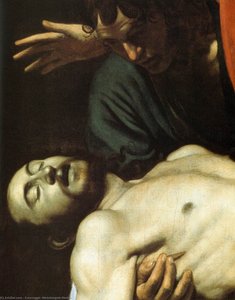
The Entombment
Format de la reproduction
To stand before this depiction of The Entombment is to be enveloped in a palpable atmosphere of sacred grief and profound human drama. Simon Vouet, a master navigating the turbulent currents from Mannerism into the full bloom of French Baroque, captures not merely an event, but a moment suspended between life and eternity. The scene centers on the figure laid before the cross, his outstretched arms speaking volumes of sacrifice and repose. It is a composition that demands the viewer’s complete surrender to its solemn narrative weight.
Vouet's genius shines through in his masterful handling of light and shadow, techniques heavily influenced by the dramatic realism pioneered by Caravaggio. The interplay between illumination and deep shadow—the tenebrism—is not merely decorative; it is narrative. Light seems to emanate from a divine source, selectively illuminating the pallor of the fallen body and the anguished gestures of those gathered around him. Observe the surrounding figures: their varied poses—some kneeling in supplication, others standing in quiet witness—create a complex tapestry of human reaction. The depth achieved through these clustered forms gives the composition an almost three-dimensional immediacy, pulling the observer directly into the sacred circle.
The symbolism inherent in this work is rich and deeply moving. Beyond the immediate religious narrative, the scene speaks to universal themes of loss, devotion, and redemption. The outstretched arms are a powerful symbol of both surrender and eternal embrace. The presence of multiple figures allows Vouet to explore the spectrum of human emotion—from profound sorrow to quiet contemplation—all converging on this central point of repose. For the collector or designer, this piece offers more than mere decoration; it is an emotional anchor, capable of lending a sense of weighty, contemplative dignity to any space.
Simon Vouet’s career trajectory—from his early portraiture successes to his pivotal role in major decorative schemes for Parisian patrons like Louis XIII—marks him as a key architect of the French Baroque style. This work, representative of that grand period, showcases his ability to integrate high drama with sophisticated compositional structure. The di sotto perspective suggested by the overall arrangement implies an immersive experience, making the viewer feel as if they are standing within the chapel itself. Owning a reproduction of this scale (151 x 149 cm) allows one to bring the grandeur and intellectual weight of 17th-century French artistic patronage into a modern setting.

Simon Vouet fut une figure essentielle dans la transition de la peinture française du maniérisme au style baroque. Né au sein d'une famille artistique – son père Laurent était peintre et son frère Aubin a également embrassé l'art – Vouet reçut une formation précoce qui posa les bases de son succès futur. Son petit-fils, Ludovico Dorigny, poursuivrait l’héritage artistique familial.
Durant son passage en Italie, Vouet absorba diverses influences. Il étudia les techniques d'éclairage dramatique pionniérées par Caravage, embrassa des éléments du maniérisme italien et analysa méticuleusement les palettes de couleurs et la perspective di sotto in su employée par Paolo Veronese. Il puisait également son inspiration dans les œuvres de Carracci, Guercino, Lanfranco et Guido Reni, synthétisant ces styles diversifiés en une vision artistique unique.
L'héritage de Simon Vouet repose sur son rôle essentiel de pont entre l’art italien et français. Il importa avec succès le dynamisme et la grandeur du baroque italien, le transformant en un style qui résonnait avec les goûts de la cour et de l'aristocratie françaises. Son influence est indéniable dans le développement de la peinture française au XVIIe siècle, et ses contributions continuent d’être reconnues par les historiens de l’art aujourd’hui.

1590 - 1649 , France

Explore the profound elegance of Baroque Classicism. Discover how 17th-century masters synthesized dramatic emotion with classical order through the lens of the Counter-Reformation and the works of legends like Carlo Maratta and Andrea Sacchi.

Explore the profound drama of 17th-century Baroque art. Discover how masters used chiaroscuro, movement, and emotional intensity to redefine history through the lens of the Counter-Reformation. An expert guide for art historians and collectors seeking deep cultural insight.

Explore the dramatic power of Baroque art through an expert guide to light, shadow, and emotion. Discover how the Counter-Reformation shaped 17th-century masterpieces and learn about the profound techniques used by the Old Masters to inspire awe.

Explore the dramatic evolution from Mannerist distortion to Baroque grandeur. Discover how light, shadow, and emotion redefined art history through a masterclass in technical mastery and religious fervor.

Explore the profound differences between Baroque drama and Rococo elegance. Our expert guide delves into art history, chiaroscuro, and the evolution of European masterpieces for collectors and enthusiasts seeking deep historical context.


Restez informé(e) des dernières actualités artistiques, des offres exclusives et des idées de décoration.
Parlez-nous de votre projet et nos experts en art vous proposeront 3 suggestions d'œuvres personnalisées.
Laissez-nous sélectionner 3 œuvres rien que pour vous – Gratuit !


 Aperçu en situation
 Envoyer
 Partager
 Détails de l'œuvre

 Télécharger
 Articles similaires
 Radiographie
 Diaporama
 Lire la suite







 L'option verre n'est disponible que pour les dimensions inférieures à 110 cm.