x

 Commander l'impression Acheter l'image haute résolution
 Partager
 Détails de l'œuvre
 Ajouter aux favoris
 Télécharger
 Articles similaires
 Radiographie
 Diaporama
Huile sur toile peinte à la main, avec cadre et dimensions personnalisés, réalisée sur commande par nos artistes.





























Choisissez parmi nos formats prédéfinis qui respectent les proportions originales de l’œuvre.

Vous pouvez saisir vos propres dimensions pour l'adapter à un cadre ou à un espace spécifique. Si la taille sélectionnée ne correspond pas aux proportions de l'image d'origine, nous recadrerons l'œuvre ou prolongerons la peinture avec des éléments peints à la main supplémentaires. Une maquette numérique vous sera envoyée pour approbation avant le début de la production.
Veuillez noter que l'aperçu à l'écran ne reflète pas le recadrage ou l'extension réels. Seule la maquette montrera fidèlement la composition finale.
Bien que des tailles personnalisées soient disponibles, nous vous recommandons de sélectionner une dimension dans la liste prédéfinie afin de préserver les proportions d'origine.
Livraison dans le monde entier () en 3 à 4 semaines au lieu des 5 semaines habituelles. (18 juillet). Aucune concession sur la qualité.


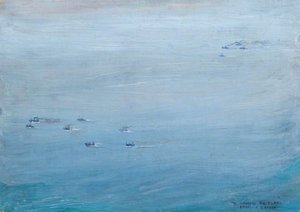
Leith
Format de reproduction
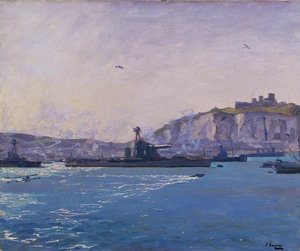
Sir John Lavery's "Leith," painted in 1917, is more than just a harbor scene; it’s a poignant snapshot of Britain during the tumultuous years of World War I. This oil-on-canvas work captures not only the bustling industrial activity of the port city but also an underlying sense of somberness and resilience – a feeling deeply embedded within the artwork's muted palette, atmospheric haze, and carefully constructed composition. Lavery, already a celebrated portraitist known for his ability to capture the spirit of Edwardian society, skillfully shifted his focus to document this pivotal moment in British history, offering us a rare glimpse into the realities faced by communities like Leith as they supported the war effort.
The painting’s composition immediately draws the eye towards the expansive water surface, occupying nearly two-thirds of the frame. This dominant element isn't merely decorative; it establishes a sense of depth and movement, mirroring the ceaseless activity within Leith’s harbor. A carefully arranged series of ships – both large vessels and smaller boats – anchors the middle ground, creating a visual pathway that guides the viewer through the scene. The foreground is grounded by machinery and docks, providing a tangible connection to the industrial heart of the port. Lavery's technique is distinctly Impressionistic; he employs loose brushstrokes, layering colors with remarkable subtlety to create soft transitions and an overall atmospheric effect. Visible impasto in certain areas – particularly within the foreground – adds texture and dynamism, hinting at the physicality of the scene while maintaining a sense of ethereal beauty.
The color palette is predominantly cool and muted—grays, blues, and greens dominate, reflecting the overcast skies typical of the era. These somber tones are punctuated by warmer hues in the hulls of the ships and within the foreground machinery, offering subtle points of visual interest and a hint of warmth amidst the prevailing gloom. Lavery masterfully uses light to evoke mood; the diffused illumination suggests a perpetual twilight, mirroring the anxieties and uncertainties of wartime. The high horizon line further enhances this sense of depth and distance, emphasizing the vastness of the water and sky. Beyond its aesthetic qualities, "Leith" subtly symbolizes the nation’s commitment to industry and defense – the ships represent naval power, while the machinery signifies the vital role of Leith in supplying the war effort. The overall effect is one of quiet determination.
Painted during 1917, “Leith” offers a valuable window into Britain’s wartime experience. Sir John Lavery's official war artist status meant he was tasked with documenting various aspects of the conflict, from naval operations to industrial production. This painting reflects his broader efforts to capture the spirit of the times – a period marked by both hardship and unwavering resolve. Lavery’s work during this era is particularly significant as it demonstrates his ability to move beyond traditional portraiture and engage with contemporary social issues. His artistic style, influenced by Whistler and rooted in Scottish Impressionism, allowed him to convey complex emotions and ideas through subtle color choices and atmospheric effects. Reproductions of “Leith” provide a tangible connection to this pivotal moment in British history, allowing us to appreciate Lavery’s skill as both an artist and a keen observer of his time.

Sir John Lavery RA était un peintre irlandais très respecté, renommé pour ses portraits captivants et ses représentations évocatrices de scènes de guerre. Né à Belfast, il a démontré un talent artistique dès son plus jeune âge, fréquentant l'Académie Haldane à Glasgow dans les années 1870 avant d'affiner davantage ses compétences à l'Académie Julian à Paris au début des années 1880.
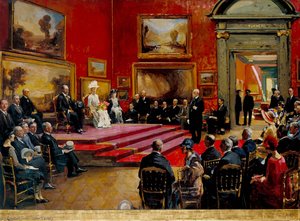
Après son retour à Glasgow, Lavery s’est associé aux artistes de la School of Glasgow. Un moment décisif est survenu en 1888 lorsqu'il a reçu une commande pour peindre la visite d'État de la reine Victoria à l'Exposition Internationale de Glasgow. Cet engagement prestigieux a lancé sa carrière en tant que peintre mondain recherché, ce qui l’a incité à déménager à Londres peu après.
Comme William Orpen, Lavery a été nommé artiste officiel pendant la Première Guerre mondiale. Cependant, des problèmes de santé persistants et un grave accident de voiture résultant d'un raid de Zeppelin l'ont empêché de servir sur le front occidental. Au lieu de cela, il s’est concentré sur la documentation des scènes de guerre au sein de la Grande-Bretagne, capturant des bateaux, des avions et des dirigeables.
Après la guerre, Lavery a été anobli et élu à la Royal Academy en 1921. Sa vie personnelle s'est entrelacée avec des événements historiques importants ; lui et sa femme, Hazel, ont joué un rôle discret dans la Guerre d'Indépendance irlandaise et la Guerre civile, mettant leur maison londonienne à disposition des négociateurs irlandais. Il a immortalisé Michael Collins avec son tableau "Michael Collins, Amour de l’Irlande", qui est maintenant exposé à la Hugh Lane Municipal Gallery.
Le style artistique de Lavery mêlait des éléments de l'impressionnisme à un sens aigu pour capturer la personnalité et l’atmosphère. Ses portraits sont célébrés pour leur réalisme, leur élégance et leur portraitage perspicace du caractère. Il était également habile dans le fait de représenter des paysages et des scènes de la vie quotidienne.
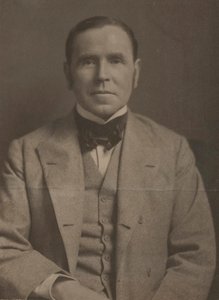
1856 - 1941 , Irlande

Plongez dans l'univers vibrant de l'impressionnisme avec notre sélection des 10 œuvres les plus emblématiques : Monet, Renoir, Degas… Découvrez l'histoire et la magie de ces chefs-d'œuvre. Reproductions d'art de qualité muséale sur Most-Famous-Paintings.com

Explorez les profondeurs émotionnelles du postimpressionnisme avec Most-Famous-Paintings. Découvrez Cézanne, Van Gogh, Gauguin et l'évolution de l'art moderne. Reproductions d'exception et expertise pour collectionneurs.

Explorez l'évolution de l'impressionnisme et du post-impressionnisme : histoire, artistes clés (Monet, Van Gogh…), techniques et héritage. Un guide expert pour les passionnés d'art.
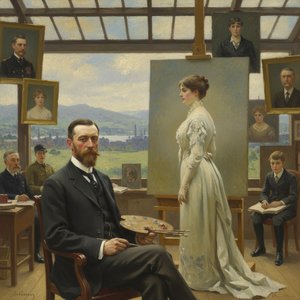
Explore the life & art of Sir John Lavery, a master of Scottish Impressionism and renowned portraitist. Discover his captivating works, Irish heritage, and lasting legacy with Most-Famous-Paintings.

Discover the captivating oil paintings of Peter Graham Li – a contemporary artist celebrated for his masterful use of light, color, and impasto technique. Explore investment potential & curated selections at Most-Famous-Paintings.


Restez informé(e) des dernières actualités artistiques, des offres exclusives et des idées de décoration.
Parlez-nous de votre projet et nos experts en art vous proposeront 3 suggestions d'œuvres personnalisées.
Laissez-nous sélectionner 3 œuvres rien que pour vous – Gratuit !


 Partager


 Afficher la suite







 L'option verre n'est disponible que pour les dimensions inférieures à 110 cm.