


x

Impressions giclées ou sur toile de qualité musée, avec une production rapide et des finitions au choix. ( Commander la reproduction peinte à la main Télécharger l'image haute résolution)





























Choisissez parmi nos formats prédéfinis qui respectent les proportions originales de l’œuvre.

Vous pouvez saisir vos propres dimensions pour vous adapter à un cadre ou à un espace spécifique. Si la taille sélectionnée ne correspond pas aux proportions de l'image originale, nous recadrerons l'œuvre ou étendrons l'image avec une bordure en miroir ou une couleur unie. Une maquette numérique vous sera envoyée pour approbation avant le début de la production.
Veuillez noter que l'aperçu à l'écran ne reflète pas le recadrage ou l'extension réelle. Seule la maquette montrera avec précision la composition finale.
Bien que des tailles personnalisées soient disponibles, nous vous recommandons de choisir une dimension dans la liste prédéfinie afin de préserver les proportions originales.
Livraison dans le monde entier () en 2 semaines au lieu des 4/5 semaines habituelles. (21 août)


The Annunciation
Format de la reproduction
In the hallowed halls of San Salvador di Venezia, there exists a moment frozen in time, a celestial intersection between the earthly and the divine captured by the incomparable hand of Titian. The Annunciation is not merely a depiction of a biblical event; it is a symphonic arrangement of light, shadow, and profound spiritual weight. Painted between 1559 and 1564, during the twilight of the High Renaissance, this masterpiece serves as a testament to Titian’s unparalleled ability to breathe life into pigment. The scene unfolds with a breathtaking intimacy, inviting the viewer to witness the very second the Archangel Gabriel delivers his momentous message to the Virgin Mary. Through his mastery of the Venetian school, Titian transforms a theological milestone into a visceral, emotional experience that resonates across the centuries.
The composition is a delicate dance of figures and symbolic objects, woven together with a technique that defines the Venetian Titan. As one gazes upon the canvas, the eye is immediately drawn to the purity of the Virgin, contrasted against the dynamic presence of Gabriel. The angel holds a lily, a timeless emblem of innocence and divine grace, acting as a silent herald of the miracle about to unfold. Yet, Titian expands the narrative beyond the central figures, populating the periphery with a celestial orchestra. Scattered throughout the scene are musical instruments that suggest a cosmic harmony: a violin rests near the bottom-right corner, a harp floats in the upper-left, and a trumpet stands sentinel in the middle-right. These elements do more than decorate; they provide a visual soundtrack to the divine proclamation, suggesting that all of creation is vibrating in resonance with this sacred news.
To behold a reproduction of this work is to appreciate the profound depth of Titian’s late style. Unlike the sharp, linear precision of his Florentine contemporaries, Titian utilized colorito—the art of building form through color and soft, blended edges. This technique creates an atmosphere that feels less like a painted surface and more like a window into a living, breathing space. The light in The Annunciation does not simply illuminate the figures; it seems to emanate from within the very fabric of the scene, casting soft glows upon the drapery and highlighting the subtle textures of the surrounding environment. For the discerning collector or interior designer, this quality of light offers an unparalleled ability to anchor a room, providing a focal point that radiates warmth, reverence, and a sense of timelessness.
The emotional impact of the piece lies in its balance of grandeur and quietude. While the presence of various figures and instruments suggests a complex, layered event, there is an underlying stillness—a profound hush that falls over the viewer as they contemplate the Virgin's acceptance of her destiny. This duality makes the painting an extraordinary choice for sophisticated spaces, whether it be a formal gallery setting or a curated private study. It invites contemplation and serves as a bridge to the Renaissance era, bringing the majesty of 16th-century Venice into the modern home. Owning a high-quality reproduction of such a monumental work is more than an aesthetic choice; it is an invitation to surround oneself with the enduring legacy of one of history's greatest masters.

Tiziano Vecellio, universally known as Titian, stands as a monumental figure of the Italian Renaissance—perhaps its most celebrated colorist and a master who redefined the possibilities of oil painting. Born around 1490 in Pieve di Cadore, nestled amidst the dramatic landscapes of the Venetian Alps, his journey from humble beginnings to international acclaim is a testament to prodigious talent and an unwavering dedication to artistic innovation. The exact date of Titian’s birth remains elusive, debated among scholars, but contemporary sources and his early stylistic development converge on estimates between 1488 and 1490.
His father, Gregorio Vecellio, was a military man—a profession that instilled in young Tiziano a disciplined spirit and an appreciation for observation. Lucia, his mother, nurtured him with affection and fostered his artistic inclinations. Recognizing their sons’ potential, the family orchestrated Tiziano’s apprenticeship with Sebastiano Zuccato, a renowned mosaicist—a decision that would irrevocably steer him toward mastering one of Venice’s most prestigious crafts.
Giovanni Bellini, Titian’s elder brother and mentor, further honed his artistic skills. Under Bellini’s guidance, Tiziano absorbed the principles of Venetian painting—characterized by a harmonious blend of realism and spirituality—and developed a distinctive style marked by luminous colors and subtle tonal gradations. This formative period cemented Bellini's influence on Titian's aesthetic sensibilities.
The encounter with Giorgione proved pivotal in shaping Tiziano’s artistic trajectory. Like Bellini, Giorgione had trained under Giovanni Bellini—establishing a lineage of Venetian artists committed to exploring innovative visual languages. Together, they embarked on ambitious projects, notably the decoration of the Fondaco dei Tedeschi—a bustling trading post frequented by German merchants—where their collaboration yielded masterpieces that epitomized the Venetian Renaissance.
Giorgione’s distinctive style—characterized by hazy atmospheric effects and muted palettes—challenged conventional artistic conventions. Tiziano embraced Giorgione’s aesthetic principles, incorporating similar techniques into his own paintings. *A Man with a Quilted Sleeve*, completed around 1509, exemplifies this stylistic fusion—demonstrating Tiziano’s burgeoning talent for portraiture while simultaneously reflecting Giorgione’s ethereal vision.
Titian swiftly ascended to prominence within Venice’s artistic milieu. He secured commissions from influential patrons—including Alfonso I d’Este and Cardinal Giovanni Grimani—and established himself as one of the foremost painters of his era. His reputation for capturing psychological depth and rendering textures with remarkable accuracy quickly garnered acclaim.
Among his most celebrated achievements were the frescoes adorning Santa Maria Gloriosa dei Frari—a monumental undertaking that showcased Tiziano’s mastery of color and composition. The ambitious project cemented his position as a leading figure in Venetian painting and solidified his legacy as an innovator who pushed the boundaries of artistic expression.
Beyond Venice, Titian cultivated relationships with artists across Europe—including Peter Paul Rubens and Rembrandt—who recognized him as a beacon of artistic excellence. His influence extended far beyond his lifetime, shaping the stylistic sensibilities of subsequent generations of painters and cementing his place among the titans of Western art history.
Titian died in Venice in 1576—leaving behind an unparalleled oeuvre that continues to captivate audiences worldwide. His paintings reside in museums spanning continents—from the Galleria Palatina in Florence to the Prado Museum in Madrid and the National Gallery in London—serving as enduring reminders of his artistic genius.
To gaze upon a Titian is to immerse oneself in a realm of luminous color, masterful brushwork, and profound psychological insight. He remains an unsurpassed exemplar of Renaissance artistry—a painter who transformed the visual language of his time and bequeathed to posterity a legacy of beauty and innovation that continues to inspire awe and admiration.
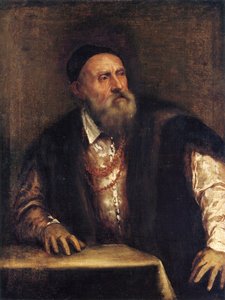
1490 - 1576 , Italie

Explore the luminous mastery of the Venetian Renaissance. Discover how masters like Titian and Giorgione revolutionized art through colorito, light, and atmosphere. An expert guide to the golden age of Italian painting for collectors and enthusiasts.

Explore the profound beauty of oil on canvas. Discover how impasto textures, masterful brushwork, and light create unparalleled depth in fine art reproductions and custom commissions for discerning collectors.


Restez informé(e) des dernières actualités artistiques, des offres exclusives et des idées de décoration.
Parlez-nous de votre projet et nos experts en art vous proposeront 3 suggestions d'œuvres personnalisées.
Laissez-nous sélectionner 3 œuvres rien que pour vous – Gratuit !


 Aperçu en situation
 Envoyer
 Partager
 Détails de l'œuvre

 Télécharger
 Articles similaires
 Radiographie
 Diaporama

 Lire la suite







 L'option verre n'est disponible que pour les dimensions inférieures à 110 cm.


