Vendez vos œuvres
Ma liste de souhaits Panier Cart
Aperçu en situationAperçu en situation Visualiser en RAVisualiser en RA Commander l'impression Commander l'impressionTélécharger l'image haute résolution Télécharger l'image haute résolution EnvoyerEnvoyer
Détails de l'œuvreDétails de l'œuvre Ajouter aux favoris Ajouter aux favoris TéléchargerTélécharger Articles similairesArticles similaires RadiographieRadiographie DiaporamaDiaporama

Dynamic Decomposition

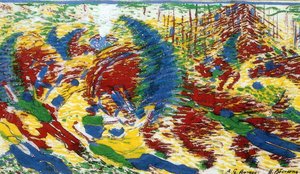
Experience Umberto Boccioni’s groundbreaking Dynamic Decomposition—a Futurist masterpiece capturing explosive movement and fragmented forms. This dynamic depiction of human figures embodies the revolutionary spirit of 1913 Italy, inviting you to explore its captivating energy.

Umberto Boccioni (1882-1916) était un peintre et sculpteur italien futuriste de premier plan. Explorez ses œuvres dynamiques, connues pour déconstruire les formes, représenter le mouvement et célébrer la modernité. Découvrez 'Dynamisme d'un corps humain' et bien plus encore !

Reproduction à l'huile faite à la main

Huile sur toile peinte à la main, avec cadre et dimensions personnalisés, réalisée sur commande par nos artistes. (Commander l'impression Commander l'impressionTélécharger l'image haute résolution Télécharger l'image haute résolution)

P118B $10
P118H $10
P118W $10
P438Z $10
P508JH $12
P508YH $12
P805H $10
P805Z $10
P919BZ $10
P919G $10
P919XJ $10
P959ZH $10
P968JZ $12
W106C $8
W218G $10
W218JH $8
W218Y $10
W307PJ $10
W316G $10
W316PJ $8
W316Y $10
W398PJ $8
W4111J $10
W500HY $15
W500JH $15
W692G $12
W849H $8
W940BG $15
W953PJ $8

Standard
custom
CM
INCH

Choisissez parmi nos formats prédéfinis qui respectent les proportions originales de l’œuvre.

largeur
hauteur

Vous pouvez saisir vos propres dimensions pour l'adapter à un cadre ou à un espace spécifique. Si la taille sélectionnée ne correspond pas aux proportions de l'image d'origine, nous recadrerons l'œuvre ou prolongerons la peinture avec des éléments peints à la main supplémentaires. Une maquette numérique vous sera envoyée pour approbation avant le début de la production.
Veuillez noter que l'aperçu à l'écran ne reflète pas le recadrage ou l'extension réels. Seule la maquette montrera fidèlement la composition finale.
Bien que des tailles personnalisées soient disponibles, nous vous recommandons de sélectionner une dimension dans la liste prédéfinie afin de préserver les proportions d'origine.

Exemples de personnalisation possibles : remplacer un visage par la photo du client ; ajouter un animal de compagnie (par exemple, remplacer un chat par un chien) ; inclure un message caché en arrière-plan ; modifier le paysage ou les éléments de l'arrière-plan.
Après la commande, l’équipe Most-Famous-Paintings.com contactera le client par e-mail pour recueillir ses instructions et lui fournira une maquette d’aperçu

Livraison dans le monde entier () en 3 à 4 semaines au lieu des 5 semaines habituelles. (19 août). Aucun compromis sur la qualité.

why_choose_icon
Livraison express gratuite dans le monde entier
why_choose_icon
Toile de lin de qualité supérieure
why_choose_icon
Assurance transport complète
why_choose_icon
Garantie de remboursement des droits de douane
why_choose_icon
Garantie de fidélité des couleurs
why_choose_icon
Politique de retour de 60 jours (uniquement en cas de défaut)
why_choose_icon
Garantie de remboursement à 100%
why_choose_icon
Offre de tarifs dégressifs

Prix total

$ 272

reproduction

Dynamic Decomposition

Technique de reproduction

Format de la reproduction

-

Prix total

$ 272

Informations clés

  • Notable elements or techniques: Motion capture; Collage
  • Subject or theme: Urban dynamism
  • Artist: Umberto Boccioni
  • Medium: Painting
  • Location: Private Collection
  • Artistic style: Cubist
  • Influences: Marinetti

Description de l'œuvre

Dynamic Decomposition: Capturing the Pulse of Modernity

The photograph captures Umberto Boccioni’s “Dynamic Decomposition,” a seminal work embodying the core tenets of Futurism—a movement that fundamentally challenged artistic traditions and championed the exhilarating pace of industrialization. Painted in 1913, this monochrome image offers an arresting glimpse into Boccioni's revolutionary vision for art and its role in reflecting the transformative forces reshaping Europe at the dawn of the twentieth century.

A Symphony of Motion: Style and Technique

Boccioni’s approach to painting was radically innovative. Rejecting traditional perspective and illusionistic representation, he embraced a technique known as “tubolare,” which aimed to convey movement through fragmented planes and overlapping forms. This method isn't merely about depicting speed; it’s about capturing the *feeling* of dynamism—the disorientation and exhilaration experienced during rapid change. The photograph reveals how Boccioni skillfully utilizes tonal variations within the black and white palette to accentuate these fractured planes, creating a palpable sense of instability and energy that draws the viewer into the scene. Notice particularly how the artist manipulates light and shadow to emphasize contours and delineate the figures’ positions amidst the swirling composition.

The Futurist Manifesto and Its Influence

Futurism arose from a fervent belief in technological progress and an ardent rejection of bourgeois values. Filippo Tommaso Marinetti, considered the movement's prophet, penned the manifesto in 1909, proclaiming “Speed! Light! Noise!” and advocating for artists to embrace machines and urban life as sources of inspiration. "Dynamic Decomposition" directly responds to this ethos, portraying a man caught in the midst of an unfolding event—a collision between individuals and forces representing progress and disruption. The figures aren’t simply depicted; they are actively dissolving into one another, symbolizing the breakdown of established order and the emergence of something new.

Symbolism Within Fragmentation

Despite its apparent simplicity, “Dynamic Decomposition” is laden with symbolic significance. The central figure represents humanity grappling with the overwhelming pressures of modernity—a confrontation between individual consciousness and the relentless march of industrialization. The scattered figures surrounding him embody the disintegration of traditional social structures and the fragmentation of experience itself. The monochrome palette contributes to this mood of unease, stripping away color’s emotive power and focusing instead on form and texture – elements that communicate the raw energy of the depicted moment.

Emotional Resonance: An Image That Speaks Volumes

Ultimately, “Dynamic Decomposition” transcends mere visual representation; it evokes a profound emotional response. The photograph encapsulates the anxiety and excitement inherent in facing an uncertain future—a feeling powerfully conveyed through Boccioni’s masterful use of technique and composition. It's a piece that compels contemplation about the human condition within the context of accelerating change, reminding us of the dynamism and complexity of our time. Reproductions offer a chance to experience this arresting vision firsthand, bringing the spirit of Futurism into any interior space.

Biographie de l'artiste

enfance et formation

umberto boccioni, un peintre et sculpteur italien clé, est né le 19 octobre 1882 à Réggio Calabria, en Italie. Le travail de son père dans la fonction publique a entraîné des déménagements fréquents à travers l'Italie, influençant la vie de Boccioni au début. À 15 ans, il s’est installé à Catane, en Sicile, où il a terminé sa scolarité. Il a ensuite déménagé à Rome pour étudier à l’Accademia di Belle Arti di Roma, à la scuola libera del nudo et sous la direction de Giovanni Mataloni, un artiste de affiches à style liberty.

Le mouvement futuriste

L’approche innovante de Boccioni en matière de forme et de déconstruction de la masse a eu un impact significatif sur le monde de l'art. Il est devenu le principal théoriste du mouvement futuriste, signant le Manifeste dei Pittori Futuristi ("Manifeste des peintres futuristes") en 1910. Ses œuvres sont conservées dans de nombreux musées d'art publics, notamment une rétrospective importante au Metropolitan Museum of Art à New York en 1988.

Œuvres notables et héritage

Liens pertinents depuis Most-Famous-Paintings.com

Wikipédia : umberto boccioni

umberto boccioni, un peintre et sculpteur italien influent. Il a contribué à façonner l'esthétique révolutionnaire du mouvement futuriste en tant que l'un de ses principaux figures. Note : cet article est une traduction de l'italien, mais pour des fins d'analyse, il a été traduit en anglais. La question originale était en italien.
Umberto Boccioni

Umberto Boccioni

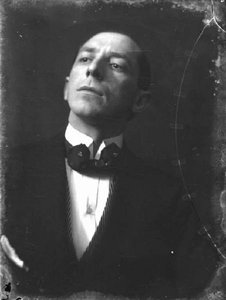
1882 - 1916 , Italie

L'essentiel de l'artiste

  • Artistes Influents:
    • Giovanni Mataloni
    • Giacomo Balla
  • Date De Décès: 1916
  • Date De Naissance: 19 octobre 1882
  • Influences Artistiques:
    • Constructivisme
    • Expressionnisme abstrait
  • Lieu De Naissance: Reggio Calabria, Italie
  • Mouvement Artistique: Futurisme
  • Nationalité: Italienne
  • Nom Complet: Umberto Boccioni
  • Oeuvres Notables:
    • Dynamisme d'un corps humain
    • Formes uniques dans l'espace
    • La Ville qui s'élève
    • Dynamisme d'un cycliste
Explorez des œuvres d'art classées par thèmes, styles et caractéristiques.