x

Impressions giclées ou sur toile de qualité musée, avec une production rapide et des finitions au choix. ( Commander la reproduction peinte à la main Télécharger l'image haute résolution)





























Choisissez parmi nos formats prédéfinis qui respectent les proportions originales de l’œuvre.

Vous pouvez saisir vos propres dimensions pour vous adapter à un cadre ou à un espace spécifique. Si la taille sélectionnée ne correspond pas aux proportions de l'image originale, nous recadrerons l'œuvre ou étendrons l'image avec une bordure en miroir ou une couleur unie. Une maquette numérique vous sera envoyée pour approbation avant le début de la production.
Veuillez noter que l'aperçu à l'écran ne reflète pas le recadrage ou l'extension réelle. Seule la maquette montrera avec précision la composition finale.
Bien que des tailles personnalisées soient disponibles, nous vous recommandons de choisir une dimension dans la liste prédéfinie afin de préserver les proportions originales.
Livraison dans le monde entier () en 2 semaines au lieu des 4/5 semaines habituelles. (19 août)


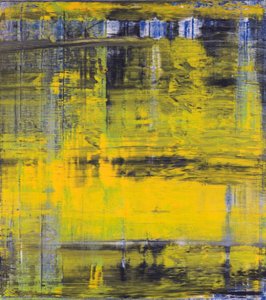
A Tree in Naples
Format de la reproduction
“A Tree in Naples,” created by Willem de Kooning in 1960, stands as a pivotal work within the realm of Abstract Expressionism—a movement that irrevocably altered the trajectory of American art history. More than just a depiction of foliage, this painting embodies De Kooning’s profound engagement with the natural world, translating its intangible qualities into a visual language characterized by bold gestures and vibrant hues.
De Kooning himself articulated his inspiration: “Just coming around roads, some place, and having the sensation of a piece of it, a piece of nature, like a fence, something on the road. And I really get very elated by again looking, by again seeing that the sky is blue, that the grass is green.” This simple statement reveals an artist deeply attuned to sensory experience—a desire to distill the essence of landscape into a form devoid of literal representation.
Rejecting traditional artistic conventions, De Kooning employed a technique rooted in spontaneity and emotional expression. Vast brushstrokes dominate the canvas, conveying movement and dynamism—a deliberate departure from meticulous realism. Thick impasto creates textural richness, highlighting the physicality of the painting process itself. Visible marks and splatters contribute to its expressive character, mirroring the artist’s intuitive response to his subject matter.
Palette knives were utilized extensively in certain areas, further amplifying the texture and depth of the artwork. This method aligns perfectly with the core tenets of Abstract Expressionism—where conveying emotion transcends precise visual accuracy. The color palette is dominated by blues and reds, punctuated by whites and blacks, reflecting De Kooning’s fascination with capturing atmospheric conditions.
"A Tree in Naples" emerged during the formative years of Abstract Expressionism—the first major American modern art movement following World War II. Artists like Jackson Pollock, Lee Krasner, and Franz Kline coalesced into “The New York School,” challenging established artistic norms and prioritizing subjective experience.
De Kooning’s work exemplifies this paradigm shift away from representational art toward a more personal and emotionally resonant aesthetic. The painting's stylistic choices—the expansive brushstrokes, the bold color palette—were directly influenced by fellow artists experimenting with similar approaches during this period.
Despite its lack of recognizable imagery, “A Tree in Naples” resonates deeply with viewers through its evocative emotional power. The interplay of color and line generates a palpable sense of vitality—a reflection of De Kooning’s fascination with capturing the fleeting beauty of nature.
Rather than portraying a specific tree, the painting seeks to convey *feeling*—the sensation of immersion in a landscape bathed in sunlight. It invites contemplation and interpretation, encouraging viewers to engage with the artwork on an emotional level. The simplification of visual vocabulary underscores De Kooning’s commitment to conveying profound ideas through abstract forms.
Ultimately, “A Tree in Naples” serves as a testament to De Kooning's artistic vision—a bold declaration that art can transcend literal depiction and communicate universal emotions.


1904 - 1997 , Pays-Bas

Plongez au cœur de l'Expressionnisme Abstrait avec ! Découvrez les 10 œuvres majeures de Pollock, Rothko et De Kooning. Histoire, techniques & inspiration déco. Explorez la collection complète en ligne.
Plongez au cœur de l'œuvre inégalable de Goya ! Découvrez 25 chefs-d’œuvre emblématiques, des portraits saisissants aux scènes dramatiques. Explorez la vie et l'art du maître espagnol avec Most-Famous-Paintings.com – reproductions d'art de qualité musée et inspirations déco.

APS ofrece reproducciones de bellas artes y encargos personalizados desde 2004. Confían en nosotros corporaciones, hoteles y coleccionistas selectos para obras de arte de calidad museística, servicio discreto y soluciones artísticas completas. ¡Póngase en contacto con nosotros para obtener un presupuesto personalizado!

Explorez l'évolution artistique de Willem de Kooning et son rôle clé dans l'expressionnisme abstrait américain. Analyse approfondie, influences européennes et héritage durable pour les collectionneurs avertis.
Explorez l'univers fascinant de l'Expressionnisme Abstrait avec Most-Famous-Paintings. Analyse approfondie des maîtres (Pollock, Rothko, De Kooning) et conseils d'experts pour collectionner ces œuvres emblématiques. Découvrez une sélection unique.


Restez informé(e) des dernières actualités artistiques, des offres exclusives et des idées de décoration.
Parlez-nous de votre projet et nos experts en art vous proposeront 3 suggestions d'œuvres personnalisées.
Laissez-nous sélectionner 3 œuvres rien que pour vous – Gratuit !


 Aperçu en situation
 Envoyer
 Partager
 Détails de l'œuvre

 Télécharger
 Articles similaires
 Radiographie
 Diaporama

 Lire la suite







 L'option verre n'est disponible que pour les dimensions inférieures à 110 cm.