


x

Impressions giclées ou sur toile de qualité musée, avec une production rapide et des finitions au choix. ( Commander la reproduction peinte à la main Télécharger l'image haute résolution)





























Choisissez parmi nos formats prédéfinis qui respectent les proportions originales de l’œuvre.

Vous pouvez saisir vos propres dimensions pour vous adapter à un cadre ou à un espace spécifique. Si la taille sélectionnée ne correspond pas aux proportions de l'image originale, nous recadrerons l'œuvre ou étendrons l'image avec une bordure en miroir ou une couleur unie. Une maquette numérique vous sera envoyée pour approbation avant le début de la production.
Veuillez noter que l'aperçu à l'écran ne reflète pas le recadrage ou l'extension réelle. Seule la maquette montrera avec précision la composition finale.
Bien que des tailles personnalisées soient disponibles, nous vous recommandons de choisir une dimension dans la liste prédéfinie afin de préserver les proportions originales.
Livraison dans le monde entier () en 2 semaines au lieu des 4/5 semaines habituelles. (21 août)


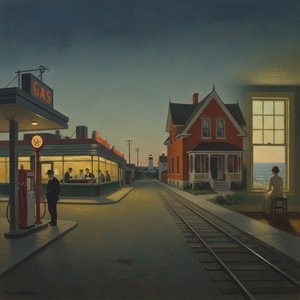
Gossips, (painting)
Format de la reproduction

William Edward Norton (1843-1916) wasn’t merely a painter; he was an interpreter of the ocean’s moods, a translator of its vastness into meticulously rendered canvases. Born in Boston, his lineage intertwined with the very fabric of maritime life – his family were shipbuilders, and from a young age, Norton spent his days immersed in the sights, sounds, and smells of the harbor. This intimate connection to the sea became the bedrock of his artistic vision, shaping his lifelong pursuit of capturing its essence on canvas. Unlike many artists who sought grand, heroic subjects, Norton focused on the quieter, more contemplative aspects of coastal life – the subtle shifts in light upon the water, the weathered faces of fishermen, and the dignified presence of sailing ships against a dramatic sky.
Norton’s early artistic development was profoundly influenced by George Inness, a prominent American painter known for his atmospheric landscapes and tonalist style. Inness's emphasis on capturing mood and atmosphere rather than precise detail resonated deeply with Norton, guiding him to prioritize the emotional impact of his scenes over photographic realism. He studied at the Lowell Institute in Boston, absorbing Inness’s techniques and developing a distinctive approach characterized by soft gradations of color, diffused light, and a remarkable ability to evoke a sense of depth and tranquility. This influence is particularly evident in works like “Gossips,” a captivating depiction of fishermen mending their nets – the figures are rendered with a gentle softness, blending seamlessly into the hazy coastal background.
Norton’s artistic journey was inextricably linked to his seafaring experiences. He spent several summers on the coast of Maine, a period that proved formative for his artistic development. These voyages weren't merely recreational; they provided him with invaluable firsthand knowledge of coastal landscapes, weather patterns, and the rhythms of maritime life. He sailed on family-owned ships, witnessing firsthand the challenges and rewards of seafaring – experiences he later translated into powerful visual narratives. This direct engagement with the sea instilled in him a deep respect for its power and beauty, as well as an understanding of the lives intertwined with it.
Beyond his personal voyages, Norton’s artistic interests extended to European travel. He spent several years studying in Paris, immersing himself in the vibrant art scene and absorbing the techniques of contemporary masters. This exposure broadened his artistic horizons, introducing him to new approaches to color, composition, and subject matter. His time in Europe allowed him to refine his style and develop a more sophisticated understanding of artistic principles.
William Edward Norton’s legacy extends beyond his individual paintings; he represents a pivotal figure in American marine art, bridging the gap between tonalism and a more direct engagement with the subject matter of coastal scenes. His work continues to resonate with viewers today, offering a poignant reminder of the enduring beauty and power of the sea. His influence can be seen in subsequent generations of seascape artists who sought to capture the emotional essence of coastal landscapes. Norton’s paintings are now housed in prominent collections such as the Museum of Fine Arts, Boston, and the Smithsonian American Art Museum, ensuring that his artistic vision will continue to inspire and captivate audiences for years to come.

1843 - 1916
Plongez dans l'univers poignant d'Edward Hopper avec les 25 œuvres incontournables du maître américain. Découvrez la lumière, l'isolation et le réalisme unique de ses tableaux iconiques. Reproductions de qualité muséale sur Most-Famous-Paintings.com. Explorez la collection en ligne.

Explore the rich history of coastal scenes in painting! Discover Impressionist masterpieces, American realism & contemporary visions. Learn about renowned artists and find your perfect seascape at Most-Famous-Paintings.

Explore the rich history of marine painting with Most-Famous-Paintings. Discover Dutch Masters, Romantic seascapes & renowned artists like Wyllie and Harris. Expert guidance for collectors & custom reproductions.

Explorez le rôle stratégique des reproductions d'art dans les galeries d'élite. Expertise, qualité artisanale et conseils personnalisés pour enrichir votre collection ou sublimer votre intérieur. Découvrez l'art authentifié.

Découvrez l'art de la reproduction d'huiles façonnées pour galeries et hôtels. Expertise technique, fidélité chromatique & conservation du patrimoine. Trouvez l'œuvre parfaite !


Restez informé(e) des dernières actualités artistiques, des offres exclusives et des idées de décoration.
Parlez-nous de votre projet et nos experts en art vous proposeront 3 suggestions d'œuvres personnalisées.
Laissez-nous sélectionner 3 œuvres rien que pour vous – Gratuit !


 Aperçu en situation
 Envoyer
 Partager
 Détails de l'œuvre

 Télécharger
 Articles similaires
 Radiographie
 Diaporama
 Lire la suite







 L'option verre n'est disponible que pour les dimensions inférieures à 110 cm.


