


x
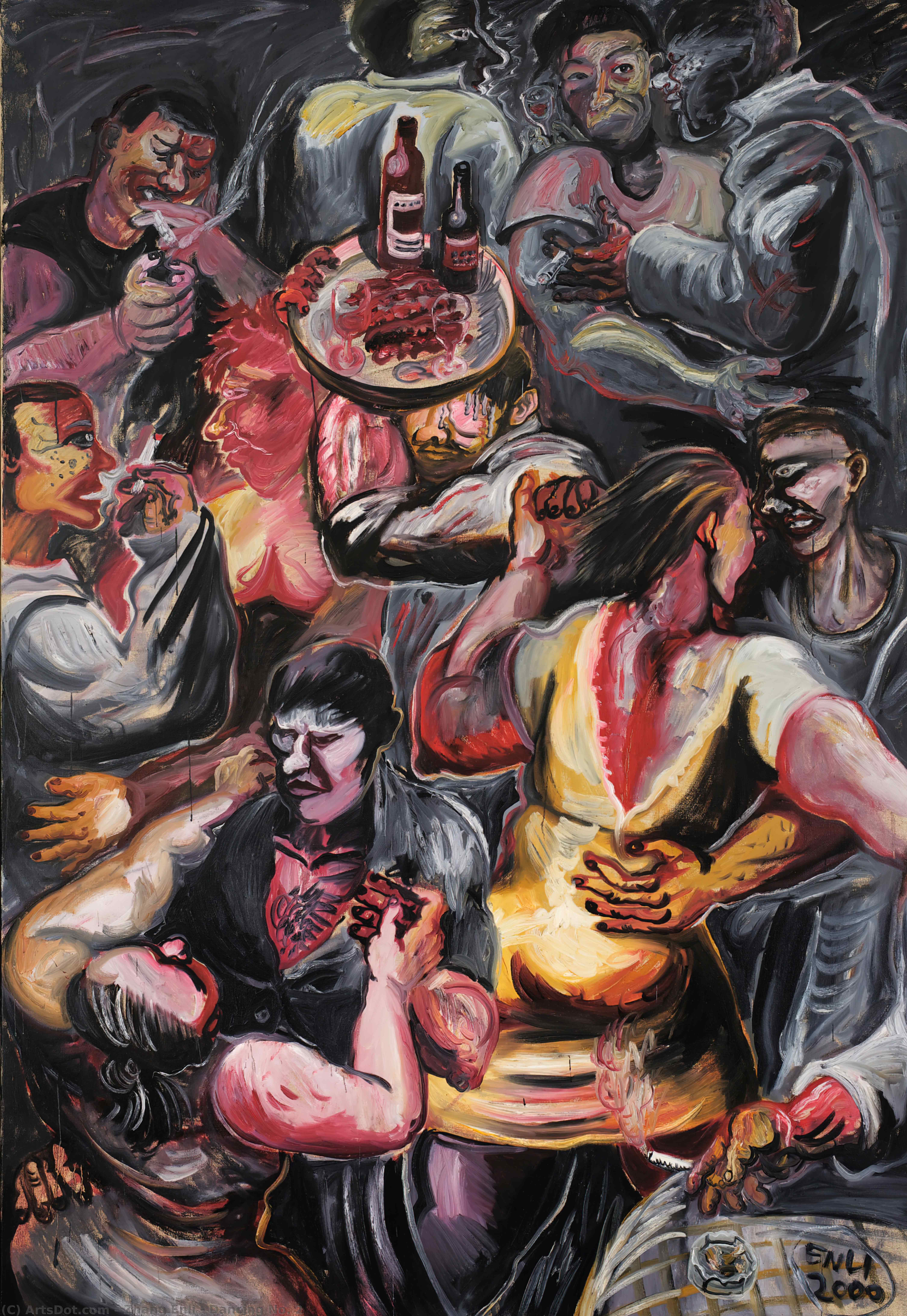
 215.0 x 147.0 cm
Acquérez une image numérique haute résolution et optimisée, d'une qualité bien supérieure à l'aperçu en ligne.
Chaque fichier est méticuleusement préparé par nos spécialistes internes à l'aide d'outils avancés et d'une retouche manuelle experte. Nous garantissons que chaque image possède une clarté exceptionnelle, une précision des couleurs irréprochable et un niveau de détail fin.
Le fichier final est livré par e-mail sous 72 heures, optimisé pour une utilisation immédiate dans des contextes professionnels, éditoriaux et d'impression. Il offre la même qualité de confiance que celle utilisée par les plus grands studios de création, éditeurs et galeries.
Téléchargez un fichier haute résolution pour votre usage personnel, l'impression et vos projets créatifs. ( Commander l'impression Commander la reproduction peinte à la main)
En choisissant Most-Famous-Paintings.com, vous n'obtenez pas seulement une simple image : vous recevez une œuvre numérique sublimée avec professionnalisme, conçue avec précision et accompagnée d'une garantie de satisfaction. Voici tout ce qui accompagne automatiquement votre commande :

Votre fichier d'image numérique haute résolution vous sera envoyé par e-mail sous 72 heures après votre commande — prêt à un usage immédiat.

Votre œuvre d'art bénéficie d'une optimisation professionnelle grâce à des outils d'IA avancés et une retouche manuelle, garantissant un niveau maximal de détail, de clarté et de fidélité chromatique.

Vous avez accidentellement supprimé ou perdu votre fichier ? Pas d'inquiétude — nous vous le renverrons gratuitement, quand vous le souhaitez.

Profitez de votre œuvre d'art instantanément sans frais de douane ni de livraison — les téléchargements numériques sont toujours exonérés de taxes.

Nous garantissons que votre image numérique reproduit les couleurs de l'original aussi fidèlement que possible grâce à des outils professionnels et une gestion rigoureuse des couleurs.

Si vous n'êtes pas satisfait de votre image numérique, nous la retoucherons ou vous rembourserons 100% sous 60 jours — sans poser de questions.

Pas satisfait ? Obtenez un remboursement intégral dans les 60 jours suivant la réception de votre fichier numérique — sans aucune question posée.

Achetez 3 images, économisez 10% - Achetez 5, économisez 15% - Achetez 10+, économisez 20%. Idéal pour les projets créatifs, les galeries et les agences.

Born in Jilin Province, China, in 1965, Zhang Enli’s artistic journey is a testament to the power of quiet observation and a deliberate rejection of grand narratives. Initially trained as an artist at the Wuxi Technical University’s Arts & Design Institute, he didn't immediately embrace the explosive trends of contemporary Chinese art that dominated the early 1980s. Instead, Zhang embarked on a path of meticulous study, absorbing the subtle rhythms and overlooked details of everyday life in his native region – a deliberate divergence from the politically charged and overtly expressive works prevalent at the time. This initial period laid the groundwork for his distinctive approach: a focused examination of the mundane, transforming the familiar into something profoundly resonant.
Zhang’s early career was marked by a gradual shift away from overt political commentary and towards a more introspective style. He spent several years working as an art teacher at Donghua University, honing his skills and developing a keen eye for composition and color. It wasn't until the late 1990s that he began to establish himself as a significant voice in the Chinese art scene, largely through a series of carefully constructed paintings depicting ordinary objects – cardboard boxes, ashtrays, tin chests, lavatories—each rendered with an almost clinical precision. These seemingly unremarkable subjects became portals into exploring themes of time, memory, and the subtle shifts within domestic spaces. This deliberate choice to focus on the overlooked was not simply aesthetic; it represented a conscious rejection of the prevailing artistic trends and a commitment to finding beauty in the commonplace.
Perhaps Zhang Enli’s most recognizable body of work is his “Container” series, which began gaining prominence in the early 2000s. Initially featuring simple cardboard boxes, these paintings evolved to encompass a wider range of utilitarian objects – ashtrays, tin chests, lavatories—each meticulously rendered with an almost photographic realism. However, Zhang doesn’t simply depict these objects; he imbues them with a sense of temporal weight and spatial depth. The repetition of the same forms, viewed from slightly different angles, creates a subtle but persistent rhythm, suggesting the passage of time and the accumulation of memories within each container. This series is not about the objects themselves, but rather about the spaces they occupy and the experiences they hold.
The influence of Zen Buddhism is often cited as a key factor in shaping Zhang’s artistic vision. The concept of “wu wei” – effortless action—resonates strongly within his work. He avoids imposing any particular meaning or narrative onto his subjects, allowing them to speak for themselves. Instead, he focuses on capturing the essence of each object through careful observation and precise execution. This approach mirrors the Buddhist emphasis on direct experience and intuitive understanding.
As Zhang’s career progressed, his focus shifted towards the urban landscape of Shanghai, a city undergoing rapid transformation. He began to depict the functional structures that populate its streets – public toilets, tiled outdoor water features, and other seemingly insignificant elements—transforming them into subjects of quiet contemplation. These paintings are not celebrations of modernity but rather subtle meditations on the rhythms of daily life in a rapidly changing metropolis. The repetitive patterns, muted colors, and slightly off-kilter perspectives create a sense of unease and alienation, reflecting the experience of navigating an increasingly complex urban environment.
His work during this period demonstrates a remarkable sensitivity to light and shadow, capturing the subtle nuances of the Shanghai skyline. He often works in series, exploring different facets of a single subject or theme—a technique that allows him to delve deeper into its complexities and reveal hidden layers of meaning. The “Space Painting” series, developed in recent years, further exemplifies this approach, utilizing immersive installations that blur the boundaries between painting and sculpture.
Zhang Enli’s work gained international recognition through exhibitions at prestigious institutions such as Villa Manin Centro d'Arte Contemporanea (Udine), the Irish Museum of Modern Art (Dublin), and the Power Station of Art (Shanghai). His inclusion in art fairs like Art Basel underscored his growing prominence within the contemporary art world. Notably, his 2006 appearance at Art Basel China marked a significant turning point, establishing him as one of the most successful Chinese artists participating in the event.
Zhang Enli’s legacy lies not in grand gestures or provocative statements but in his quiet dedication to observation and his ability to transform the mundane into something profoundly meaningful. His work invites viewers to slow down, to look closely at their surroundings, and to appreciate the beauty that can be found in the most unexpected places. He represents a subtle yet powerful counterpoint to the prevailing trends of contemporary art, offering a refreshing perspective on the complexities of modern life.


Restez informé(e) des dernières actualités artistiques, des offres exclusives et des idées de décoration.
Parlez-nous de votre projet et nos experts en art vous proposeront 3 suggestions d'œuvres personnalisées.
Laissez-nous sélectionner 3 œuvres rien que pour vous – Gratuit !


 Aperçu en situation
 Envoyer
 Partager
 Détails de l'œuvre

 Télécharger
 Articles similaires
 Radiographie
 Diaporama
 Lire la suite


