x

आपके आकार और फ्रेम के अनुसार कैनवास पर हाथ से बनी ऑयल पेंटिंग, हमारे कलाकारों द्वारा विशेष रूप से ऑर्डर पर तैयार। ( प्रिंट खरीदें छवि खरीदें)





























कलाकृति के मूल अनुपात से मेल खाने वाले हमारे पूर्व निर्धारित आकारों में से चुनें।

आप किसी विशिष्ट फ्रेम या स्थान के अनुसार अपने स्वयं के आयाम (dimensions) दर्ज कर सकते हैं। यदि आपके द्वारा चुना गया आकार मूल छवि के अनुपात से मेल नहीं खाता है, तो हम कलाकृति को क्रॉप करेंगे या पेंटिंग में अतिरिक्त हाथ से चित्रित तत्व जोड़कर उसका विस्तार करेंगे। उत्पादन शुरू होने से पहले आपकी स्वीकृति के लिए एक डिजिटल मॉकअप भेजा जाएगा।
कृपया ध्यान दें कि स्क्रीन पर दिखने वाला पूर्वावलोकन वास्तविक क्रॉपिंग या विस्तार को नहीं दर्शाता है। केवल मॉकअप ही अंतिम रचना को सटीक रूप से दिखाएगा।
यद्यपि कस्टम आकार उपलब्ध हैं, फिर भी हम मूल अनुपात बनाए रखने के लिए पूर्व-निर्धारित सूची से आयाम चुनने की सलाह देते हैं।
विश्वव्यापी वितरण () मानक 5 सप्ताह के बजाय मात्र 3/4 सप्ताह में। (16 अगस्त)। गुणवत्ता से कोई समझौता नहीं।


The Rower
प्रतिकृति का आकार
James Ensor's "The Rower," painted circa 1883, is not merely a depiction of a man at work; it’s a carefully constructed tableau brimming with psychological depth and unsettling ambiguity. This intimate portrait, rendered in the artist’s signature dark palette and characterized by his distinctive use of masks and symbolic imagery, invites viewers to contemplate themes of isolation, struggle, and the inherent tension between outward appearance and inner turmoil – hallmarks of Ensor's enduring artistic vision.
The scene unfolds within a relatively small canvas, dominated by the imposing presence of the boat itself. Its substantial size immediately establishes a sense of scale and effort, suggesting a demanding undertaking. The rower, positioned centrally, is an embodiment of focused determination. His posture, his grip on the oar, and the slight furrow in his brow all convey a palpable sense of exertion and unwavering resolve. Yet, this apparent strength is subtly undermined by the surrounding atmosphere – a muted, almost oppressive darkness that seems to press in from all sides.
Ensor’s masterful manipulation of light and shadow is crucial to understanding the painting's emotional resonance. The rower exists within a realm of subdued tones, punctuated by sharp contrasts – the bright white of his hat, the dark wood of the oars, and the murky depths of the water. This interplay creates a dramatic effect, drawing attention to key elements while simultaneously obscuring others, fostering a sense of mystery and unease. Notably, Ensor frequently employed masks in his work, often representing hidden identities or suppressed emotions. While not overtly visible in “The Rower,” the suggestion of masked figures lurking in the background – hinted at by the indistinct shapes on either side – reinforces this thematic concern.
Further adding to the painting’s complexity is Ensor's characteristic use of symbolism. The rower’s solitary journey across the water can be interpreted as a metaphor for life’s challenges, a relentless struggle against unseen forces. The boat itself might represent the individual’s vessel, navigating an uncertain and potentially perilous course. The lack of a clear destination or horizon line contributes to this feeling of disorientation and existential questioning – a common thread in Ensor's oeuvre.
"The Rower" stands as a pivotal work in the development of Expressionist painting, predating many of the movement’s key figures. Ensor’s willingness to distort reality and prioritize emotional impact over strict representation was revolutionary for his time. He rejected the conventions of academic art, embracing instead a raw, subjective approach that sought to capture the inner landscape of the human experience. His use of bold colors, unsettling imagery, and psychologically charged compositions paved the way for future generations of artists who challenged traditional notions of beauty and truth.
Most-Famous-Paintings offers meticulously crafted hand-painted reproductions of James Ensor’s “The Rower,” allowing art enthusiasts to experience the power and complexity of this iconic painting firsthand. Each reproduction is created by skilled artisans using archival-quality materials, ensuring that the colors and details faithfully capture the original's nuanced atmosphere. Whether adorning a study, a gallery wall, or simply serving as a source of contemplation, a Most-Famous-Paintings reproduction of “The Rower” provides a tangible connection to one of the 19th century’s most innovative and unsettling artistic voices.

James Sidney Edouard, Baron Ensor (Ostend, 13 April 1860 – November 19, 1949) был бельгийским художником и гравёром, оказавшим значительное влияние на экспрессионизм и сюрреализм. Он был членом художественной группы Les XX.
James Ensor’s father, James Frederic Ensor, родился в Брюсселе у английских родителей и был образованным человеком, изучавшим инженерию в Англии и Германии. Его мать, Мария Катерина Хаэгеман, была бельгийкой. Сам Энсор не проявлял интереса к академическому изучению и оставил школу в возрасте пятнадцати лет, чтобы начать своё художественное обучение с двух местных художников. Он посещал Академию Королевскую Бельгии в Брюсселе вместе со своим одноклассником Фернандом Хнопфом.
Энсор быстро отказался от традиционного подхода к живописи и начал разрабатывать революционный стиль, который отражал его собственное видение мира. Он особенно был очарован карнавальской культурой организованной вокруг праздника Мартра каждый год в Бельгии, что несомненно было вызвано тем, что семья Энсора в Остенде была главным поставщиком карнавальной атрибутики. Формальный метод живописи Энсора отличался от традиционных методов и был предназначен для выражения его личной позиции. Он отвергал французский импрессионизм и символизм и использовал экспрессивные средства света, линии и цвета.
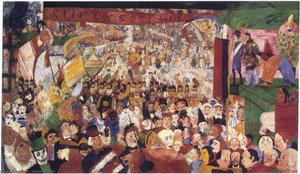
Энсор создал серию работ, которые продолжают поражать и восхищать публику сегодня. Картина «Христос входит в Брюссель» (1888–89) является одним из самых известных произведений Энсора и представляет собой сатиру религиозной неискренности и социальной безразличия. Этот тревожный образ Христа, входящего в город, наполненный гротескными масками и фигурами, является мощным комментарием о разрыве между духовными идеалами и человеческим поведением. Картина «Скелеты сражаются за повешенного человека» (1891) исследует темы смерти, разложения и абсурда жизни.
Несмотря на первоначальное сопротивление Энсора его художественное наследие остается свидетельством силы искусства для столкновения с неудобными истинами и исследования глубины человеческого состояния. Он является одним из ключевых фигур в переходном периоде от XIX века к началу XX века — настоящим пионером современного искусства.

1860 - 1949 , बेल्जियम

Explore the profound history and technical mastery of woodcut relief printing. From ancient origins to German Expressionism, discover how artists use the subtractive process to create iconic works. A definitive guide for art students, collectors, and historians.

Discover the technical mastery behind Most-Famous-Paintings.com's premium Giclée canvas prints. Our guide for elite collectors explores archival pigment inks, museum-grade substrates, and the science of high-fidelity reproduction to ensure lasting beauty and historical accuracy.


नवीनतम कला समाचार, विशेष ऑफ़र और सजावट के विचारों से अपडेट रहें।
हमें अपने प्रोजेक्ट के बारे में बताएं और हमारे कला विशेषज्ञ आपको 3 व्यक्तिगत कला सुझाव प्रदान करेंगे।
हम आपके लिए विशेष रूप से 3 विकल्प चुनने में आपकी मदद कर सकते हैं - बिल्कुल मुफ्त!


 पूर्वावलोकन देखें
 साझा करें
 साझा करें
 विस्तृत विवरण

 डाउनलोड करें
 समान कलाकृतियाँ
 एक्स-रे
 स्लाइड शो देखें
 पूरा देखें







 ग्लास का विकल्प केवल 110 सेमी से कम आकार में ही उपलब्ध है।