x

Giclée tisak muzejske kvalitete ili otisak na platnu uz brzu proizvodnju i fleksibilne opcije završne obrade. ( Kupi ručno naslikanu sliku Kupi digitalnu sliku)
Odaberite jednu od naših unaprijed definiranih veličina koje odgovaraju izvornim proporcijama umjetničkog djela.

Možete unijeti vlastite dimenzije kako biste umjetničko djelo prilagodili specifičnom okviru ili prostoru. Ako odabrana veličina ne odgovara proporcijama izvornog rada, izrezat ćemo dio slike ili je proširiti pomoću ogledalnog efekta ili jednobojne rubne površine. Digitalni prikaz (mockup) bit će vam poslan na odobrenje prije početka proizvodnje.
Imajte na umu da pregled na zaslonu ne odražava stvarno izrezivanje ili proširivanje. Samo će mockup točno prikazati konačnu kompoziciju.
Iako su dostupne prilagođene veličine, preporučujemo odabir dimenzije iz unaprijed definirane liste kako biste očuvali izvorne proporcije.
Dostava širom svijeta () u roku od 2 tjedna umjesto standardnih 4/5 tjedana. (18 Kolovoz)


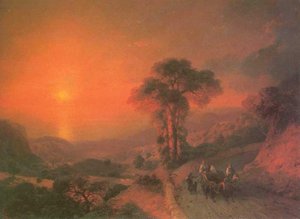
Spring evening
Veličina reprodukcije

Born in the cultural heart of Dresden in 1803, Adrian Ludwig Richter emerged as a defining voice of the German Romantic movement. His journey into the world of fine art was one of inherited passion and rigorous discipline, shaped profoundly by his father, Carl August Richter, a master engraver. This early immersion in the meticulous world of printmaking provided Adrian with a foundational eye for detail and an unparalleled command over tonal subtlety. As he transitioned from the precision of etching to the expansive possibilities of oil on canvas, Richter developed a style that bridged the gap between the technical accuracy of the Biedermeier period and the emotive, sweeping grandeur of Romanticism.
Richter’s artistic evolution was deeply intertwined with the landscapes of his homeland. His training at the Dresden Art Academy allowed him to absorb the influences of contemporaries such as Johann Christian Dahl, fostering a deep reverence for the natural world. He did not merely seek to document scenery; he sought to capture its spirit. Whether rendering the rugged, mist-shrouded peaks of the Riesengebirge mountains or the tranquil, sun-dappled valleys of Saxony, his work possesses a luminous quality that breathes life into the canvas. His brushwork often employed a delicate balance of realism and atmosphere, creating scenes that felt both tangibly present and dreamlike in their perfection.
The brilliance of Richter’s oeuvre lies in his ability to weave narrative elements into the very fabric of the landscape. His paintings often serve as windows into a serene, idealized era, where human presence is harmoniously integrated with nature. This is evident in works such as "Crossing the Elbe at Aussig," where the drama of a journey is captured through the evocative interplay of light and water, or in his more tranquil compositions like "The Well in the Wood at Ariccia." In these pieces, the viewer is invited to linger within a moment of profound stillness, experiencing the atmospheric detail and the quiet majesty of the rural landscape.
Beyond the sweeping vistas, Richter was also a master of the intimate and the pastoral. His ability to depict seasonal shifts—as seen in the delicate, balanced beauty of "Spring near Ariccia"—showcases his technical prowess in using muted tones and soft impasto to evoke the warmth of new growth. This talent for capturing the ephemeral qualities of light and season made him a celebrated illustrator of fairy tales and folk legends, as he could imbue even the smallest woodland scene with a sense of enchantment and historical weight.
The enduring significance of Adrian Ludwig Richter resides in his role as a chronicler of the German spirit during a transformative century. His work stands as a testament to the Biedermeier era's appreciation for domesticity, nature, and order, while simultaneously embracing the Romantic fascination with the sublime. Through his prolific output of drawings, etchings, and paintings, he helped define a visual language for the Saxon landscape that continues to resonate with collectors and art historians today.
His achievements can be summarized through several key artistic contributions:

1803 - 1884 , Germany


Budite u tijeku s najnovijim umjetničkim vijestima, ekskluzivnim ponudama i idejama za dekoraciju.
Recite nam nešto o svom projektu, a naši će stručnjaci za umjetnost pripremiti 3 personalizirana prijedloga umjetnina.
Dopustite nam da odaberemo 3 opcije samo za Vas – Besplatno!


 Pregledaj u stvarnoj veličini
 Pošalji
 Podijeli
 Detalji o umjetničkom djelu

 Preuzmi
 Slični predmeti
 Rentgenska snimka
 Automatska prezentacija
 Prikaži više




































 Opcija stakla dostupna je samo za dimenzije manje od 110 cm