x

Giclée tisak muzejske kvalitete ili otisak na platnu uz brzu proizvodnju i fleksibilne opcije završne obrade. ( Kupi ručno naslikanu sliku Kupi digitalnu sliku)





























Odaberite jednu od naših unaprijed definiranih veličina koje odgovaraju izvornim proporcijama umjetničkog djela.

Možete unijeti vlastite dimenzije kako biste umjetničko djelo prilagodili specifičnom okviru ili prostoru. Ako odabrana veličina ne odgovara proporcijama izvornog rada, izrezat ćemo dio slike ili je proširiti pomoću ogledalnog efekta ili jednobojne rubne površine. Digitalni prikaz (mockup) bit će vam poslan na odobrenje prije početka proizvodnje.
Imajte na umu da pregled na zaslonu ne odražava stvarno izrezivanje ili proširivanje. Samo će mockup točno prikazati konačnu kompoziciju.
Iako su dostupne prilagođene veličine, preporučujemo odabir dimenzije iz unaprijed definirane liste kako biste očuvali izvorne proporcije.
Dostava širom svijeta () u roku od 2 tjedna umjesto standardnih 4/5 tjedana. (20 Kolovoz)


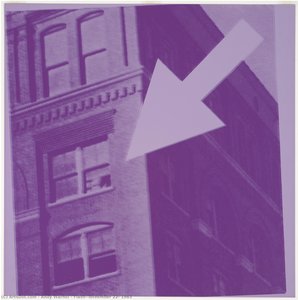
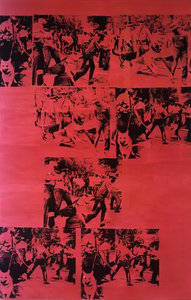
Flash--November 22, 1963
Veličina reprodukcije
Andy Warhol’s Flash—November 22, 1963 is not a painting in the traditional sense; it's a visceral echo of a nation’s collective grief. Created in 1968, five years after the assassination of President John F. Kennedy, this work isn’t about the event itself, but rather about *how* we consumed that event – through the relentless, fragmented lens of mass media. The image, rendered with Warhol's signature pointillist technique, is a close-up portrait, almost dissolving into a field of black and grey dots. This deliberate abstraction isn’t coldness; it’s an attempt to capture the overwhelming sensory overload that characterized the news coverage, the feeling of being bombarded with images stripped of context and emotional depth.
Warhol was deeply fascinated – and profoundly disturbed – by the way television transformed tragedy into spectacle. He famously recounted hearing the news of Kennedy’s assassination while painting, noting his detachment wasn't indifference but a recognition of how media “programmed” public emotion. The Flash series, comprised of eleven screenprints, directly confronts this phenomenon. Each print draws from campaign posters, newspaper photographs, and wire service reports – the raw materials of instant historical documentation. By isolating and repeating these images, Warhol forces us to confront not just the tragedy itself, but our own complicity in its mediation. The pointillist style further emphasizes this fragmentation; individual dots build up the image, mirroring how news snippets coalesce into a larger, often distorted, narrative.
Born from the burgeoning Pop Art movement, Flash—November 22, 1963 embodies Warhol’s exploration of celebrity, consumerism, and the blurring lines between high art and popular culture. However, this work transcends simple commentary on those themes. It's a somber meditation on mortality, loss, and the power of images to shape our understanding of reality. The monochromatic palette—a sea of greys and blacks—evokes mourning and the starkness of newsprint. While seemingly devoid of explicit emotion, the image’s very texture – that dense field of dots – creates a subtle sense of unease, a visual representation of national trauma lingering beneath the surface. Warhol wasn't interested in creating a heroic portrait or a sentimental memorial; he was documenting the *experience* of grief in a media-saturated age.
Andy Warhol, born Andrew Warhola Jr. in 1928 to Rusyn immigrant parents, rose from humble beginnings as a commercial illustrator to become one of the most influential artists of the 20th century. His work continues to resonate today because it anticipates our current media landscape – an age of instant information, viral images, and manufactured emotions. Flash—November 22, 1963 is not merely a historical artifact; it’s a prescient warning about the dangers of passive consumption and the importance of critical engagement with the images that surround us. A reproduction of this piece serves as a powerful statement in any collection, prompting reflection on our relationship with history, media, and the enduring human experience of loss.
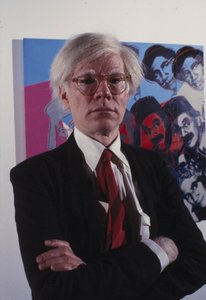
1928 - 1987 , Sjedinjene Američke Države

Explore the provocative world of Aggressive Pop Art. Discover how confrontational imagery, bold saturated hues, and mass media deconstruction redefined modern aesthetics through an expert art-historical lens.


Budite u tijeku s najnovijim umjetničkim vijestima, ekskluzivnim ponudama i idejama za dekoraciju.
Recite nam nešto o svom projektu, a naši će stručnjaci za umjetnost pripremiti 3 personalizirana prijedloga umjetnina.
Dopustite nam da odaberemo 3 opcije samo za Vas – Besplatno!


 Pregledaj u stvarnoj veličini
 Pošalji
 Podijeli
 Detalji o umjetničkom djelu

 Preuzmi
 Slični predmeti
 Rentgenska snimka
 Automatska prezentacija

 Prikaži više







 Opcija stakla dostupna je samo za dimenzije manje od 110 cm