


x

Ručno oslikano uljanim bojama na platnu u dimenzijama i okviru po vašem izboru, izrađeno po narudžbi od strane naših umjetnika. ( Kupi print Kupi digitalnu sliku)





























Odaberite jednu od naših unaprijed definiranih veličina koje odgovaraju izvornim proporcijama umjetničkog djela.

Možete unijeti vlastite dimenzije kako bi odgovarale određenom okviru ili prostoru. Ako odabrana veličina ne odgovara proporcijama izvorne slike, izrezat ćemo umjetničko djelo ili proširiti sliku dodatnim ručno oslikanim elementima. Digitalni nacrt bit će vam poslan na odobrenje prije početka proizvodnje.
Imajte na umu da pregled na ekranu ne prikazuje stvarno izrezivanje ili proširivanje. Samo će nacrt točno prikazati konačni sastav.
Iako su dostupne prilagođene veličine, preporučujemo odabir dimenzije s preddefiniranog popisa kako bismo očuvali izvorne proporcije.
Isporuka širom svijeta () u roku od 3-4 tjedna umjesto standardnih 5 tjedana. (18 Kolovoz). Bez kompromisa u kvaliteti.


Four (arithmetic) actions
Veličina reprodukcije
El Lissitzky's "Four (Arithmetic) Actions," painted in 1928, is more than just a depiction of four stacked figures; it’s a potent distillation of the core tenets of Russian Constructivism. This striking black-and-white image, born from Lissitzky’s revolutionary vision, embodies his belief that art could be a tool for social and intellectual transformation – a concept deeply rooted in the burgeoning modernist movement of the time. The painting's stark simplicity belies its complex engagement with mathematical principles, presenting them not as abstract concepts but as tangible forms demanding rigorous investigation.
Created during a period of intense artistic experimentation following the Russian Revolution, “Four (Arithmetic) Actions)” exemplifies Constructivism’s rejection of traditional representational art. Lissitzky, along with other key figures like Vladimir Tatlin, sought to build a new visual language based on geometric abstraction and industrial forms. The painting's composition – the deliberate layering of the red figures – is a direct manifestation of this approach. Each figure isn't merely a representation of an action; it’s a carefully constructed element contributing to a larger, dynamic whole. The use of bold, primary colors—a conscious choice reflecting the era’s embrace of industrial materials and machine aesthetics—further emphasizes this geometric sensibility.
The numerical markings associated with each figure are crucial to understanding the artwork's deeper meaning. These aren’t arbitrary additions; they represent fundamental mathematical operations – addition, subtraction, multiplication, and division. Lissitzky was interested in exploring how visual forms could embody abstract concepts, transforming mathematics from a theoretical discipline into an accessible and engaging aesthetic experience. The larger figure, visually dominant, can be interpreted as representing the culmination of these actions—the result or outcome of the mathematical process. This layering creates a sense of progression and hierarchy, mirroring the sequential nature of calculation itself.
"Four (Arithmetic) Actions)" was created in 1928, a pivotal year for Lissitzky’s career. It reflects his growing interest in exploring the relationship between art, architecture, and technology – themes that would become central to his later work. The painting's influence extends far beyond its immediate historical context. Lissitzky’s pioneering use of geometric abstraction paved the way for subsequent developments in modern art, including Suprematism and De Stijl. Today, “Four (Arithmetic) Actions)” remains a powerful example of Constructivism’s ambition – a testament to the idea that art can be both intellectually stimulating and profoundly beautiful.


1890 - 1941 , Rusija

Explore the opulent world of Erté and Art Deco. Discover how Romain de Tirtoff defined an era through geometric elegance, fashion illustration, and theatrical design. A deep dive into the history of 20th-century glamour for art lovers and collectors.

Explore the sophisticated world of Art Deco. Discover the history, geometric precision, and enduring glamour of this iconic 20th-century movement through an expert art-historical lens.

Explore the radical world of Constructivism. Discover how pioneers like Tatlin and Rodchenko used geometric abstraction to redefine modern art through industrial form and social purpose. A deep dive into the Russian avant-garde for students and collectors alike.
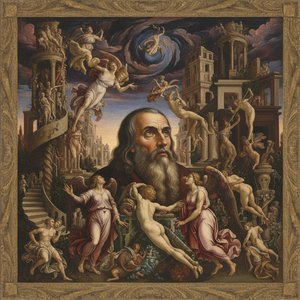
Explore the dramatic transition from High Renaissance harmony to Mannerist tension. Discover how masters like El Greco redefined art through distortion and spiritual intensity. An expert guide for art enthusiasts seeking deep historical context and museum-quality inspiration.


Budite u tijeku s najnovijim umjetničkim vijestima, ekskluzivnim ponudama i idejama za dekoraciju.
Recite nam nešto o svom projektu, a naši će stručnjaci za umjetnost pripremiti 3 personalizirana prijedloga umjetnina.
Dopustite nam da odaberemo 3 opcije samo za Vas – Besplatno!


 Pregledaj u stvarnoj veličini
 Pošalji
 Podijeli
 Detalji o umjetničkom djelu

 Preuzmi
 Slični predmeti
 Rentgenska snimka
 Automatska prezentacija

 Prikaži više







 Opcija stakla dostupna je samo za dimenzije manje od 110 cm


