x

 Ulje na paneluMannerism
 1566Renesansa
 97.0 x 71.0 cm
Giclée tisak muzejske kvalitete ili otisak na platnu uz brzu proizvodnju i fleksibilne opcije završne obrade. ( Kupi ručno naslikanu sliku Kupi digitalnu sliku)





























Odaberite jednu od naših unaprijed definiranih veličina koje odgovaraju izvornim proporcijama umjetničkog djela.

Možete unijeti vlastite dimenzije kako biste umjetničko djelo prilagodili specifičnom okviru ili prostoru. Ako odabrana veličina ne odgovara proporcijama izvornog rada, izrezat ćemo dio slike ili je proširiti pomoću ogledalnog efekta ili jednobojne rubne površine. Digitalni prikaz (mockup) bit će vam poslan na odobrenje prije početka proizvodnje.
Imajte na umu da pregled na zaslonu ne odražava stvarno izrezivanje ili proširivanje. Samo će mockup točno prikazati konačnu kompoziciju.
Iako su dostupne prilagođene veličine, preporučujemo odabir dimenzije iz unaprijed definirane liste kako biste očuvali izvorne proporcije.
Dostava širom svijeta () u roku od 2 tjedna umjesto standardnih 4/5 tjedana. (15 Kolovoz)


Bibliotekar
Veličina reprodukcije
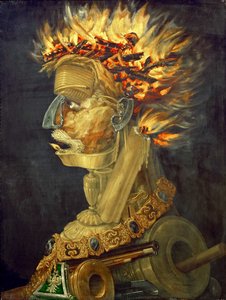
Within the hallowed halls of Skokloster Castle in Sweden resides a work that defies easy categorization, a visual riddle crafted by the ingenious hand of Giuseppe Arcimboldo. “The Librarian,” painted around 1566, isn't merely a portrait; it’s an elaborate construction, a fantastical being born from the very essence of knowledge – books. This masterpiece, believed to depict Wolfgang Lazius, a historian in service to Holy Roman Emperors, transcends the conventional boundaries of Renaissance portraiture, offering instead a glimpse into the artist’s uniquely imaginative world and a profound meditation on intellect itself.
Arcimboldo's technique is nothing short of astonishing. He eschews traditional brushstrokes in favor of an intricate assemblage – every element, from the eyes to the beard, meticulously composed of books and pages. The vertical orientation emphasizes the figure’s imposing presence against a dark, curtain-like backdrop, drawing the viewer’s eye into the heart of this literary construct. A palette dominated by earthy tones—the aged browns, beiges, and grays characteristic of antique volumes—is punctuated by subtle hints of red and gold on some spines, adding richness and visual interest. The arrangement isn't haphazard; it’s a carefully orchestrated dance of shapes and textures, creating the illusion of human form with remarkable precision. It is this deliberate layering and precise placement that elevates "The Librarian" beyond mere novelty into a work of profound artistic skill.
To fully appreciate “The Librarian,” one must understand its historical context. Arcimboldo served as a court artist to Emperors Ferdinand I, Maximilian II, and Rudolf II – patrons known for their intellectual curiosity and appreciation for the unusual. This painting is part of a series of portraits composed entirely of objects, reflecting the Renaissance fascination with puzzles, allegories, and the bizarre. The era was one of burgeoning humanism and a renewed interest in classical learning; Arcimboldo’s work can be seen as both a celebration and perhaps a gentle satire of this intellectual fervor. The portrait's creation within such an environment allowed for experimentation and a playful exploration of artistic boundaries.


1527 - 1593 , Italija
Uronite u svijet nadrealizma s 25 remek-djela René Magritta. Otkrijte priče iza ikoničnih slika, simbolizam i tehniku belgijskog umjetnika. Pronađite savršenu reprodukciju za vaš dom na Most-Famous-Paintings.com!

Explore the life & art of Giuseppe Maria Crespi, a pivotal Bolognese Baroque painter. Discover his groundbreaking genre scenes, religious works, and lasting influence on Italian art history. Learn more at Most-Famous-Paintings.

Explore the life & art of Giovanni Fattori, a leading figure of the Macchiaioli movement. Discover his revolutionary realism, captivating Tuscan landscapes, and lasting impact on Italian painting. Learn more at Most-Famous-Paintings.
Explore the Italian Renaissance! Discover how competitive patronage & humanist ideals fueled artistic innovation in republics like Florence & Venice. Expert insights for art lovers and collectors.

Explore the profound works of Mario Sironi, a key figure in Italian Modernism. Discover his evolution from Futurism to Metaphysical painting and his powerful social commentary. Learn about his legacy at Most-Famous-Paintings.


Budite u tijeku s najnovijim umjetničkim vijestima, ekskluzivnim ponudama i idejama za dekoraciju.
Recite nam nešto o svom projektu, a naši će stručnjaci za umjetnost pripremiti 3 personalizirana prijedloga umjetnina.
Dopustite nam da odaberemo 3 opcije samo za Vas – Besplatno!


 Pregledaj u stvarnoj veličini
 Pošalji
 Podijeli
 Detalji o umjetničkom djelu

 Preuzmi
 Slični predmeti
 Rentgenska snimka
 Automatska prezentacija
 Prikaži više







 Opcija stakla dostupna je samo za dimenzije manje od 110 cm