x


 Preview
 Naručite reprodukciju Kupi digitalnu sliku
 Pošalji
 Detalji o umjetničkom djelu
 Dodaj u omiljene
 Preuzmi
 Slični predmeti
 Rentgenska snimka
 Automatska prezentacija
Giclée tisak muzejske kvalitete ili otisak na platnu uz brzu proizvodnju i fleksibilne opcije završne obrade.





























Odaberite jednu od naših unaprijed definiranih veličina koje odgovaraju izvornim proporcijama umjetničkog djela.

Možete unijeti vlastite dimenzije kako biste umjetničko djelo prilagodili specifičnom okviru ili prostoru. Ako odabrana veličina ne odgovara proporcijama izvornog rada, izrezat ćemo dio slike ili je proširiti pomoću ogledalnog efekta ili jednobojne rubne površine. Digitalni prikaz (mockup) bit će vam poslan na odobrenje prije početka proizvodnje.
Imajte na umu da pregled na zaslonu ne odražava stvarno izrezivanje ili proširivanje. Samo će mockup točno prikazati konačnu kompoziciju.
Iako su dostupne prilagođene veličine, preporučujemo odabir dimenzije iz unaprijed definirane liste kako biste očuvali izvorne proporcije.
Dostava širom svijeta () u roku od 2 tjedna umjesto standardnih 4/5 tjedana. (27 Srpanj)


Attributes of the Studio
Veličina reprodukcije
James Ensor’s 1889 painting, *Attributes of the Studio*, isn’t merely a depiction of a domestic scene; it’s a visceral plunge into the artist’s own complex and often unsettling psyche. This large-scale oil on canvas immediately commands attention with its vibrant, almost jarring palette – deep reds, blues, and greens clash against muted browns and yellows, creating an atmosphere thick with unease and suppressed emotion. The composition is deliberately chaotic, figures overlapping and merging in a way that suggests a mental landscape struggling to maintain order. It’s a scene brimming with life, yet profoundly unsettling, hinting at hidden anxieties and unspoken tensions.
Ensor, born in Ostend, Belgium, in 1860, was a pivotal figure in the burgeoning Expressionist movement, though he often resisted easy categorization. His work consistently explored themes of mortality, masquerade, and the darker aspects of human nature – subjects frequently informed by his childhood spent amidst the vibrant, slightly macabre atmosphere of carnival celebrations. *Attributes of the Studio* perfectly encapsulates this preoccupation with the grotesque and the unsettling; it’s a portrait not just of a room, but of a mind grappling with its own demons.
The painting's power lies in Ensor’s masterful manipulation of artistic technique. He employs bold brushstrokes and deliberately distorted forms to convey a sense of disorientation and emotional intensity. The figures aren’t rendered with photographic realism; instead, they are stylized and exaggerated, their faces often obscured by masks or shadowed expressions. This distortion isn't merely decorative; it serves as a conduit for the artist’s subjective experience – a way to externalize his inner turmoil. Notice particularly the woman holding the baby: her face is partially hidden, her posture conveying both tenderness and a subtle hint of despair. The two chairs and the dining table in the background are rendered with an almost childlike simplicity, further emphasizing the painting's unsettling quality.
Ensor’s use of color is equally significant. He eschews naturalistic hues, opting instead for intense, symbolic colors that amplify the emotional impact of the scene. The reds and yellows, often associated with passion and danger, dominate the composition, while the blues and greens evoke feelings of melancholy and isolation. This deliberate manipulation of color contributes to the painting’s overall sense of unease and psychological depth.
Beyond its immediate visual impact, *Attributes of the Studio* is rich in symbolism. The central image of a woman holding a baby immediately evokes themes of motherhood, nurturing, and vulnerability – yet these familiar symbols are presented within a context of profound uncertainty. The presence of masks—a recurring motif in Ensor’s work—suggests the idea of hidden identities and concealed emotions. The gathering itself feels like a carefully constructed facade, concealing deeper anxieties and unresolved conflicts. It's a scene ripe with narrative possibilities, inviting viewers to speculate about the relationships between the figures and the unspoken stories that lie beneath the surface.
Furthermore, the painting’s connection to broader artistic currents—particularly Ensor’s engagement with Expressionism alongside artists like Picasso and Munch—highlights its place within a wider movement dedicated to exploring the subjective emotional experience. The chaotic composition mirrors the turbulent inner worlds depicted by these contemporaries, reflecting a shared interest in capturing the raw intensity of human feeling.
*Attributes of the Studio* remains a profoundly affecting work of art, offering a rare glimpse into the mind of a troubled genius. It’s a painting that rewards careful observation and invites repeated viewing, revealing new layers of meaning with each encounter. Whether you are an art historian, a collector seeking a unique addition to your collection, or simply someone drawn to emotionally resonant artwork, this piece offers a compelling testament to James Ensor's artistic vision and his ability to translate the complexities of human experience onto canvas.

James Sidney Edouard Ensor, Baron Ensor (Ostend, 13 April 1860 – 19 November 1949) was a Belgian painter and printmaker who stands as one of the most influential figures in the development of Expressionism and Surrealism. Born into an English father and Belgian mother—a duality that profoundly shaped his artistic worldview—Ensor defied convention from the outset, rejecting academic formalism for a bold exploration of psychological depth and grotesque imagery.
His formative years were marked by exposure to the vibrant atmosphere of Ostend’s seaside resort town, where his parents operated a souvenir shop brimming with curiosities—a veritable cabinet of wonders that ignited his imagination. From 1876 until 1880 he studied at the Académie Royale des Beaux-Arts in Brussels, alongside fellow students like Fernand Khnopff and Theo Van Rysselberghe, where Jean Portales instilled in him a commitment to artistic innovation.
Ensor’s early paintings reflected a more traditional approach, depicting scenes of everyday life rendered in somber tones. However, he swiftly abandoned these conventions as he embraced the expressive qualities of light, line, and color—a decisive move toward Expressionism. Influenced by Rembrandt, Goya, and Japanese woodcuts, Ensor developed a distinctive iconography characterized by unsettling juxtapositions and symbolic references to death and decay.
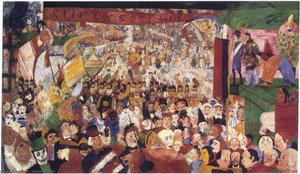
His most celebrated works – including *Christ’s Entry into Brussels* (1888-1889), *The Scandalized Masks* (1883) and *Skeletons Fighting over a Hanged Man* (1891) – exemplify his unwavering commitment to confronting uncomfortable truths and exploring the darkest recesses of human psychology. These paintings are not merely aesthetically striking; they serve as powerful critiques of societal norms, religious hypocrisy, and the absurdity of existence.
James Ensor’s artistic legacy extends far beyond his own lifetime. He is recognized as a pivotal catalyst in the transition from Symbolism to Expressionism and Surrealism—a true pioneer who challenged artistic conventions and paved the way for future generations of artists. His fearless exploration of the subconscious, combined with his masterful use of grotesque imagery and symbolic language, continues to inspire artists today.

1860 - 1949 , België
Istražite 25 remek-djela Jamesa Abbotta McNeilla Whistlera, majstora tonalizma i američkog impresionizma. Otkrijte priče iza njegovih čuvenih 'Nocturna' i portreta te pronađite inspiraciju za luksuznu dekoraciju interijera na Most-Famous-Paintings.com.

Explore 25 iconic Sir Alfred Munnings paintings! Discover the beauty of British Impressionism, equine art & rural England. Find museum-quality reproductions and elevate your home decor with Most-Famous-Paintings. Explore the full collection online.

Istražite 25 najpoznatijih remek-djela Metropolitana u New Yorku! Otkrijte priče Van Gogha, Moneta i drugih majstora. Inspirirajte se za dekoraciju doma s luksuznim reprodukcijama slika na Most-Famous-Paintings.com.
Istražite 25 najpoznatijih djela Egona Schielea! Otkrijte ekspresionističke portrete, autoportrete i simbolizam u austrijskoj umjetnosti. Kvalitetne reprodukcije slika za vaš dom na Most-Famous-Paintings.com.
Uronite u svijet Henri Matissea! Otkrijte 25 remek-djela Fauvizma i moderne umjetnosti. Priče iza slika, boje i tehnike slavnog umjetnika. Pronađite savršenu reprodukciju za vaš interijer na Most-Famous-Paintings.com.


Budite u tijeku s najnovijim umjetničkim vijestima, ekskluzivnim ponudama i idejama za dekoraciju.
Recite nam nešto o svom projektu, a naši će stručnjaci za umjetnost pripremiti 3 personalizirana prijedloga umjetnina.
Dopustite nam da odaberemo 3 opcije samo za Vas – Besplatno!


 Podijeli


 Prikaži više







 Opcija stakla dostupna je samo za dimenzije manje od 110 cm