x


 Preview
 Kupi otisak Kupi digitalnu sliku
 Pošalji
 Detalji o umjetničkom djelu
 Dodaj u omiljene
 Preuzmi
 Slični predmeti
 Rentgenska snimka
 Automatska prezentacija
Ručno oslikano uljanim bojama na platnu u dimenzijama i okviru po vašem izboru, izrađeno po narudžbi od strane naših umjetnika.





























Odaberite jednu od naših unaprijed definiranih veličina koje odgovaraju izvornim proporcijama umjetničkog djela.

Možete unijeti vlastite dimenzije kako bi odgovarale određenom okviru ili prostoru. Ako odabrana veličina ne odgovara proporcijama izvorne slike, izrezat ćemo umjetničko djelo ili proširiti sliku dodatnim ručno oslikanim elementima. Digitalni nacrt bit će vam poslan na odobrenje prije početka proizvodnje.
Imajte na umu da pregled na ekranu ne prikazuje stvarno izrezivanje ili proširivanje. Samo će nacrt točno prikazati konačni sastav.
Iako su dostupne prilagođene veličine, preporučujemo odabir dimenzije s preddefiniranog popisa kako bismo očuvali izvorne proporcije.
Isporuka širom svijeta () u roku od 3-4 tjedna umjesto standardnih 5 tjedana. (25 Srpanj). Bez kompromisa u kvaliteti.


Bourgal, Normandy
Veličina reprodukcije
James Ensor’s “Bourgal, Normandy” is not merely a depiction of a rural French village; it’s an immersion into the artist’s profoundly unsettling psyche. Painted around 1930, this work reveals Ensor’s signature preoccupation with themes of isolation, decay, and the grotesque – anxieties that simmered beneath the surface of his lifelong artistic explorations. The scene itself is deceptively simple: a stone or brick house crowned with a steeple, accompanied by a smaller structure echoing its form in the distance. Yet, within this tranquil facade lies a palpable sense of unease, amplified by Ensor’s deliberate manipulation of light and shadow, and the subtly distorted forms that populate the composition.
Born in Ostend, Belgium, in 1860, James Ensor was profoundly shaped by his upbringing amidst a vibrant mix of cultures – his English father and Belgian mother instilled within him a unique perspective. This duality fueled his artistic explorations, particularly his fascination with masks and disguise, motifs that would become central to his oeuvre. The souvenir shop operated by his parents, filled with carnival masks and peculiar objects, undoubtedly served as a crucial source of inspiration, feeding his imagination and providing a visual vocabulary rooted in the theatrical and the macabre. “Bourgal, Normandy” can be interpreted as a reflection of this environment – a carefully constructed façade concealing hidden anxieties and perhaps even a sense of lost innocence.
The steeple itself is a potent symbol, often associated with religious authority and tradition. However, within Ensor’s work, it frequently takes on a sinister quality, representing not faith but rather the oppressive weight of societal expectations and the potential for corruption. The muted color palette – dominated by browns, grays, and ochres – further contributes to the painting's somber mood, reinforcing the sense of decay and stagnation.
"Bourgal, Normandy" is a profoundly moving work that speaks to the darker aspects of human experience. Ensor’s masterful use of perspective and his unsettling depiction of everyday scenes create an atmosphere of profound unease. The painting's emotional impact stems from its ability to tap into universal anxieties about isolation, mortality, and the fragility of the human condition. It is a testament to Ensor’s artistic genius that he could transform a seemingly simple village scene into such a powerfully evocative and disturbing image.
This hand-painted reproduction captures not only the visual details of Ensor's original painting but also its inherent emotional power, offering collectors and interior designers alike an opportunity to bring this iconic work into their own spaces. Its haunting beauty will undoubtedly spark conversation and contemplation for years to come.
James Sidney Edouard Ensor, Baron Ensor (Ostend, 13 April 1860 – 19 November 1949) was a Belgian painter and printmaker who stands as one of the most influential figures in the development of Expressionism and Surrealism. Born into an English father and Belgian mother—a duality that profoundly shaped his artistic worldview—Ensor defied convention from the outset, rejecting academic formalism for a bold exploration of psychological depth and grotesque imagery.
His formative years were marked by exposure to the vibrant atmosphere of Ostend’s seaside resort town, where his parents operated a souvenir shop brimming with curiosities—a veritable cabinet of wonders that ignited his imagination. From 1876 until 1880 he studied at the Académie Royale des Beaux-Arts in Brussels, alongside fellow students like Fernand Khnopff and Theo Van Rysselberghe, where Jean Portales instilled in him a commitment to artistic innovation.
Ensor’s early paintings reflected a more traditional approach, depicting scenes of everyday life rendered in somber tones. However, he swiftly abandoned these conventions as he embraced the expressive qualities of light, line, and color—a decisive move toward Expressionism. Influenced by Rembrandt, Goya, and Japanese woodcuts, Ensor developed a distinctive iconography characterized by unsettling juxtapositions and symbolic references to death and decay.
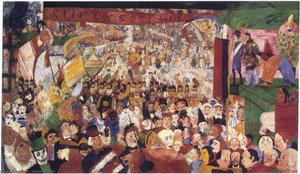
His most celebrated works – including *Christ’s Entry into Brussels* (1888-1889), *The Scandalized Masks* (1883) and *Skeletons Fighting over a Hanged Man* (1891) – exemplify his unwavering commitment to confronting uncomfortable truths and exploring the darkest recesses of human psychology. These paintings are not merely aesthetically striking; they serve as powerful critiques of societal norms, religious hypocrisy, and the absurdity of existence.
James Ensor’s artistic legacy extends far beyond his own lifetime. He is recognized as a pivotal catalyst in the transition from Symbolism to Expressionism and Surrealism—a true pioneer who challenged artistic conventions and paved the way for future generations of artists. His fearless exploration of the subconscious, combined with his masterful use of grotesque imagery and symbolic language, continues to inspire artists today.

1860 - 1949 , België

Istražite revolucionarni pokret ekspresionizma u umjetnosti! Dubinski pregled povijesti, ključnih umjetnika i utjecaja na moderno kolekcionarstvo. Pronađite savršeno djelo za vašu zbirku s Most-Famous-Paintings.
Explore 10 defining Cubist Expressionism masterpieces by Picasso, Braque & more. Discover the stories behind these bold, geometric paintings and bring museum-quality art to your home with Most-Famous-Paintings.com. Explore the full collection online.

Explore 10 legendary 'Acrylic On Canvas' masterpieces by artists like Rothko, Warhol & Frankenthaler. Discover the stories behind these iconic paintings and their impact on modern art. Find museum-quality reproductions at – elevate your home with timeless beauty.

Explore 10 legendary acrylic paintings that revolutionized modern art! From Helen Frankenthaler's color fields to Richter’s abstract power, discover the stories behind these iconic masterpieces. Find museum-quality reproductions & elevate your home decor on Most-Famous-Paintings.com.

Explore 10 legendary 'Acrylic on Paper' masterpieces by artists like Helen Frankenthaler & Gerhard Richter. Discover abstract expressionism, color field painting & the evolution of modern art. Find museum-quality reproductions for your home at Most-Famous-Paintings.com.


Budite u tijeku s najnovijim umjetničkim vijestima, ekskluzivnim ponudama i idejama za dekoraciju.
Recite nam nešto o svom projektu, a naši će stručnjaci za umjetnost pripremiti 3 personalizirana prijedloga umjetnina.
Dopustite nam da odaberemo 3 opcije samo za Vas – Besplatno!


 Podijeli


 Prikaži više







 Opcija stakla dostupna je samo za dimenzije manje od 110 cm