x

Ručno oslikano uljanim bojama na platnu u dimenzijama i okviru po vašem izboru, izrađeno po narudžbi od strane naših umjetnika. ( Kupi print Kupi digitalnu sliku)





























Odaberite jednu od naših unaprijed definiranih veličina koje odgovaraju izvornim proporcijama umjetničkog djela.

Možete unijeti vlastite dimenzije kako bi odgovarale određenom okviru ili prostoru. Ako odabrana veličina ne odgovara proporcijama izvorne slike, izrezat ćemo umjetničko djelo ili proširiti sliku dodatnim ručno oslikanim elementima. Digitalni nacrt bit će vam poslan na odobrenje prije početka proizvodnje.
Imajte na umu da pregled na ekranu ne prikazuje stvarno izrezivanje ili proširivanje. Samo će nacrt točno prikazati konačni sastav.
Iako su dostupne prilagođene veličine, preporučujemo odabir dimenzije s preddefiniranog popisa kako bismo očuvali izvorne proporcije.
Isporuka širom svijeta () u roku od 3-4 tjedna umjesto standardnih 5 tjedana. (14 Kolovoz). Bez kompromisa u kvaliteti.


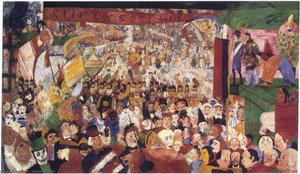
Effect of Light
Veličina reprodukcije
James Ensor’s “Effect of Light” is not merely a still life; it’s a meticulously constructed descent into the unsettling heart of human experience. Painted by the Belgian artist during a period marked by profound social and psychological anxieties, this work embodies Ensor's signature style – a potent blend of realism and deeply personal symbolism, rendered with an almost obsessive attention to detail. The composition immediately draws the viewer into a space of quiet drama, dominated by a table laden with objects that seem both familiar and profoundly strange. Three vases command attention, their varying sizes and contents—flowers, fruit, and even a single flower within a bottle – contributing to a sense of deliberate imbalance, mirroring perhaps the artist’s own internal struggles.
Born in Ostend, Belgium, in 1860, James Ensor was a figure profoundly shaped by his upbringing and the cultural currents of his time. His father, an English merchant, and his mother, a Belgian artist, provided him with a unique perspective, one that would later inform his artistic vision. The souvenir shop operated by his parents – filled with carnival masks, shells, and other curiosities – undoubtedly played a crucial role in shaping his aesthetic sensibility. Ensor’s work is often interpreted as reflecting the anxieties of fin-de-siècle Europe, a period marked by social unrest, scientific advancements, and a growing sense of disillusionment. The painting's somber palette and unsettling subject matter reflect this broader cultural mood.
The deliberate use of light – hence the title – is particularly significant. It’s not a naturalistic illumination but rather a theatrical device that intensifies the drama and casts long, distorted shadows, contributing to the overall sense of unease. The objects themselves are rendered with a remarkable degree of realism, yet their arrangement feels deliberately discordant, hinting at underlying tensions and unresolved conflicts.
Beyond its formal qualities, “Effect of Light” is rich in symbolic meaning. The abundance of fruit and flowers can be interpreted as representing fertility and life, but this joyous imagery is tempered by the painting’s overall mood of melancholy. The masks – subtly suggested within the composition – are a recurring motif in Ensor's work, symbolizing deception, anonymity, and the hidden aspects of human nature. The bottles, particularly those containing flowers, evoke a sense of fragility and vulnerability.
Ensor’s use of color is equally deliberate. The muted tones—ochres, browns, and greens—create a somber atmosphere, while occasional flashes of red or yellow draw the eye to key elements within the composition. The overall effect is one of profound emotional intensity, inviting viewers to confront uncomfortable truths about themselves and the world around them.
"Effect of Light" remains a powerful and evocative work of art, demonstrating Ensor’s mastery of technique and his ability to translate complex psychological states onto canvas. Most-Famous-Paintings offers meticulously crafted hand-painted reproductions that capture the essence of this iconic painting, allowing you to bring its beauty and emotional depth into your own space. Whether for a private collection or interior design project, our reproductions provide an authentic representation of Ensor’s genius, ensuring that this remarkable artwork continues to inspire and captivate audiences for generations to come.
James Sidney Edouard Ensor, Baron Ensor (Ostend, 13 April 1860 – 19 November 1949) was a Belgian painter and printmaker who stands as one of the most influential figures in the development of Expressionism and Surrealism. Born into an English father and Belgian mother—a duality that profoundly shaped his artistic worldview—Ensor defied convention from the outset, rejecting academic formalism for a bold exploration of psychological depth and grotesque imagery.
His formative years were marked by exposure to the vibrant atmosphere of Ostend’s seaside resort town, where his parents operated a souvenir shop brimming with curiosities—a veritable cabinet of wonders that ignited his imagination. From 1876 until 1880 he studied at the Académie Royale des Beaux-Arts in Brussels, alongside fellow students like Fernand Khnopff and Theo Van Rysselberghe, where Jean Portales instilled in him a commitment to artistic innovation.
Ensor’s early paintings reflected a more traditional approach, depicting scenes of everyday life rendered in somber tones. However, he swiftly abandoned these conventions as he embraced the expressive qualities of light, line, and color—a decisive move toward Expressionism. Influenced by Rembrandt, Goya, and Japanese woodcuts, Ensor developed a distinctive iconography characterized by unsettling juxtapositions and symbolic references to death and decay.
His most celebrated works – including *Christ’s Entry into Brussels* (1888-1889), *The Scandalized Masks* (1883) and *Skeletons Fighting over a Hanged Man* (1891) – exemplify his unwavering commitment to confronting uncomfortable truths and exploring the darkest recesses of human psychology. These paintings are not merely aesthetically striking; they serve as powerful critiques of societal norms, religious hypocrisy, and the absurdity of existence.
James Ensor’s artistic legacy extends far beyond his own lifetime. He is recognized as a pivotal catalyst in the transition from Symbolism to Expressionism and Surrealism—a true pioneer who challenged artistic conventions and paved the way for future generations of artists. His fearless exploration of the subconscious, combined with his masterful use of grotesque imagery and symbolic language, continues to inspire artists today.

1860 - 1949 , België

Transformirajte fotografije u autentične uljane reprodukcije vrhunskog kvaliteta! Most-Famous-Paintings – stručnjaci za personalizirane umjetnine i dekoraciju interijera. Stvorite nasljeđe stilom!

Explore 10 iconic paintings where dark olive green reigns supreme! From Van Gogh to Rembrandt, discover art history's most captivating masterpieces & the stories behind them. Find museum-quality reproductions and curated decor ideas at .

Explore the rich history of still life painting & the symbolism of fruit across art movements. Discover masterpieces from Caravaggio to Cézanne with Most-Famous-Paintings – expert guidance & museum-quality reproductions.

Otkrijte 10 remek djela koja su definirala simbolizam u umjetnosti! Gustave Moreau, Odilon Redon i drugi majstori – istražite priče iza ikoničnih slika. Inspirirajte se za svoj interijer s Most-Famous-Paintings.com - vrhunskim reprodukcijama i kuriranim idejama za dekoraciju.

Otkrijte povijest i simboliku mrtve prirode te kako reprodukcije umjetnina transformiraju vile u luksuzne prostore. Kvalitetne slike, personalizacija & stručni savjeti na Most-Famous-Paintings.com!


Budite u tijeku s najnovijim umjetničkim vijestima, ekskluzivnim ponudama i idejama za dekoraciju.
Recite nam nešto o svom projektu, a naši će stručnjaci za umjetnost pripremiti 3 personalizirana prijedloga umjetnina.
Dopustite nam da odaberemo 3 opcije samo za Vas – Besplatno!


 Pregledaj u stvarnoj veličini
 Pošalji
 Podijeli
 Detalji o umjetničkom djelu

 Preuzmi
 Slični predmeti
 Rentgenska snimka
 Automatska prezentacija

 Prikaži više







 Opcija stakla dostupna je samo za dimenzije manje od 110 cm