


x
Ručno oslikano uljanim bojama na platnu u dimenzijama i okviru po vašem izboru, izrađeno po narudžbi od strane naših umjetnika. ( Kupi print Kupi digitalnu sliku)
Odaberite jednu od naših unaprijed definiranih veličina koje odgovaraju izvornim proporcijama umjetničkog djela.

Možete unijeti vlastite dimenzije kako bi odgovarale određenom okviru ili prostoru. Ako odabrana veličina ne odgovara proporcijama izvorne slike, izrezat ćemo umjetničko djelo ili proširiti sliku dodatnim ručno oslikanim elementima. Digitalni nacrt bit će vam poslan na odobrenje prije početka proizvodnje.
Imajte na umu da pregled na ekranu ne prikazuje stvarno izrezivanje ili proširivanje. Samo će nacrt točno prikazati konačni sastav.
Iako su dostupne prilagođene veličine, preporučujemo odabir dimenzije s preddefiniranog popisa kako bismo očuvali izvorne proporcije.
Isporuka širom svijeta () u roku od 3-4 tjedna umjesto standardnih 5 tjedana. (15 Kolovoz). Bez kompromisa u kvaliteti.


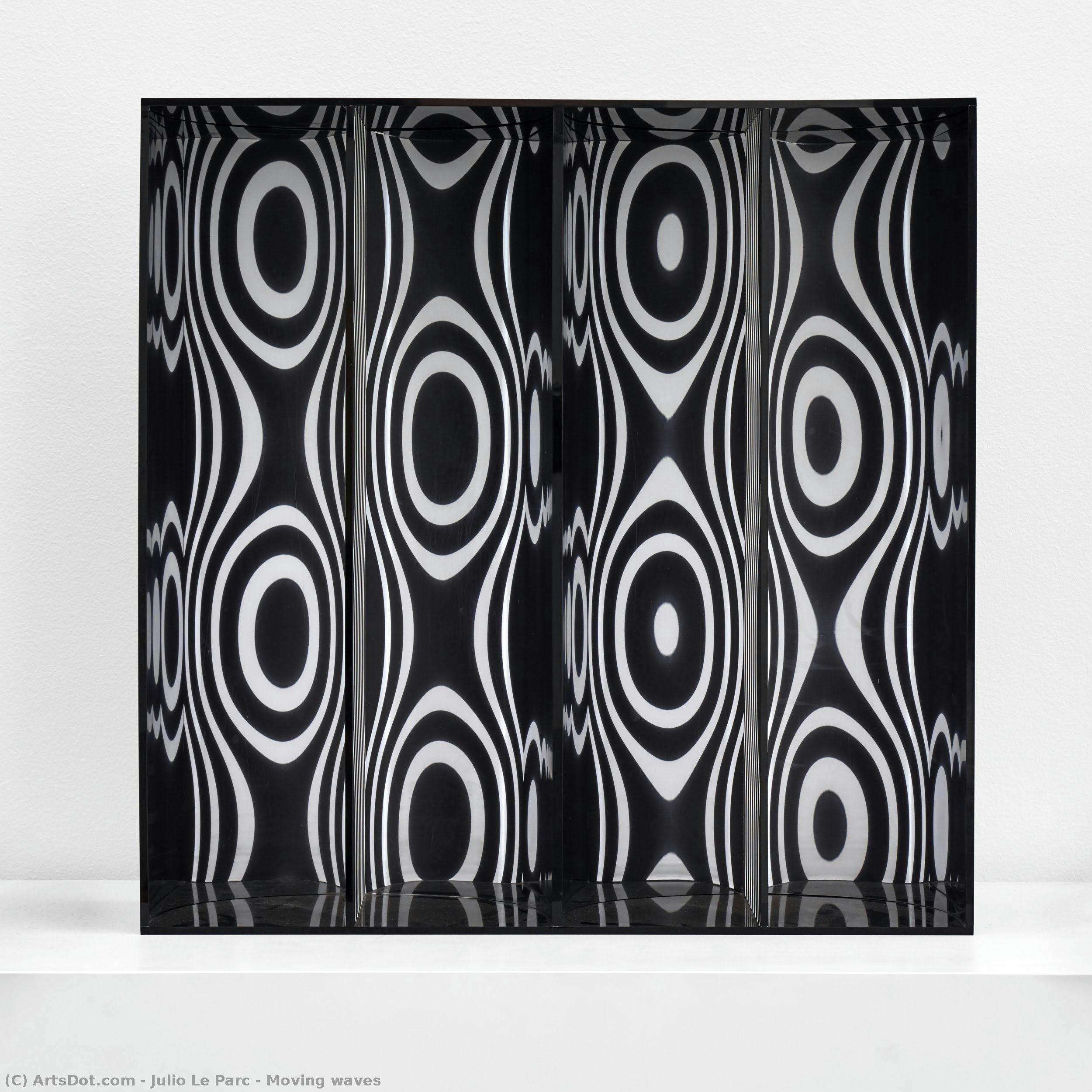
Moving waves
Veličina reprodukcije

Julio Le Parc (born September 23, 1928) is an Argentina-born artist celebrated for his pioneering work in both Op Art and Kinetic Art. His career has been marked by a commitment to challenging traditional artistic conventions and engaging viewers through interactive experiences.
Le Parc’s early life was shaped by modest economic circumstances. At the age of thirteen, he moved with his mother and brothers to Buenos Aires, where he attended the School of Fine Arts. This period proved formative, exposing him to the burgeoning artistic avant-garde movement in Argentina.
Le Parc’s artistic journey began with a growing interest in exploring new forms of visual expression. He was influenced by:
He quickly became a precursor to both Kinetic and Op Art, seeking to create artworks that engaged the viewer’s perception and challenged static notions of form.
A pivotal moment in Le Parc's career was his co-founding of the Groupe de Recherche d’Art Visuel (GRAV) in Paris in 1960. This collective aimed to investigate the possibilities of visual art through experimentation and collaboration. His work gained international acclaim, culminating in winning the Grand Prize for Painting at the 33rd Venice Biennale in 1966.
Le Parc’s artworks are characterized by:
Le Parc was not only an artist but also a socially conscious individual. In May 1968, he participated in the Atelier Populaire, a workshop that produced protest posters during the student uprisings in France. His involvement led to his expulsion from France, highlighting his commitment to political activism.
Following his exile, Le Parc continued to live and work in Cachan, France. He has remained a significant figure in modern art history, influencing generations of artists with his innovative approach to visual perception and interactive art. He was again bestowed the Konex Award from Argentina in 2022, recognizing his enduring impact.
Julio Le Parc’s contributions have been instrumental in expanding the boundaries of modern art. He:
His work continues to be exhibited in museums and galleries worldwide, solidifying his place as a leading figure in 20th and 21st-century art.

1928 - , Argentina

Explore the profound emotional depth of Lyrical Abstraction. Discover how masters like Raymond Parker used color and form to bridge Impressionism and Abstract Expressionism. Learn about this pivotal movement through our expert-led art history guide.

Explore the profound emotional depth of Color Field painting. Discover the history of mid-century abstraction, from Rothko to Newman, and learn how pure color transforms the viewer's experience through our expert art history guide.

Discover the profound emotional depth and investment potential of contemporary abstraction. Our expert guide explores how texture, movement, and form create timeless value for discerning art collectors and sophisticated interiors.


Budite u tijeku s najnovijim umjetničkim vijestima, ekskluzivnim ponudama i idejama za dekoraciju.
Recite nam nešto o svom projektu, a naši će stručnjaci za umjetnost pripremiti 3 personalizirana prijedloga umjetnina.
Dopustite nam da odaberemo 3 opcije samo za Vas – Besplatno!


 Pregledaj u stvarnoj veličini
 Pošalji
 Podijeli
 Detalji o umjetničkom djelu

 Preuzmi
 Slični predmeti
 Rentgenska snimka
 Automatska prezentacija


 Prikaži više




































 Opcija stakla dostupna je samo za dimenzije manje od 110 cm


