Prodajte svoju umjetnost
Lista želja Vaša košarica Cart
Pregledaj u stvarnoj veličiniPregledaj u stvarnoj veličini AR pregledAR pregled Kupi print Kupi printKupi digitalnu sliku Kupi digitalnu sliku PošaljiPošalji
Detalji o umjetničkom djeluDetalji o umjetničkom djelu Dodaj u omiljene Dodaj u omiljene PreuzmiPreuzmi Slični predmetiSlični predmeti Rentgenska snimkaRentgenska snimka Automatska prezentacijaAutomatska prezentacija

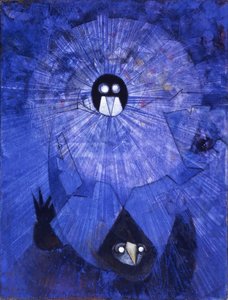
Abstract Composition

Konrad Zuse (1910-1995): German computer pioneer & artist. Inventor of the first programmable computer, Z3, & Plankalkül language. Explore his abstract compositions.

Ručno rađena uljana reprodukcija

Ručno oslikano uljanim bojama na platnu u dimenzijama i okviru po vašem izboru, izrađeno po narudžbi od strane naših umjetnika. (Kupi print Kupi printKupi digitalnu sliku Kupi digitalnu sliku)

Standard
custom
CM
INCH

Odaberite jednu od naših unaprijed definiranih veličina koje odgovaraju izvornim proporcijama umjetničkog djela.

širina
visina

Možete unijeti vlastite dimenzije kako bi odgovarale određenom okviru ili prostoru. Ako odabrana veličina ne odgovara proporcijama izvorne slike, izrezat ćemo umjetničko djelo ili proširiti sliku dodatnim ručno oslikanim elementima. Digitalni nacrt bit će vam poslan na odobrenje prije početka proizvodnje.
Imajte na umu da pregled na ekranu ne prikazuje stvarno izrezivanje ili proširivanje. Samo će nacrt točno prikazati konačni sastav.
Iako su dostupne prilagođene veličine, preporučujemo odabir dimenzije s preddefiniranog popisa kako bismo očuvali izvorne proporcije.

Primjeri mogućnosti prilagodbe: Zamijenite lice fotografijom klijenta; Dodajte ljubimca (npr. zamijenite mačku psom); Uključite skrivenu poruku u pozadinu; Promijenite pejzaž ili elemente pozadine.
Nakon narudžbe, tim Most-Famous-Paintings.com kontaktirat će klijenta putem e-pošte radi dobivanja uputa te dostaviti probni prikaz (mockup).

Isporuka širom svijeta () u roku od 3-4 tjedna umjesto standardnih 5 tjedana. (17 Kolovoz). Bez kompromisa u kvaliteti.

why_choose_icon
Besplatna ekspresna dostava širom svijeta
why_choose_icon
Visokokvalitetno laneno platno
why_choose_icon
Potpuno osiguranje dostave
why_choose_icon
Jamstvo povrata carine i uvoznih poreza
why_choose_icon
Garancija vjernog podudaranja boja
why_choose_icon
Politika povrata u roku od 60 dana (samo u slučaju nedostataka)
why_choose_icon
Jamstvo povrata 100% novca
why_choose_icon
Popust na više proizvoda

Ukupna cijena

$ 272

reproduction

Abstract Composition

Tehnika reprodukcije

Veličina reprodukcije

-

Ukupna cijena

$ 272


Biografija umjetnika

Konrad Ernst Otto Zuse: Pioneer of Computing

Early Life and Education

  • Konrad Ernst Otto Zuse was born on June 22, 1910, in Berlin, Germany.
  • He studied mechanical engineering at the Technical University of Braunschweig, graduating in 1933.
  • Even during his studies, Zuse demonstrated a keen interest in automation and calculation, laying the groundwork for his future innovations.

The Genesis of Computing: Early Machines

  • Driven by frustration with repetitive calculations during his engineering work, Zuse began designing calculating machines in the 1930s.
  • His first creation was the Z1 (1936-1938), a mechanical binary computer using floating-point numbers and limited programmability. Though mechanically unreliable, it demonstrated key concepts.
  • The Z2 (1939) improved upon the Z1 with electromechanical relays, offering greater reliability but was destroyed during World War II.

The Z3: The First Functional Programmable Computer

  • In May 1941, Zuse completed the Z3, widely considered the world’s first functional program-controlled Turing-complete computer.
  • It was electromechanical, using relays, and operated with binary floating-point arithmetic.
  • The Z3 was destroyed during a bombing raid in 1943, but its design principles were revolutionary.

Further Developments: The Z4 and Beyond

  • Zuse continued his work, developing the Z4 (completed in 1945), which became the world’s first commercial computer. It was sold to the Aerodynamische Versuchsanstalt (AVA) for aerodynamic calculations.
  • He founded one of the earliest computer businesses, Zuse KG, to produce and sell computers.

Plankalkül: A Visionary Programming Language

  • Between 1943 and 1945, amidst wartime conditions, Zuse designed Plankalkül, the first high-level programming language.
  • It was remarkably advanced for its time, featuring concepts like data structures and conditional statements. However, it remained largely unimplemented during his lifetime due to lack of resources and computing power.

Later Life and Theoretical Work

  • In 1969, Zuse published Rechnender Raum (Calculating Space), proposing the concept of a computation-based universe – a precursor to digital physics.
  • He received belated recognition for his pioneering work in the latter part of his life, including the Turing Award in 1968.
  • Konrad Zuse died in Hünfeld, Germany, on December 18, 1995.

Historical Significance and Legacy

  • Zuse’s work was largely overlooked during World War II due to the conflict and limited communication with Allied researchers.
  • His contributions were crucial in laying the foundations for modern computing, influencing subsequent generations of computer scientists and engineers.
  • He is rightfully regarded as a founding father of computer science, whose vision extended beyond mere calculation to encompass the very nature of reality itself.
konrad ernst otto zuse

konrad ernst otto zuse

1910 - 1995 , Germany

Osnovne informacije

  • Birth Date: 1910
  • Birth Place: Berlin, Germany
  • Death Date: 1995
  • Movement: Early Computing / Pioneer of Computer Science
  • Name: Konrad Ernst Otto Zuse
  • Nationality: German
  • Notable Works:
    • Z3
    • Plankalkül
    • Z4