


x

Ručno oslikano uljanim bojama na platnu u dimenzijama i okviru po vašem izboru, izrađeno po narudžbi od strane naših umjetnika. ( Kupi print Kupi digitalnu sliku)





























Odaberite jednu od naših unaprijed definiranih veličina koje odgovaraju izvornim proporcijama umjetničkog djela.

Možete unijeti vlastite dimenzije kako bi odgovarale određenom okviru ili prostoru. Ako odabrana veličina ne odgovara proporcijama izvorne slike, izrezat ćemo umjetničko djelo ili proširiti sliku dodatnim ručno oslikanim elementima. Digitalni nacrt bit će vam poslan na odobrenje prije početka proizvodnje.
Imajte na umu da pregled na ekranu ne prikazuje stvarno izrezivanje ili proširivanje. Samo će nacrt točno prikazati konačni sastav.
Iako su dostupne prilagođene veličine, preporučujemo odabir dimenzije s preddefiniranog popisa kako bismo očuvali izvorne proporcije.
Isporuka širom svijeta () u roku od 3-4 tjedna umjesto standardnih 5 tjedana. (21 Kolovoz). Bez kompromisa u kvaliteti.


Trinity (detail)
Veličina reprodukcije
Masaccio’s “Trinity (detail),” housed within the magnificent Santa Maria Novella in Florence, isn't merely a fresco; it’s a pivotal moment in art history – a visual manifesto declaring the arrival of the High Renaissance. Painted between 1425 and 1427, this intimate section captures the essence of Masaccio’s revolutionary approach to depicting reality, a departure from the stylized elegance of the preceding Gothic era and a profound influence on generations of artists to come. The scene, centered around an elder figure representing God the Father, is imbued with a startling sense of depth, volume, and emotional resonance that was unprecedented for its time.
The fresco’s immediate impact lies in its masterful use of linear perspective. Masaccio didn't simply depict space; he created it – a meticulously constructed illusion of three-dimensionality that draws the viewer directly into the scene. The architecture, modeled after Roman precedents and likely informed by Filippo Brunelleschi’s groundbreaking experiments with perspective, recedes realistically towards a vanishing point, anchoring the figures within a believable environment. This isn't a flat surface; it’s a stage where forms exist in relation to each other, creating an astonishingly convincing sense of space.
Masaccio’s palette is restrained yet remarkably effective. Earth tones – ochres, siennas, and umbers – dominate the composition, lending it a dignified solemnity. However, within this muted range, he skillfully employs chiaroscuro—the dramatic interplay of light and shadow—to sculpt the figures and define their forms. The light source, emanating from an unseen point above and to the right, casts deep shadows that accentuate the musculature of the Father’s body, imbuing him with a palpable sense of weight and presence. This subtle manipulation of light isn't merely decorative; it’s integral to Masaccio’s goal of creating realistic figures that appear to exist within a tangible world.
The figure of the Father is particularly striking. His face, rendered with astonishing detail – the furrowed brow, the thoughtful gaze—conveys an intense contemplation. He isn't depicted as a distant deity but as a human being grappling with profound questions. The folds of his garment are meticulously modeled, demonstrating Masaccio’s mastery of drapery and his commitment to accurately representing the texture and weight of fabric.
Beyond its technical brilliance, “Trinity (detail)” is rich in symbolic meaning. The central figure represents God the Father, while the dove hovering above symbolizes the Holy Spirit. The presence of Mary and Saint John—both deeply revered figures within Christian iconography—adds layers of spiritual significance to the scene. The inclusion of a *memento mori* – a reminder of death – beneath the depiction of the Trinity serves as a poignant counterpoint, reminding viewers of the ephemeral nature of earthly existence and the importance of seeking salvation.
The donor figures flanking the central archway are particularly intriguing. Their placement within the architectural framework suggests that they represent patrons who commissioned the fresco—likely members of the Florentine elite. The gesture of prayer, with their hands raised in supplication, underscores the devotional purpose of the artwork and its intended audience.
Masaccio’s “Trinity (detail)” represents a watershed moment in art history. It marked a decisive shift away from the stylized conventions of the Gothic era and toward a more naturalistic and intellectually rigorous approach to painting. His innovations in perspective, his mastery of chiaroscuro, and his profound understanding of human anatomy profoundly influenced artists like Leonardo da Vinci and Michelangelo, shaping the course of Western art for centuries to come. Reproductions of this masterpiece offer a unique opportunity to experience firsthand the genius of one of the Renaissance’s most visionary painters.
Additional Research:

Tommaso di Ser Giovanni di Simone, poznatiji kao Masaccio (što na talijanskom znači “nespretni Tom”), bio je ključna figura ranog talijanskog Renesansa. Rođen 21. prosinca 1401. godine u San Giovanniju Valdarnu, Italija, i tragično mlad umro 1428. godine, njegova kratka karijera revolucionirala je slikarstvo s pionirskim realizmom, perspektivom i chiaroscuro tehnikom (upotrebom snažnih kontrasta između svjetla i tame). Unatoč kratkom životu, Masacciov utjecaj na kasnije generacije umjetnika bio je dubok, uspostavljajući novi standard naturalizma i utječući na tijek zapadne umjetnosti.
Masaccio se rodio Giovanniju di Simone Cassaiju, bilježniku, i Jacopi di Martinozzu. Njegovo prezime, Cassai, potječe od zanata njegovog djeda po ocu – stolara. Siroče je postao u petoj godini smrti svog oca, a imao je brata, Giovannija (Lo Scheggia), koji je također postao slikar. Detalji Masacciovog umjetničkog obrazovanja ostaju uglavnom nepoznati, što je neuobičajeno za renesansne umjetnike. Vjeruje se da je vjerojatno započeo učiti oko dvanaeste godine života, ali nije identificiran nijedan definitivan majstor. Nedostatak dokumentiranog obrazovanja dodaje misterij brzom razvoju i inovativnim tehnikama koje je razvio.
U svojim ranim radovima, Masaccio je bio pod utjecajem Giotta di Bondonea, prethodnika poznatog po svom naturalizmu. Međutim, brzo ga je nadmašio u razumijevanju perspektive i anatomije. Inspiraciju je crpio i iz arhitektonskih inovacija Filippa Brunelleschija, posebno iz Brunelleschijevog ponovnog otkrića linearne perspektive. Njegova umjetnost nije bila samo tehnički napredak; to je bio radikalan pomak u načinu prikazivanja svijeta.
Njegova djela poput San Giovenale Triptycha (oko 1422.) pokazuju njegov rastući talent u perspektivi i naturalističkom prikazu. Suradnja s Masolinom na Madonni i Djetetu sa Sv. Anom (oko 1423.-1425.) ističe Masacciov izranjajući realizam uz Masolinov tradicionalniji stil.
Masacciov utjecaj na tijek zapadne umjetnosti je nemjerljiv, unatoč njegovoj tragično kratkoj karijeri. Njegove inovacije u perspektivi, chiaroscuro tehnici i naturalizmu temeljito su promijenile način na koji su umjetnici prikazivali svijet. Uspješno je premostio jaz između srednjovjekovnih umjetničkih konvencija i novih ideala Renesanse.
Masacciovo nasljeđe traje kao jednog od najvažnijih i najutjecajnijih umjetnika u povijesti. Stoji kao ključna figura u prijelazu sa srednjovjekovne na renesansnu umjetnost, zauvijek mijenjajući način na koji doživljavamo i prikazujemo svijet kroz slikarstvo. Njegova kratka ali briljantna karijera služi kao svjedočanstvo moći inovacija i trajne snage umjetničkog genija.

1401 - 1429 , Italija
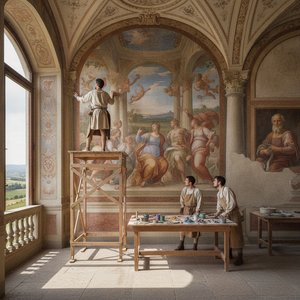
Explore the profound history and technical mastery of fresco painting. From ancient Roman murals to Michelangelo's Sistine Chapel, discover the enduring chemistry and artistry behind this timeless wall painting technique used by the world's greatest masters.


Budite u tijeku s najnovijim umjetničkim vijestima, ekskluzivnim ponudama i idejama za dekoraciju.
Recite nam nešto o svom projektu, a naši će stručnjaci za umjetnost pripremiti 3 personalizirana prijedloga umjetnina.
Dopustite nam da odaberemo 3 opcije samo za Vas – Besplatno!


 Pregledaj u stvarnoj veličini
 Pošalji
 Podijeli
 Detalji o umjetničkom djelu

 Preuzmi
 Slični predmeti
 Rentgenska snimka
 Automatska prezentacija


 Prikaži više







 Opcija stakla dostupna je samo za dimenzije manje od 110 cm


![Stanze Vaticane - The Parnassus (detail) [07] — Rafael, High Renaissance](/media/artworks/images-thumb/3c/a1/3ca1620e84d3f2fe4e94d9bb954e0eca.jpg)


