
Prodajte svoju umjetnost
Lista želja Vaša košarica Cart
Pregledaj u stvarnoj veličiniPregledaj u stvarnoj veličini AR pregledAR pregled Kupi print Kupi printKupi ručno naslikanu sliku Kupi ručno naslikanu sliku PošaljiPošalji
Detalji o umjetničkom djeluDetalji o umjetničkom djelu Dodaj u omiljene Dodaj u omiljene PreuzmiPreuzmi Slični predmetiSlični predmeti Rentgenska snimkaRentgenska snimka Automatska prezentacijaAutomatska prezentacija

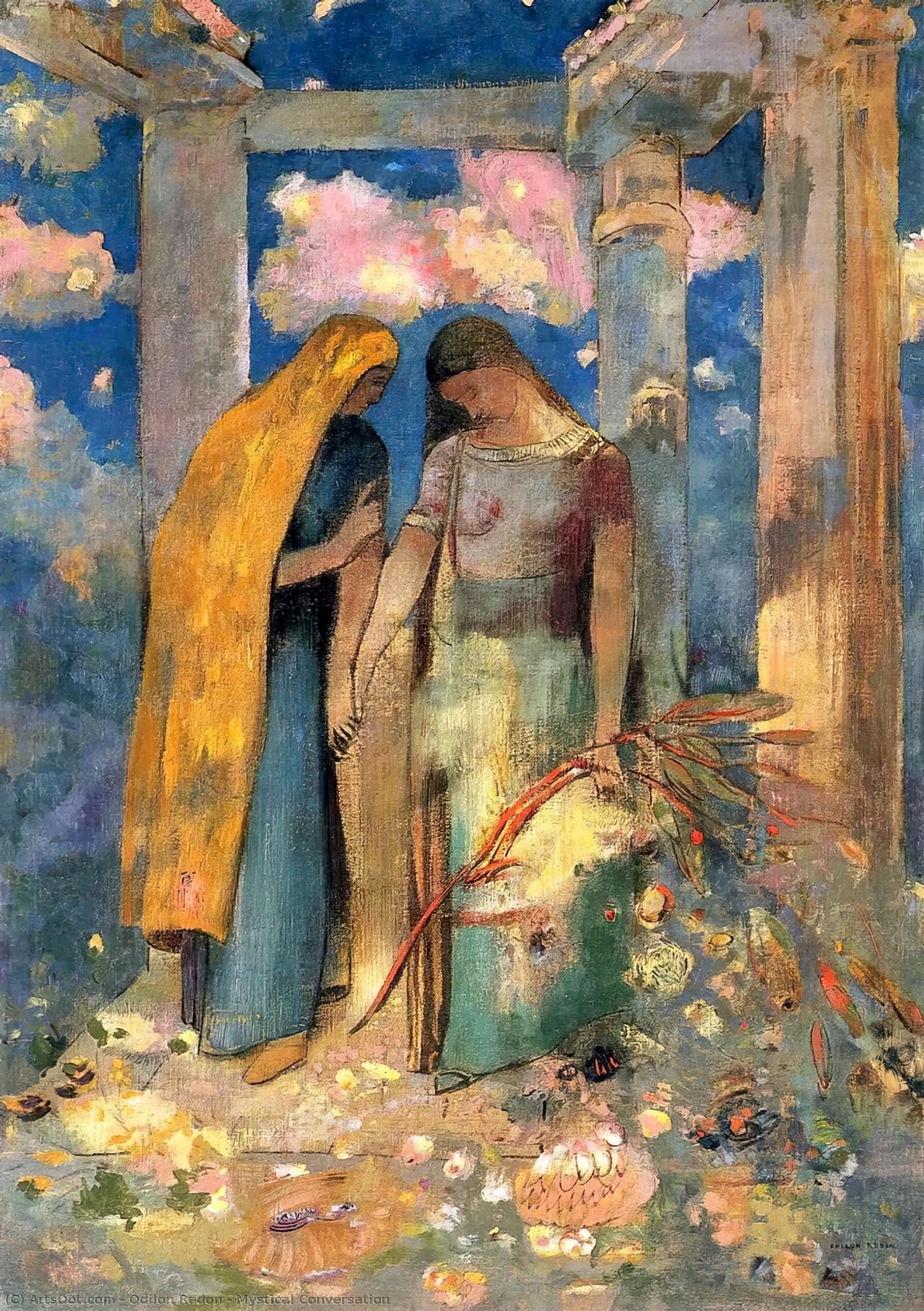
Mystical Conversation

This mesmerizing piece by Odilon Redon depicts three women engaged in a profound dialogue amidst a serene landscape punctuated by a solitary pillar and potted plant. Executed in 1896, the artwork showcases Redon's masterful use of etching and lithography techniques to convey an otherworldly atmosphere.

Meta Description: Odilon Redon (1840-1916) bio je francuski simbolista poznat po svojim zaboravljajućim crtežima u crno bijelu tehniku i velikom utjecaju na Surrealizam, oslanjajući se na svijet sna i fantazije kako bi prikazao dublje psihološke teme.

Kupite digitalnu sliku visoke rezolucije i poboljšane kvalitete, koja je znatno superiornija od online prikaza.

Svaka datoteka pedantno je pripremljena od strane naših internih stručnjaka koristeći napredne alate i vještinsku ručnu retušu. Osiguravamo da svaka slika ima iznimnu jasnoću, preciznu točnost boja i visoku razinu detalja.

Konačna datoteka dostavlja se putem e-pošte u roku od 72 sata, optimizirana za neposrednu upotrebu u profesionalnim, uredničkim i tiskarskim okruženjima. To je ista kvaliteta kojoj vjeruju vrhunski studiji dizajna, izdavači i galerije.

Digitalna slika

Preuzmite datoteku visoke rezolucije za osobnu izložbu, tisak i kreativne projekte. (Kupi print Kupi printKupi ručno naslikanu sliku Kupi ručno naslikanu sliku)

Ukupna cijena

$ 24,90

Uključeno uz svaku narudžbu digitalne slike

Profesionalna digitalna dostava, zajamčena

Odabirom Most-Famous-Paintings.com ne dobivate samo sliku – dobivate profesionalno unapređeno digitalno umjetničko djelo, izrađeno s najvećom preciznošću uz jamstvo zadovoljstva. Evo svega što automatski dolazi uz vašu narudžbu:

shipping_icon
Brza dostava e-poštom

Vaša digitalna slika visoke rezolucije bit će vam poslana e-mailom u roku od 72 sata od narudžbe – spremna za neposrednu upotrebu.

canvas_icon
Digitalna datoteka poboljšana AI-om

Vaše umjetničko djelo profesionalno je optimizirano pomoću naprednih AI alata i ručnog uređivanja, čime se osigurava maksimalna razina detalja, oštrine i točnosti boja.

insurance_icon
Besplatna ponovna dostava doživotno

Slučajno ste obrisali ili izgubili svoju datoteku? Ne brinite – ponovno ćemo vam je poslati u bilo kojem trenutku, potpuno besplatno.

tax_icon
Bez uvoznih carina – ikada

Uživajte u svojim umjetničkim djelima trenutno, bez carina, pristojbi ili troškova dostave – digitalne datoteke uvijek su oslobođene poreza.

color_icon
Jamstvo točnosti boja

Uz pomoć profesionalnih alata i upravljanja bojama, osiguravamo da vaša digitalna slika što vjernije odražava izvorne boje.

return_icon
Jamstvo zadovoljstva u trajanju od 60 dana

Ako niste zadovoljni svojom digitalnom slikom, revidirat ćemo je ili vratiti 100% novca u roku od 60 dana – bez ikakvih pitanja.

guarantee_icon
100% Jamstvo povrata novca

Niste zadovoljni? Osigurajte puni povrat novca u roku od 60 dana od primitka vaše digitalne datoteke – bez suvišnih pitanja.

discount_icon
Popusti na velike narudžbe

Kupite 3 slike, uštedite 10% - Kupite 5 slika, uštedite 15% - Kupite 10+ slika, uštedite 20%. Odlično za kreativne projekte, galerije i agencije.

Osnovne informacije

  • Year: 1896
  • Subject or theme: Spiritual mystery
  • Title: Mystical Conversation
  • Artist: Odilon Redon
  • Influences: Jean-Léon Gérôme
  • Location: The Art Institute of Chicago
  • Artistic style: Dreamlike

Kviz o umjetnosti

Svako pitanje ima samo jedan točan odgovor.

Pitanje 1:
What artistic technique is prominently featured in Odilon Redon’s "Mystical Conversation", allowing for a textured surface and evocative imagery?
Pitanje 2:
The painting depicts three women engaged in what activity, suggesting themes of connection and contemplation?
Pitanje 3:
In what year was "Mystical Conversation" created?
Pitanje 4:
What is the primary visual element that contributes to the painting's atmosphere of mystery and dreamlike quality?
Pitanje 5:
Odilon Redon’s artistic style aligns with which broader movement in art history?

Opis kolekcionarskog djela

A Journey Into Shadowed Realms: Exploring Odilon Redon’s Mystical Conversation

Odilon Redon's "Mystical Conversation," completed in 1892, stands as a testament to the artist’s unwavering fascination with the subconscious and his masterful manipulation of visual language. More than just a depiction of two figures—a woman and a man—within an ambiguous space, it embodies a profound meditation on spirituality, isolation, and the elusive nature of human experience. The painting resides within The Art Institute of Chicago's collection, offering visitors a glimpse into Redon’s distinctive artistic vision.

Style and Technique: Impasto Texture and Dreamlike Atmosphere

Redon eschewed the conventions of academic realism, opting instead for an expressive style characterized by thick impasto—a technique where paint is applied in heavy layers—creating palpable textural surfaces that seem to pulsate with inner energy. This deliberate disregard for conventional representation prioritizes mood and emotion over precise detail. The artist’s use of muted colors – predominantly ochre, umber, and shades of grey – contributes to the painting's ethereal atmosphere, transporting viewers into a realm beyond the visible world. Light plays an integral role, casting dramatic shadows that heighten the sense of mystery and reinforce the psychological depth of the scene.

Historical Context: Symbolism in Late Impressionism

“Mystical Conversation” emerged during the waning years of Impressionism, marking a pivotal moment in artistic evolution. While Impressionists sought to capture fleeting moments of sensory experience, Redon delved into the realm of symbolism—drawing inspiration from mythology, folklore, and esoteric traditions. The figures themselves are deliberately indistinct, representing archetypal representations rather than identifiable individuals. Their posture suggests contemplation and dialogue, hinting at a quest for understanding or perhaps confronting unspoken anxieties. The presence of a solitary plant – positioned prominently on the right side of the canvas – symbolizes resilience and growth amidst darkness, mirroring the overarching theme of spiritual transformation.

Symbolism Unveiled: Figures, Space, and the Essence of Contemplation

The painting’s symbolism extends beyond its immediate visual elements. The ambiguous space—characterized by curving lines and undefined boundaries—represents the labyrinthine pathways of consciousness, reflecting the artist's preoccupation with exploring inner landscapes. The woman’s arms encircling the man convey a sense of protection and intimacy, yet also underscore their separation from each other and from the outside world. These figures are not merely present; they embody concepts – contemplation, vulnerability, and perhaps even fear—that resonate deeply within the viewer's psyche. Redon skillfully utilizes visual cues to communicate these intangible ideas, inviting interpretation and fostering a connection between the artwork and its audience.

Emotional Impact: A Resonance of Quiet Mystery

Ultimately, “Mystical Conversation” succeeds in evoking a powerful emotional response. Its subdued palette and textured surface create an immersive experience that encourages introspection. The painting’s haunting beauty lies not in grand spectacle but in its ability to capture the subtle nuances of human emotion—the quiet yearning for connection, the apprehension of the unknown, and the enduring fascination with the mysteries of existence. It remains a captivating example of Redon's artistic prowess and his profound engagement with the spiritual dimension of art.

Biografija umjetnika

Odilon Redon (1840-1916): Between Shadow and Light

Odilon Redon, born Bertrand Jean Redon in Bordeaux, France, on April 20, 1840, was an artist whose profound engagement with the unseen realms of imagination solidified his place as a pivotal figure in Symbolism. His artistic journey began not with grand ambition but with quiet observation; at just ten years old he won a drawing prize—a foreshadowing of the visual sensitivity that would define his life’s work. Though initially steered towards architecture by familial expectations, Redon's true calling lay elsewhere, illuminated by instruction from Jean-Léon Gérôme and, crucially, Rodolphe Bresdin, who guided him in the intricate arts of etching and lithography. These techniques became foundational to his early explorations, allowing him to delve into a world of shadowy figures and ambiguous forms that would soon captivate those seeking an alternative to academic realism. The interruption of the Franco-Prussian War saw Redon briefly serving in the military, but it was upon his return to Paris that his artistic vision truly began to coalesce.

Early Life & Artistic Training

Redon’s childhood was marked by a peculiar blend of solitude and fascination with nature—a formative experience that would profoundly shape his artistic sensibilities. Living primarily with his uncle in Bordeaux's countryside, he cultivated an intimate connection with the landscape, meticulously studying trees and undergrowth. This early immersion in natural beauty instilled within him a deep appreciation for observation and detail, qualities that would permeate his entire oeuvre. At age 15, he began formal study in drawing but on the insistence of his father he switched to architecture—a decision ultimately thwarted by his failure to pass the École des Beaux-Arts entrance examinations. Despite this setback, Redon continued to pursue artistic development, studying under Jean-Léon Gérôme and honing his skills in watercolor and charcoal. His encounter with Rodolphe Bresdin proved particularly influential; Bresdin instructed him in etching and lithography—techniques that would become indispensable tools for exploring the expressive potential of monochrome prints.

The Birth of Symbolism & The “Noirs”

Redon’s artistic trajectory diverged sharply from prevailing trends during his time, rejecting the pursuit of realistic representation in favor of conveying emotional depth and spiritual resonance. This conviction led him to create his celebrated series of “noirs”—monochromatic works executed primarily in charcoal and lithography—a stylistic choice that would become synonymous with Symbolism itself. These weren’t merely studies in darkness; they were explorations of the subconscious, populated by unsettling creatures, disembodied eyes, and haunting figures emerging from swirling mists. The influence of writers like Edgar Allan Poe and Charles Baudelaire is palpable here—a shared fascination with the macabre, the mysterious, and the power of suggestion. Critics initially dismissed Redon’s “noirs” as morbid and unsettling, yet they nonetheless captured the essence of Symbolist aesthetics: a deliberate rejection of naturalism in favor of conveying inner psychological states.

Lithography & Artistic Innovation

Redon's mastery of lithography was instrumental to his artistic success. He recognized its capacity to achieve remarkable tonal effects—particularly the subtle gradations of black and gray—that surpassed those attainable with watercolor or oil paint alone. Bresdin’s guidance ensured that Redon possessed the technical skills necessary to exploit this medium’s expressive potential, allowing him to produce prints that conveyed a sense of atmosphere and psychological complexity. His early lithographs, such as *Le Gué* (The Ford), demonstrated his ability to capture the mood of a scene with remarkable precision—a characteristic that would persist throughout his career. Redon's innovative approach to printmaking established him as a pioneer in modern art, anticipating developments in Expressionism and abstraction decades later.

Later Years & Legacy

Redon’s artistic vision matured during the 1890s, marked by a gradual embrace of color—first pastel, then oil—which infused his paintings with vibrancy and luminosity. This stylistic shift reflected an evolving inner landscape within the artist himself—a move away from the melancholic introspection of his early works toward a more optimistic engagement with mythology, Buddhism, and Japanese art (*Japonism*). The influence of *Japonism* is evident in numerous compositions featuring flattened planes and decorative ensembles—a testament to Redon’s openness to new artistic ideas. His paintings gained considerable acclaim during the Armory Show of 1913, attracting international attention and cementing his reputation as a visionary artist. Odilon Redon died peacefully in Paris on July 6, 1916, leaving behind an enduring legacy—one characterized by courage, imagination, and a profound belief in art’s capacity to illuminate the hidden dimensions of human experience. His work continues to inspire artists today, serving as a reminder that true artistic expression lies beyond the confines of conventional realism.
Odilon Redon

Odilon Redon

1840 - 1916 , Francuska

Kratke činjenice

  • Artistic Movement Or Style: Simbolizam
  • Artists Or Movements Influenced By This Artist:
    • Surrealizm
    • Marcel Duchamp
  • Artists Who Influenced This Artist:
    • Jean-Léon Gérôme
    • Rodolphe Bresdin
  • Date Of Birth: 1840
  • Full Name: Odilon Redon
  • Nationality: Francuski
  • Notable Artworks:
    • Centaurs
    • Onnes
    • Portrait of Ari Redon
  • Place Of Death: Paris

