x

Ručno oslikano uljanim bojama na platnu u dimenzijama i okviru po vašem izboru, izrađeno po narudžbi od strane naših umjetnika. ( Kupi print Kupi digitalnu sliku)





























Odaberite jednu od naših unaprijed definiranih veličina koje odgovaraju izvornim proporcijama umjetničkog djela.

Možete unijeti vlastite dimenzije kako bi odgovarale određenom okviru ili prostoru. Ako odabrana veličina ne odgovara proporcijama izvorne slike, izrezat ćemo umjetničko djelo ili proširiti sliku dodatnim ručno oslikanim elementima. Digitalni nacrt bit će vam poslan na odobrenje prije početka proizvodnje.
Imajte na umu da pregled na ekranu ne prikazuje stvarno izrezivanje ili proširivanje. Samo će nacrt točno prikazati konačni sastav.
Iako su dostupne prilagođene veličine, preporučujemo odabir dimenzije s preddefiniranog popisa kako bismo očuvali izvorne proporcije.
Isporuka širom svijeta () u roku od 3-4 tjedna umjesto standardnih 5 tjedana. (18 Kolovoz). Bez kompromisa u kvaliteti.


Corrida de toros 4
Veličina reprodukcije
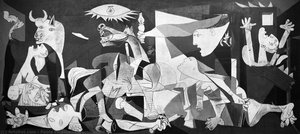
Pablo Picasso’s “Corrida de toros 4,” a striking black and white drawing executed in 1961, isn't merely a depiction of a bullfight; it’s a visceral exploration of human drama, primal instinct, and the unsettling beauty of violence. This work, part of Picasso’s late-career series exploring bullfighting, transcends simple illustration, becoming a potent meditation on courage, fear, and the precarious balance between life and death. The drawing captures a pivotal moment within the spectacle – a man perched precariously atop a horse, holding aloft a vibrant red cape, directly confronting the looming threat of the bull.
Picasso’s masterful use of line and shadow immediately establishes an atmosphere of heightened tension. The figures are rendered with a deliberate lack of detail, emphasizing their essential forms rather than precise representation. The horse, a powerful, almost skeletal presence, dominates the left side of the composition, its musculature taut with anticipation. The man on horseback is similarly simplified, his posture conveying both determination and vulnerability. Notice how Picasso uses jagged lines to define the bull’s horns and charging form – these aren't gentle curves; they are sharp, aggressive indicators of impending attack. The background is largely obscured, drawing all attention to this central confrontation.
“Corrida de toros 4” firmly anchors itself within Picasso’s late Cubist style, though it departs from the geometric fragmentation of his earlier works. Here, the subject matter is broken down into fundamental shapes – planes and angles – yet these elements are interwoven with a remarkable sense of dynamism. The drawing isn't about recreating reality; it’s about capturing the *feeling* of the event—the energy, the chaos, the underlying brutality. The influence of his earlier explorations with African masks and Iberian sculpture is evident in the stylized forms and the deliberate distortion of perspective. This approach allows Picasso to convey multiple viewpoints simultaneously, mirroring the experience of a spectator caught within the swirling drama of the bullfight.
The monochromatic palette – primarily shades of black, white, and grey – further amplifies the drawing’s emotional impact. It evokes the starkness of newsprint photographs, lending the scene an air of documentary realism while simultaneously stripping it of sentimentality. The absence of color forces the viewer to focus on form, line, and composition, intensifying the sense of urgency and danger.
Beyond its formal qualities, “Corrida de toros 4” is rich in symbolic meaning. The bull itself represents not just brute force but also primal instinct, aggression, and perhaps even a confrontation with mortality. The red cape, a traditional element of the bullfight, becomes a beacon of both courage and vulnerability – a desperate attempt to control the uncontrollable. The man on horseback embodies the human spirit’s willingness to face danger, albeit with a palpable sense of risk.
Interestingly, Picasso included other figures within the scene—a dog observing the action, and a lone individual positioned near the top left corner. These additions suggest a broader commentary on humanity's fascination with spectacle and violence. The dog’s presence hints at the animalistic nature of the event, while the solitary observer underscores the detached yet deeply engaged perspective of the audience.
“Corrida de toros 4” remains a powerfully evocative work, demonstrating Picasso's ability to distill complex emotions and dramatic narratives into deceptively simple forms. It’s a testament to his enduring fascination with human behavior and his willingness to confront uncomfortable truths through art. Reproductions of this drawing offer a unique opportunity to experience the intensity of Picasso’s vision – a glimpse into the heart of a spectacle that continues to captivate and disturb audiences worldwide. Its stark beauty and profound symbolism make it a compelling addition to any collection, offering both aesthetic pleasure and intellectual stimulation.


1881 - 1973 , Španjolska

Explore the revolutionary world of Cubism. Discover how Pablo Picasso and Georges Braque dismantled perspective to redefine modern art through geometric innovation and analytical mastery. An essential guide for art students, collectors, and history enthusiasts.

Explore the revolutionary world of Cubism. Discover how masters Pablo Picasso and Georges Braque dismantled reality through geometric abstraction to redefine modern art history.

Master the complexities of Cubism with our expert guide. Explore how Picasso and Braque revolutionized modern art through fragmentation, multiple perspectives, and geometric innovation. Perfect for art students and collectors seeking deep historical insight.


Budite u tijeku s najnovijim umjetničkim vijestima, ekskluzivnim ponudama i idejama za dekoraciju.
Recite nam nešto o svom projektu, a naši će stručnjaci za umjetnost pripremiti 3 personalizirana prijedloga umjetnina.
Dopustite nam da odaberemo 3 opcije samo za Vas – Besplatno!


 Pregledaj u stvarnoj veličini
 Pošalji
 Podijeli
 Detalji o umjetničkom djelu

 Preuzmi
 Slični predmeti
 Rentgenska snimka
 Automatska prezentacija

 Prikaži više







 Opcija stakla dostupna je samo za dimenzije manje od 110 cm