x

Giclée tisak muzejske kvalitete ili otisak na platnu uz brzu proizvodnju i fleksibilne opcije završne obrade. ( Kupi ručno naslikanu sliku Kupi digitalnu sliku)





























Odaberite jednu od naših unaprijed definiranih veličina koje odgovaraju izvornim proporcijama umjetničkog djela.

Možete unijeti vlastite dimenzije kako biste umjetničko djelo prilagodili specifičnom okviru ili prostoru. Ako odabrana veličina ne odgovara proporcijama izvornog rada, izrezat ćemo dio slike ili je proširiti pomoću ogledalnog efekta ili jednobojne rubne površine. Digitalni prikaz (mockup) bit će vam poslan na odobrenje prije početka proizvodnje.
Imajte na umu da pregled na zaslonu ne odražava stvarno izrezivanje ili proširivanje. Samo će mockup točno prikazati konačnu kompoziciju.
Iako su dostupne prilagođene veličine, preporučujemo odabir dimenzije iz unaprijed definirane liste kako biste očuvali izvorne proporcije.
Dostava širom svijeta () u roku od 2 tjedna umjesto standardnih 4/5 tjedana. (18 Kolovoz)


Landscape 1
Veličina reprodukcije
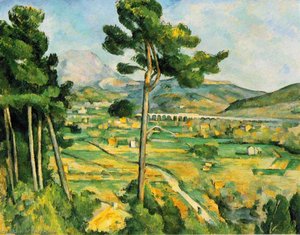
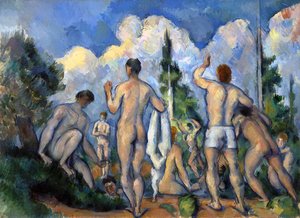
Paul Cézanne’s “Landscape 1,” though its precise dimensions remain elusive, offers a profound glimpse into the artist’s revolutionary approach to painting. More than simply a depiction of a field and trees, it’s an exploration of form, light, and the very nature of perception – a pivotal work that laid the groundwork for much of 20th-century art. The scene unfolds with a quiet intensity; a gentle slope leads the eye towards a cluster of mature trees, their branches reaching skyward like grasping fingers. A weathered wooden bench sits nestled amongst the grass, inviting contemplation and suggesting a human presence within this vast, natural space. The inclusion of two figures – one on the left, another to the right – subtly anchors the scene, imbuing it with a sense of scale and inviting us to consider our own place within the landscape.
Cézanne’s genius lay not in replicating reality but in distilling its essence. He abandoned the traditional techniques of linear perspective and atmospheric modeling, favoring instead a fragmented approach that emphasized geometric forms and the underlying structure of objects. Notice how he breaks down the trees into interlocking planes of color and shape – rectangular blocks of green and brown intermingled with patches of blue sky. This deliberate simplification wasn’t an act of carelessness; it was a conscious effort to reveal the essential building blocks of nature, as if he were constructing a visual puzzle from its constituent parts. The brushstrokes themselves are visible, not blended or smoothed out, but rather applied in short, broken strokes that create a sense of movement and vibration.
Born in Aix-en-Provence in 1839, Paul Cézanne was a key figure bridging the gap between Impressionism and Cubism. Initially influenced by the academic traditions of his upbringing – his father was a banker – he ultimately rejected these constraints to pursue his own artistic vision. He spent much of his life studying Mount Saint-Victoire, a towering peak near Aix, transforming it into a recurring motif in his work. This obsessive study wasn’t merely about capturing its appearance; it was an attempt to understand its fundamental geometry and the way light interacted with its surfaces. Cézanne's exploration of this mountain became a metaphor for his broader artistic quest – to find new ways of representing three-dimensional space on a two-dimensional surface.
Cézanne’s work was initially met with skepticism and even ridicule by the Parisian art establishment, who found his fragmented forms and unconventional techniques jarring. However, his influence gradually grew as artists like Matisse and Picasso recognized the radical nature of his ideas. Picasso famously declared that Cézanne “destroyed perspective,” acknowledging the profound impact of Cézanne’s work on the development of Cubism. Cézanne's insistence on seeing objects in their essential forms – divorced from superficial details – paved the way for a new era of artistic abstraction.
Beyond its formal innovations, “Landscape 1” resonates with deeper symbolic meanings. The bench itself represents a moment of pause, an invitation to reflect on our relationship with nature. The two figures in the painting suggest a connection between humanity and the natural world – a recognition that we are both part of and separate from this landscape. Cézanne’s use of color is equally significant; the warm greens and browns evoke feelings of tranquility and stability, while the touches of blue sky hint at an infinite expanse beyond our immediate perception. The painting isn't simply about depicting a scene; it’s about conveying a sense of profound contemplation and spiritual awareness.
Most-Famous-Paintings offers meticulously crafted, hand-painted reproductions of Paul Cézanne’s “Landscape 1,” capturing the artist's unique style and emotional depth. Each reproduction is created by skilled artisans who painstakingly recreate Cézanne’s broken brushstrokes and vibrant color palette using traditional oil painting techniques. Whether you are an art enthusiast, a collector seeking to expand your collection, or simply someone looking for a stunning piece of artwork to enhance your interior space, a Most-Famous-Paintings reproduction of “Landscape 1” is a timeless investment that will bring beauty and inspiration into your home for years to come. Explore the full range of available sizes and finishes on our website today – https://www.Most-Famous-Paintings.com/en/art/paul-cezanne-landscape-1-8EWNXK-en/


1839 - 1906 , Francuska

Explore the profound evolution of Post-Impressionist landscapes. From Van Gogh's emotional brushwork to Cézanne's structural mastery, discover how these visionaries redefined art history through color and form in this expert guide for fine art enthusiasts.


Budite u tijeku s najnovijim umjetničkim vijestima, ekskluzivnim ponudama i idejama za dekoraciju.
Recite nam nešto o svom projektu, a naši će stručnjaci za umjetnost pripremiti 3 personalizirana prijedloga umjetnina.
Dopustite nam da odaberemo 3 opcije samo za Vas – Besplatno!


 Pregledaj u stvarnoj veličini
 Pošalji
 Podijeli
 Detalji o umjetničkom djelu

 Preuzmi
 Slični predmeti
 Rentgenska snimka
 Automatska prezentacija
 Prikaži više







 Opcija stakla dostupna je samo za dimenzije manje od 110 cm