x

Giclée tisak muzejske kvalitete ili otisak na platnu uz brzu proizvodnju i fleksibilne opcije završne obrade. ( Kupi ručno naslikanu sliku Kupi digitalnu sliku)





























Odaberite jednu od naših unaprijed definiranih veličina koje odgovaraju izvornim proporcijama umjetničkog djela.

Možete unijeti vlastite dimenzije kako biste umjetničko djelo prilagodili specifičnom okviru ili prostoru. Ako odabrana veličina ne odgovara proporcijama izvornog rada, izrezat ćemo dio slike ili je proširiti pomoću ogledalnog efekta ili jednobojne rubne površine. Digitalni prikaz (mockup) bit će vam poslan na odobrenje prije početka proizvodnje.
Imajte na umu da pregled na zaslonu ne odražava stvarno izrezivanje ili proširivanje. Samo će mockup točno prikazati konačnu kompoziciju.
Iako su dostupne prilagođene veličine, preporučujemo odabir dimenzije iz unaprijed definirane liste kako biste očuvali izvorne proporcije.
Dostava širom svijeta () u roku od 2 tjedna umjesto standardnih 4/5 tjedana. (18 Kolovoz)


untitled (2078)
Veličina reprodukcije
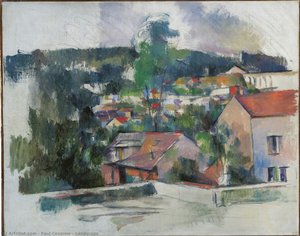
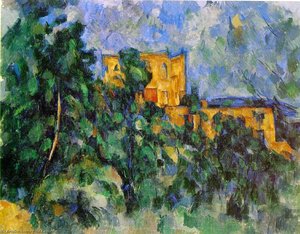
Paul Cézanne's "Untitled (2078)" isn’t merely a landscape; it’s an invitation to contemplate the very essence of perception. Painted in the twilight years of his career, around 1906, this work stands as a pivotal bridge between the fleeting impressions of Impressionism and the nascent explorations of Cubism – a testament to Cézanne's profound understanding of how we truly *see* the world. The canvas unfolds like a carefully constructed architectural study, dominated by a dense grove of trees that seem to both exist within and independently shape the surrounding space. It’s a scene rooted in the Provençal countryside near his beloved Aix-en-Provence, yet transcends simple representation, becoming instead an embodiment of Cézanne's relentless pursuit of formal structure and underlying geometry.
The style is undeniably Post-Impressionist, but one that deliberately rejects the ephemeral qualities favored by its predecessors. Cézanne wasn’t interested in capturing a momentary sunset or the shimmering effect of light; he sought to distill nature down to its fundamental components – cylinders, spheres, and cones – as he famously articulated. This is evident in the way the trees are rendered: not as soft, hazy forms, but as sharply defined planes stacked upon one another, creating an illusion of depth and solidity. The composition itself is vertically oriented, emphasizing the towering presence of the arboreal subjects and drawing the eye upwards into the atmospheric haze above.
Cézanne’s technique is immediately arresting – a deliberate departure from the smooth, blended brushstrokes of Impressionism. Instead, he employs a thick, broken application of paint known as *impasto*, building up layers of color with visible, tactile strokes. These aren't delicate whispers; they are assertive declarations, each mark contributing to the overall structure and form of the painting. Notice how the greens – ranging from deep forest hues to lighter, almost yellowish tones – are applied in distinct patches, creating a sense of texture and volume. The subtle use of ochre and yellow in the foreground grounds the scene, providing a warm counterpoint to the cool blues and greens of the sky and distant hills. The canvas itself feels alive with the artist’s hand; you can almost trace the individual movements as he built up the surface.
He utilized oil paints on canvas, meticulously layering them to achieve his desired effects. The deliberate roughness of the paint application adds a remarkable sense of immediacy and presence to the work – it feels as though Cézanne was working directly onto the canvas, capturing the essence of the scene in real-time. The scale of the *impasto* is particularly noteworthy; it’s not merely decorative but integral to the painting's structural integrity, reinforcing the idea that nature itself is a complex system of interlocking forms.
Beyond its formal qualities, “Untitled (2078)” resonates with a quiet sense of solitude and contemplation. The dense forest creates an enclosure, suggesting a retreat from the outside world – a space for introspection and connection with nature. The distant hills, rendered in muted tones, offer a subtle suggestion of human presence, perhaps a small dwelling or structure nestled within the landscape. This secondary element serves not as a focal point but rather as a reminder of our place within the larger natural order.
Cézanne’s work is deeply rooted in his personal experience and philosophical outlook. He sought to capture not just what he *saw*, but how he *felt* about what he saw – a profound appreciation for the beauty and enduring power of nature. The painting evokes a sense of timelessness, inviting viewers to lose themselves in its tranquil atmosphere and contemplate the mysteries of perception and existence. It’s a reminder that art can be both intellectually stimulating and emotionally resonant, offering a pathway to deeper understanding and connection.
Cézanne's influence on subsequent generations of artists is undeniable. His exploration of form, color, and perspective paved the way for the revolutionary developments of Cubism and other avant-garde movements. Artists like Picasso and Braque were profoundly inspired by his ability to deconstruct reality and represent it in a new and innovative way. “Untitled (2078)” stands as a prime example of this legacy – a work that continues to challenge our perceptions and inspire artists today. Reproductions, while capturing the essence of the original, can never fully replicate the tactile richness and emotional depth of Cézanne’s masterful brushwork.


1839 - 1906 , Francuska

Explore the profound evolution of Post-Impressionist landscapes. From Van Gogh's emotional brushwork to Cézanne's structural mastery, discover how these visionaries redefined art history through color and form in this expert guide for fine art enthusiasts.

Explore the profound revolution of Post-Impressionism. Delve into the history, techniques, and emotional depth of masters like Van Gogh and Seurat. Discover how to transform your space with museum-quality, hand-painted oil reproductions of these iconic masterpieces.

Delve into the transformative era of Post-Impressionism. From Seurat’s Pointillism to Cézanne’s structure, explore the history behind the masters. Most-Famous-Paintings.com provides museum-grade, hand-painted oil reproductions for the discerning art enthusiast and collector.


Budite u tijeku s najnovijim umjetničkim vijestima, ekskluzivnim ponudama i idejama za dekoraciju.
Recite nam nešto o svom projektu, a naši će stručnjaci za umjetnost pripremiti 3 personalizirana prijedloga umjetnina.
Dopustite nam da odaberemo 3 opcije samo za Vas – Besplatno!


 Pregledaj u stvarnoj veličini
 Pošalji
 Podijeli
 Detalji o umjetničkom djelu

 Preuzmi
 Slični predmeti
 Rentgenska snimka
 Automatska prezentacija

 Prikaži više







 Opcija stakla dostupna je samo za dimenzije manje od 110 cm