


x


 Preview
 Kupi otisak Naručite reprodukciju
 Pošalji
 Detalji o umjetničkom djelu
 Dodaj u omiljene
 Preuzmi
 Slični predmeti
 Rentgenska snimka
 Automatska prezentacija
Kupite digitalnu sliku visoke rezolucije i poboljšane kvalitete, koja je znatno superiornija od online prikaza.
Svaka datoteka pedantno je pripremljena od strane naših internih stručnjaka koristeći napredne alate i vještinsku ručnu retušu. Osiguravamo da svaka slika ima iznimnu jasnoću, preciznu točnost boja i visoku razinu detalja.
Konačna datoteka dostavlja se putem e-pošte u roku od 72 sata, optimizirana za neposrednu upotrebu u profesionalnim, uredničkim i tiskarskim okruženjima. To je ista kvaliteta kojoj vjeruju vrhunski studiji dizajna, izdavači i galerije.
Preuzmite datoteku visoke rezolucije za osobnu izložbu, tisak i kreativne projekte.
Odabirom Most-Famous-Paintings.com ne dobivate samo sliku – dobivate profesionalno unapređeno digitalno umjetničko djelo, izrađeno s najvećom preciznošću uz jamstvo zadovoljstva. Evo svega što automatski dolazi uz vašu narudžbu:

Vaša digitalna slika visoke rezolucije bit će vam poslana e-mailom u roku od 72 sata od narudžbe – spremna za neposrednu upotrebu.

Vaše umjetničko djelo profesionalno je optimizirano pomoću naprednih AI alata i ručnog uređivanja, čime se osigurava maksimalna razina detalja, oštrine i točnosti boja.

Slučajno ste obrisali ili izgubili svoju datoteku? Ne brinite – ponovno ćemo vam je poslati u bilo kojem trenutku, potpuno besplatno.

Uživajte u svojim umjetničkim djelima trenutno, bez carina, pristojbi ili troškova dostave – digitalne datoteke uvijek su oslobođene poreza.

Uz pomoć profesionalnih alata i upravljanja bojama, osiguravamo da vaša digitalna slika što vjernije odražava izvorne boje.

Ako niste zadovoljni svojom digitalnom slikom, revidirat ćemo je ili vratiti 100% novca u roku od 60 dana – bez ikakvih pitanja.

Niste zadovoljni? Osigurajte puni povrat novca u roku od 60 dana od primitka vaše digitalne datoteke – bez suvišnih pitanja.

Kupite 3 slike, uštedite 10% - Kupite 5 slika, uštedite 15% - Kupite 10+ slika, uštedite 20%. Odlično za kreativne projekte, galerije i agencije.
Piet Mondrian’s “Composition,” produced around 1925, stands as a cornerstone of Neo-Plasticism—a movement that fundamentally reshaped the landscape of early twentieth-century art. More than just aesthetically pleasing, it embodies a profound philosophical assertion: that abstraction represents a more truthful reflection of reality than representational imagery.
As Dr Stephanie Chadwick eloquently explains in Smarthistory (Smarthistory), Mondrian believed that pure abstract art emancipated itself from the constraints of naturalistic depiction, liberating it to explore universal harmonies and principles.
Considered alongside references like *The Red Mill*, Mondrian’s formative landscapes reveal a young artist diligently studying nature—a meticulous process aimed at mastering technique. Yet, even amidst this careful observation, he harbored an insistent desire for simplification. He wasn't merely replicating what he saw; he sought to distill its essence into its purest form.
The painting itself is deceptively simple. A grid of horizontal and vertical lines dominates the canvas—a deliberate rejection of curvilinear forms favored by Impressionism and Cubism. Within this geometric framework reside squares of primary colors – red, blue, and yellow – interspersed with rectangles of black and white.
The meticulous execution is characteristic of Mondrian’s approach. Each square is precisely delineated, its edges sharply defined, conveying a sense of stability and order. The color palette—though restrained—is carefully considered; the hues are chosen to create visual balance and contribute to the overall meditative atmosphere.
“Composition” emerged during a period of intense intellectual ferment in Europe, fueled by breakthroughs in physics (Einstein’s theory of relativity) and psychology. Artists like Mondrian were grappling with questions about perception and representation, rejecting traditional artistic conventions in favor of new expressive languages.
The painting aligns perfectly with the tenets of Neo-Plasticism—a movement championed by artists including Kazimir Malevich and Theo van Doesburg. These pioneers sought to create a universal aesthetic language based on geometric abstraction, mirroring the underlying structure of the cosmos.
Mondrian’s use of color isn't arbitrary; it carries symbolic significance rooted in his spiritual beliefs. He drew inspiration from Zendavesta—the Zoroastrian sacred text—which posits that the universe is comprised of four elemental forces: fire, air, water, and earth.
The squares represent these elements, while the horizontal and vertical lines symbolize the opposing forces of heaven and earth. By eliminating extraneous details and reducing forms to their fundamental geometric shapes, Mondrian aimed to transcend subjective experience and capture a glimpse of objective reality—a quest for spiritual harmony expressed through visual language.
Despite its austere appearance, “Composition” possesses an undeniable emotional resonance. The balanced grid and harmonious color scheme evoke feelings of serenity and contemplation. It invites viewers to engage in a dialogue with the artwork itself—to consider its underlying principles and appreciate its subtle beauty.
As showcased at The Metropolitan Museum of Art (The Metropolitan Museum of Art), this piece exemplifies the movement’s ambition to communicate profound ideas through visual form, demonstrating how Mondrian successfully translated philosophical concepts into a powerfully evocative aesthetic experience.

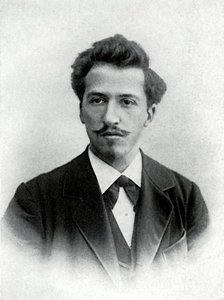
1872 - 1944 , Nizozemska


Budite u tijeku s najnovijim umjetničkim vijestima, ekskluzivnim ponudama i idejama za dekoraciju.
Recite nam nešto o svom projektu, a naši će stručnjaci za umjetnost pripremiti 3 personalizirana prijedloga umjetnina.
Dopustite nam da odaberemo 3 opcije samo za Vas – Besplatno!


 Podijeli


 Prikaži više


