


x

 AcrylicWallArtHigh Renaissance
 1502
1502 31.0 x 46.0 cm
 Museo Poldi Pezzoli
Ručno oslikano uljanim bojama na platnu u dimenzijama i okviru po vašem izboru, izrađeno po narudžbi od strane naših umjetnika. ( Kupi print Kupi digitalnu sliku)





























Odaberite jednu od naših unaprijed definiranih veličina koje odgovaraju izvornim proporcijama umjetničkog djela.

Možete unijeti vlastite dimenzije kako bi odgovarale određenom okviru ili prostoru. Ako odabrana veličina ne odgovara proporcijama izvorne slike, izrezat ćemo umjetničko djelo ili proširiti sliku dodatnim ručno oslikanim elementima. Digitalni nacrt bit će vam poslan na odobrenje prije početka proizvodnje.
Imajte na umu da pregled na ekranu ne prikazuje stvarno izrezivanje ili proširivanje. Samo će nacrt točno prikazati konačni sastav.
Iako su dostupne prilagođene veličine, preporučujemo odabir dimenzije s preddefiniranog popisa kako bismo očuvali izvorne proporcije.
Isporuka širom svijeta () u roku od 3-4 tjedna umjesto standardnih 5 tjedana. (19 Kolovoz). Bez kompromisa u kvaliteti.


Processioned Cross with Franciscan Saints (recto)
Veličina reprodukcije

Born in Brooklyn, New York City, in December 1960 to a Haitian father, Gerard Basquiat, and a Puerto Rican mother, Matilde Fernández, Jean-Michel Basquiat’s life was one of profound contrasts – privilege alongside struggle, artistic promise shadowed by personal demons. He navigated the vibrant, often turbulent, streets of New York during a period of immense social and political change, an environment that would indelibly shape his art. His early years were marked by a complex family dynamic; after his parents separated when he was just three years old, he spent much of his childhood with his paternal grandmother in Washington Heights, a predominantly Black neighborhood known for its tight-knit community and rich cultural heritage. This experience instilled within him a deep awareness of racial inequality and the complexities of identity – themes that would become recurring motifs in his work.
Basquiat’s artistic journey began with graffiti art in the late 1970s, a movement he quickly embraced as a means of expression and rebellion. Alongside Al Diaz, he formed the duo SAMO (Seeking Artistic Maturity Organization), tagging subway cars throughout Manhattan with cryptic phrases and symbols. These early works were not merely vandalism; they were a deliberate challenge to established artistic norms and a commentary on urban life. The collaboration with Diaz proved short-lived, however, as Basquiat soon asserted his own voice and began to develop his distinctive style – a potent blend of raw emotion, social critique, and neo-expressionist techniques.
By the early 1980s, Jean-Michel Basquiat had emerged as a singular force in the New York art scene. His work quickly gained recognition for its bold imagery, fragmented narratives, and incorporation of text – often borrowed from encyclopedias, historical documents, and personal reflections. He drew heavily on his Haitian heritage, exploring themes of race, identity, power, and social injustice with unflinching honesty. His canvases were layered with symbols—skulls, crowns, musical instruments, and anatomical studies—creating a visual language that was both unsettling and deeply compelling.
Basquiat’s rise coincided with the burgeoning neo-expressionist movement, characterized by its rejection of minimalist abstraction and return to figurative painting. Artists like Frank Auerbach, Anselm Kiefer, and Rudolf Baranik were exploring similar themes of personal experience and social commentary. However, Basquiat's work possessed a unique urgency and immediacy that set him apart. His art wasn’t simply about depicting reality; it was about interrogating it, exposing its contradictions, and challenging the viewer to confront uncomfortable truths.
Basquiat’s artistic vision was profoundly shaped by his diverse influences – from the street art of New York to the works of artists like Picasso, Warhol, and Bas-Ksi. He was particularly fascinated by the writings of Haitian poet Jean Dubois, whose work explored themes of colonialism, identity, and resistance. His interest in history, particularly the legacy of slavery and racial oppression, fueled his desire to create art that spoke to the complexities of the African American experience.
Furthermore, Basquiat’s fascination with music—particularly jazz and blues—permeated his work. He frequently incorporated musical instruments into his paintings, often depicting them as symbols of struggle, resilience, and cultural identity. His use of text was similarly influenced by the rhythms and patterns of spoken word poetry and hip-hop lyrics – a reflection of the vibrant urban culture that surrounded him.
Tragically, Jean-Michel Basquiat’s life was cut short at the age of 27 in August 1988. He died from a heroin overdose in his New York apartment, a devastating loss for the art world and a poignant reminder of the personal struggles that often accompany artistic genius. Despite his untimely death, Basquiat's legacy endures. His work continues to be exhibited around the world, celebrated for its raw emotion, social commentary, and innovative approach to painting.
His paintings command staggering prices at auction, a testament to their enduring value and cultural significance. Basquiat’s influence can be seen in the work of countless contemporary artists, who continue to draw inspiration from his fearless exploration of identity, power, and social justice. He remains a powerful symbol of artistic rebellion, a voice for the marginalized, and an unforgettable figure in the history of art.

1978 - , Switzerland
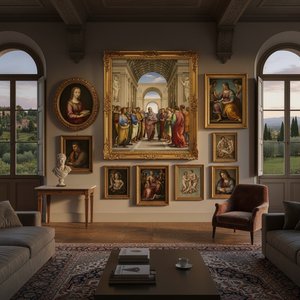
Uronite u svijet Rafaela! Otkrijte 25 remek-djela renesansnog genija – od Madona do Sikstinske kapele. Povijest umjetnosti, tehnike slikanja i inspiracija za vaš dom. Kvalitetne reprodukcije na Most-Famous-Paintings.com!

Explore the life & art of Henri Edmond Cross, a pivotal Neo-Impressionist painter. Discover his innovative divisionist technique, political affiliations, and lasting influence on modern art movements like Fauvism. Learn about key works & legacy.

Explore the life & art of Pietro Perugino, a pivotal Renaissance master and Raphael’s influential teacher. Discover his serene compositions, Sistine Chapel frescoes, and lasting legacy with Most-Famous-Paintings.

Embark on a profound journey through art history with our exploration of Saint Francis's most iconic works. Discover Giotto’s revolutionary frescoes and the spiritual depth of Proto-Renaissance masterpieces through an expert lens for the true classic art enthusiast.

Elevate your home with the sublime harmony of Raphael’s masterpieces. Explore iconic High Renaissance works, from St. George to The School of Athens, and discover how premium, hand-painted reproductions can transform your space into a sanctuary of classical elegance and timeless beauty.


Budite u tijeku s najnovijim umjetničkim vijestima, ekskluzivnim ponudama i idejama za dekoraciju.
Recite nam nešto o svom projektu, a naši će stručnjaci za umjetnost pripremiti 3 personalizirana prijedloga umjetnina.
Dopustite nam da odaberemo 3 opcije samo za Vas – Besplatno!


 Pregledaj u stvarnoj veličini
 Pošalji
 Podijeli
 Detalji o umjetničkom djelu

 Preuzmi
 Slični predmeti
 Rentgenska snimka
 Automatska prezentacija
 Prikaži više







 Opcija stakla dostupna je samo za dimenzije manje od 110 cm


