x

 Ulje na paneluBaroque
 1625
1625 85.0 x 61.0 cm
Giclée tisak muzejske kvalitete ili otisak na platnu uz brzu proizvodnju i fleksibilne opcije završne obrade. ( Kupi ručno naslikanu sliku Kupi digitalnu sliku)





























Odaberite jednu od naših unaprijed definiranih veličina koje odgovaraju izvornim proporcijama umjetničkog djela.

Možete unijeti vlastite dimenzije kako biste umjetničko djelo prilagodili specifičnom okviru ili prostoru. Ako odabrana veličina ne odgovara proporcijama izvornog rada, izrezat ćemo dio slike ili je proširiti pomoću ogledalnog efekta ili jednobojne rubne površine. Digitalni prikaz (mockup) bit će vam poslan na odobrenje prije početka proizvodnje.
Imajte na umu da pregled na zaslonu ne odražava stvarno izrezivanje ili proširivanje. Samo će mockup točno prikazati konačnu kompoziciju.
Iako su dostupne prilagođene veličine, preporučujemo odabir dimenzije iz unaprijed definirane liste kako biste očuvali izvorne proporcije.
Dostava širom svijeta () u roku od 2 tjedna umjesto standardnih 4/5 tjedana. (17 Kolovoz)


Samoportret
Veličina reprodukcije
Peter Paul Rubens's self-portrait, painted in 1625, is far more than a simple likeness; it’s a profound and intensely personal revelation. This oil on panel, measuring a modest 85 x 61 centimeters, offers an unprecedented glimpse into the mind of one of the most influential figures of the Flemish Baroque – a man grappling with his own identity, artistic ambitions, and the weighty responsibilities of a celebrated artist. The painting resides within the Gemaldegalerie Donaueschingen, a testament to its enduring significance and the institution’s commitment to preserving cultural heritage.
The immediate impact is one of quiet contemplation. Rubens isn't presenting a flamboyant display of wealth or power; instead, he’s depicted with a deliberate solemnity. His gaze, fixed beyond the viewer, suggests an inward focus, a deep engagement with something unseen – perhaps a memory, a creative impulse, or simply the weight of his own legacy. The beard, neatly trimmed but bearing the marks of time and experience, adds to this sense of gravitas. The simple black hat, angled slightly off-center, is not merely an accessory; it subtly frames his face, drawing attention to his eyes – windows into a complex and deeply thoughtful soul.
Rubens’s mastery of technique is immediately apparent. He employs the dramatic principles of chiaroscuro—the masterful manipulation of light and shadow—to create an astonishing sense of volume and depth. The dark background, rendered with subtle washes of brown underpaint, serves to intensify the luminosity of his face and hands. This isn't a flat, two-dimensional representation; it’s a sculpted portrait, alive with texture and movement. Notice how the light catches the folds of his clothing, highlighting their richness and detail, while simultaneously obscuring other areas in shadow, creating an illusion of three-dimensionality.
The brushwork itself is remarkably expressive. Rubens doesn't shy away from visible strokes—a characteristic of the Baroque style—which contribute to the painting’s dynamic energy. The application of paint varies across the surface; some areas are thinly scrubbed, revealing the wood beneath, while others boast thick, impastoed layers that seem to shimmer with color and vitality. This deliberate variation in technique adds another layer of visual interest and reinforces the sense of movement within the composition.
To fully appreciate this self-portrait, it's crucial to understand the historical context in which it was created. 1625 falls during a period of immense artistic and cultural ferment in Europe – the height of the Baroque era. Rubens himself was deeply involved in the political and diplomatic landscape of his time, serving as an ambassador for the Spanish court. This experience undoubtedly informed his work, imbuing it with a sense of grandeur and formality. The portrait reflects this dual existence: the artist-intellectual engaged in scholarly pursuits alongside the diplomat navigating complex international relations.
Furthermore, Rubens’s artistic style was deeply rooted in classical ideals, yet he infused them with a distinctly Baroque sensibility – characterized by heightened emotion, dramatic lighting, and dynamic composition. His work drew inspiration from Renaissance masters like Titian and Michelangelo, but he pushed the boundaries of realism and expression to create something entirely new. The inclusion of elements such as the rock and reddening sky—a subtle nod to his own name (Petrus et caelum rubens)—demonstrates this intellectual engagement with his art.
Rubens’s self-portraits are not merely technical exercises; they offer invaluable insights into the artist's life, personality, and artistic philosophy. They reveal a man of considerable intellect, ambition, and emotional depth – a complex individual grappling with his own identity within a rapidly changing world. The intensity of his gaze, the subtle nuances of expression, and the masterful use of light and shadow all contribute to a portrait that transcends the limitations of mere likeness.
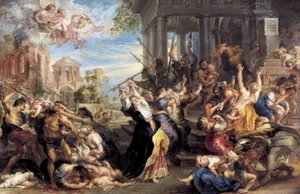
Consider, too, the significance of the act of self-portraiture itself. In an era when artists were often commissioned to paint portraits of wealthy patrons, Rubens’s decision to depict himself was remarkably bold – a declaration of his own artistic agency and a challenge to conventional notions of representation. For those seeking to understand the profound impact of one of history's greatest painters, exploring works like The Elevation of the Cross (Rubens) and Massacre of the Innocents (Rubens), alongside broader historical studies such as History of Painting.


1577 - 1640 , Njemačka

Explore the profound elegance of Baroque Classicism. Discover how 17th-century masters synthesized dramatic emotion with classical order through the lens of the Counter-Reformation and the works of legends like Carlo Maratta and Andrea Sacchi.

Explore the dramatic power of Baroque art through an expert guide to light, shadow, and emotion. Discover how the Counter-Reformation shaped 17th-century masterpieces and learn about the profound techniques used by the Old Masters to inspire awe.

Explore the profound drama of 17th-century Baroque art. Discover how masters used chiaroscuro, movement, and emotional intensity to redefine history through the lens of the Counter-Reformation. An expert guide for art historians and collectors seeking deep cultural insight.


Budite u tijeku s najnovijim umjetničkim vijestima, ekskluzivnim ponudama i idejama za dekoraciju.
Recite nam nešto o svom projektu, a naši će stručnjaci za umjetnost pripremiti 3 personalizirana prijedloga umjetnina.
Dopustite nam da odaberemo 3 opcije samo za Vas – Besplatno!


 Pregledaj u stvarnoj veličini
 Pošalji
 Podijeli
 Detalji o umjetničkom djelu

 Preuzmi
 Slični predmeti
 Rentgenska snimka
 Automatska prezentacija
 Prikaži više







 Opcija stakla dostupna je samo za dimenzije manje od 110 cm