


x


 Kupi otisak Kupi digitalnu sliku
 Pošalji
 Detalji o umjetničkom djelu
 Dodaj u omiljene
 Preuzmi
 Slični predmeti
 Rentgenska snimka
 Automatska prezentacija
Ručno oslikano uljanim bojama na platnu u dimenzijama i okviru po vašem izboru, izrađeno po narudžbi od strane naših umjetnika.
Odaberite jednu od naših unaprijed definiranih veličina koje odgovaraju izvornim proporcijama umjetničkog djela.

Možete unijeti vlastite dimenzije kako bi odgovarale određenom okviru ili prostoru. Ako odabrana veličina ne odgovara proporcijama izvorne slike, izrezat ćemo umjetničko djelo ili proširiti sliku dodatnim ručno oslikanim elementima. Digitalni nacrt bit će vam poslan na odobrenje prije početka proizvodnje.
Imajte na umu da pregled na ekranu ne prikazuje stvarno izrezivanje ili proširivanje. Samo će nacrt točno prikazati konačni sastav.
Iako su dostupne prilagođene veličine, preporučujemo odabir dimenzije s preddefiniranog popisa kako bismo očuvali izvorne proporcije.
Isporuka širom svijeta () u roku od 3-4 tjedna umjesto standardnih 5 tjedana. (20 Srpanj). Bez kompromisa u kvaliteti.


Commodore John Watson
Veličina reprodukcije

Tilly Kettle (1735–1786) stands as a singular figure in British art history—the first prominent English portrait painter to establish himself successfully within the vibrant cultural landscape of India during the zenith of the East India Company’s dominion. Born in London, the son of a coach painter from a family steeped in brewing tradition for five decades, Kettle's artistic journey began with foundational training under William Shipley at the Strand. This early apprenticeship placed him within a burgeoning artistic milieu eager to explore new horizons beyond the traditional confines of the English countryside.
His professional foray into portraiture commenced in the 1750s, swiftly gaining recognition for his ability to capture likenesses with remarkable accuracy and sensitivity. Kettle’s early canvases—primarily self-portraits from 1760—immediately signaled his ambition and established him as a rising talent within the Society of Artists, founded in 1761. This initial exhibition solidified his position amongst fellow artists striving for acclaim and propelled him toward greater commissions. His early career was marked by a refined ability to document the dignity and status of his subjects, notably through his work with the members of the Dartmouth family.
Beyond the borders of England, Kettle’s legacy is defined by his extraordinary expedition in 1768. Traveling alongside the East India Company, he landed at Madras, an experience that would profoundly transform his artistic vision and subject matter. This period allowed him to bridge two worlds, blending European neoclassical techniques with the exoticism and grandeur of the Indian subcontinent. His work from this era serves as a vital historical record, capturing the complex intersections of British colonial presence and local Indian life.
Kettle’s technique was characterized by a remarkable realism and an ability to render both the textures of opulent fabrics and the subtle nuances of human emotion. His repertoire spans a diverse range of subjects, from the aristocratic elegance of Georgian England to the commanding figures of the East India Company's influence in India. Some of his most significant contributions to the art world include:
Through these works, Kettle did more than merely record faces; he captured the very essence of an era defined by expansion, trade, and the meeting of disparate cultures. His ability to adapt his style to suit both the formal requirements of British portraiture and the vibrant, often overwhelming, sensory landscape of India ensures his enduring place in the annals of art history.

1735 - 1786 , United Kingdom

Journey through 18th century art! Explore 10 iconic paintings – from Rococo elegance to Neoclassical grandeur. Discover Fragonard, David & more. Find museum-quality reproductions and elevate your home decor on Most-Famous-Paintings.com.

Explore the life & work of Henry Raeburn, a master Scottish portraitist. Discover his innovative techniques, captivating portraits of the Enlightenment era, and lasting legacy in art history. Learn more at Most-Famous-Paintings.

Commission a timeless historical-style portrait from skilled artists. Explore Renaissance to Dutch Masters techniques & create a lasting legacy. Expert guidance, bespoke designs & museum-quality results. Discover your artistic vision today!

Explore the life & art of Louise Élisabeth Vigée Le Brun, Marie Antoinette’s renowned portraitist. Discover her Rococo style, self-portraits, and influence on 18th-century French painting. A deep dive into patronage & feminine identity.
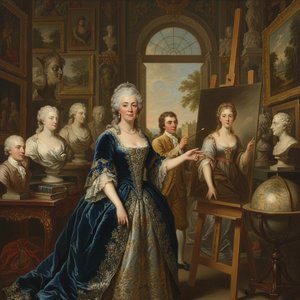
Explore the fascinating world of Sarah Churchill, Countess of Essex, a pivotal figure in 18th-century art patronage. Discover her influence on Rococo aesthetics and portraiture, and learn about commissioning artworks as a statement of power & identity.


Budite u tijeku s najnovijim umjetničkim vijestima, ekskluzivnim ponudama i idejama za dekoraciju.
Recite nam nešto o svom projektu, a naši će stručnjaci za umjetnost pripremiti 3 personalizirana prijedloga umjetnina.
Dopustite nam da odaberemo 3 opcije samo za Vas – Besplatno!


 Podijeli


 Prikaži više




































 Opcija stakla dostupna je samo za dimenzije manje od 110 cm


