Prodajte svoju umjetnost
Lista želja Vaša košarica Cart
Pregledaj u stvarnoj veličiniPregledaj u stvarnoj veličini AR pregledAR pregled Kupi print Kupi printKupi ručno naslikanu sliku Kupi ručno naslikanu sliku PošaljiPošalji
Detalji o umjetničkom djeluDetalji o umjetničkom djelu Dodaj u omiljene Dodaj u omiljene PreuzmiPreuzmi Slični predmetiSlični predmeti Rentgenska snimkaRentgenska snimka Automatska prezentacijaAutomatska prezentacija

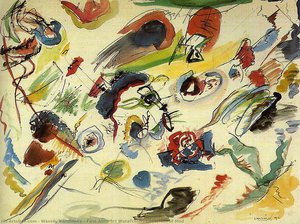
Fixed Points

Explore Wassily Kandinsky’s "Fixed Points," a vibrant abstract landscape masterpiece from 1942. Discover his geometric shapes & colors at Most-Famous-Paintings.com – high-quality reproductions available!

Otkrijte svijet apstraktne umjetnosti s Kandinskyjevom "Kompozicija VII" i drugim velikanskim djelima koja su promijenila povijest umjetnosti!

Kupite digitalnu sliku visoke rezolucije i poboljšane kvalitete, koja je znatno superiornija od online prikaza.

Svaka datoteka pedantno je pripremljena od strane naših internih stručnjaka koristeći napredne alate i vještinsku ručnu retušu. Osiguravamo da svaka slika ima iznimnu jasnoću, preciznu točnost boja i visoku razinu detalja.

Konačna datoteka dostavlja se putem e-pošte u roku od 72 sata, optimizirana za neposrednu upotrebu u profesionalnim, uredničkim i tiskarskim okruženjima. To je ista kvaliteta kojoj vjeruju vrhunski studiji dizajna, izdavači i galerije.

Digitalna slika

Preuzmite datoteku visoke rezolucije za osobnu izložbu, tisak i kreativne projekte. (Kupi print Kupi printKupi ručno naslikanu sliku Kupi ručno naslikanu sliku)

Ukupna cijena

$ 24,90

Uključeno uz svaku narudžbu digitalne slike

Profesionalna digitalna dostava, zajamčena

Odabirom Most-Famous-Paintings.com ne dobivate samo sliku – dobivate profesionalno unapređeno digitalno umjetničko djelo, izrađeno s najvećom preciznošću uz jamstvo zadovoljstva. Evo svega što automatski dolazi uz vašu narudžbu:

shipping_icon
Brza dostava e-poštom

Vaša digitalna slika visoke rezolucije bit će vam poslana e-mailom u roku od 72 sata od narudžbe – spremna za neposrednu upotrebu.

canvas_icon
Digitalna datoteka poboljšana AI-om

Vaše umjetničko djelo profesionalno je optimizirano pomoću naprednih AI alata i ručnog uređivanja, čime se osigurava maksimalna razina detalja, oštrine i točnosti boja.

insurance_icon
Besplatna ponovna dostava doživotno

Slučajno ste obrisali ili izgubili svoju datoteku? Ne brinite – ponovno ćemo vam je poslati u bilo kojem trenutku, potpuno besplatno.

tax_icon
Bez uvoznih carina – ikada

Uživajte u svojim umjetničkim djelima trenutno, bez carina, pristojbi ili troškova dostave – digitalne datoteke uvijek su oslobođene poreza.

color_icon
Jamstvo točnosti boja

Uz pomoć profesionalnih alata i upravljanja bojama, osiguravamo da vaša digitalna slika što vjernije odražava izvorne boje.

return_icon
Jamstvo zadovoljstva u trajanju od 60 dana

Ako niste zadovoljni svojom digitalnom slikom, revidirat ćemo je ili vratiti 100% novca u roku od 60 dana – bez ikakvih pitanja.

guarantee_icon
100% Jamstvo povrata novca

Niste zadovoljni? Osigurajte puni povrat novca u roku od 60 dana od primitka vaše digitalne datoteke – bez suvišnih pitanja.

discount_icon
Popusti na velike narudžbe

Kupite 3 slike, uštedite 10% - Kupite 5 slika, uštedite 15% - Kupite 10+ slika, uštedite 20%. Odlično za kreativne projekte, galerije i agencije.

Osnovne informacije

  • Title: Fixed Points
  • Movement: Abstract Art
  • Location: Private Collection
  • Artistic style: Expressionism
  • Dimensions: 17" x 22"
  • Notable elements or techniques: Geometric Shapes, Vibrant Colors
  • Medium: Oil on Canvas

Kviz o umjetnosti

Svako pitanje ima samo jedan točan odgovor.

Pitanje 1:
What artistic movement is Wassily Kandinsky’s ‘Fixed Points’ primarily associated with?
Pitanje 2:
The painting utilizes geometric shapes like circles and squares. What is the dominant purpose of these shapes in conveying Kandinsky’s artistic vision?
Pitanje 3:
What color scheme characterizes ‘Fixed Points’?
Pitanje 4:
‘Fixed Points’ exemplifies Kandinsky's exploration of spirituality. How does the painting contribute to this thematic element?
Pitanje 5:
What is the significance of the clock element in ‘Fixed Points’?

Opis kolekcionarskog djela

Fixed Points by Wassily Kandinsky

Wassily Wassilyevich Kandinsky (1866-1944), born in Moscow, Russia, was an artist whose groundbreaking exploration of abstraction fundamentally reshaped the landscape of modern art. Initially drawn to music—he possessed considerable skill on the piano and cello—Kandinsky’s artistic journey began with a transformative encounter: witnessing Monet's “Haystacks” exhibition ignited his passion for painting and propelled him toward a radical new vision. He pursued law and economics at Moscow University, graduating in 1889, but swiftly abandoned academic pursuits to dedicate himself entirely to artistic creation. This decisive step culminated in relocating to Munich, Germany, where he honed his craft at Anton Ažbe’s private school and later the Academy of Fine Arts. It was during this period that Kandinsky's stylistic evolution accelerated. Influenced by Impressionism, Fauvism, and Cubism—movements that wrestled with capturing fleeting sensations and exploring new perspectives—he nevertheless sought a path beyond mere representation. The pivotal moment arrived in 1896 when he witnessed Monet’s “Haystacks” exhibition, sparking his interest in art. This encounter served as catalyst for Kandinsky's artistic exploration, leading him to abandon his academic career and embrace painting with unwavering conviction. He studied law and economics at Moscow University, graduating in 1889, but swiftly abandoned academic pursuits to dedicate himself entirely to artistic creation. His early canvases reflected these influences—bold colors and expressive brushstrokes conveyed emotion rather than precise observation. However, Kandinsky’s true genius lay in his unwavering commitment to abstraction, a concept he championed as a means of accessing pure spiritual experience. He believed that art should transcend the limitations of visual perception, striving instead for an inner harmony that mirrored the rhythms of nature and the harmonies of music. This conviction drove him to experiment relentlessly with color, form, and composition—techniques that would become hallmarks of his distinctive style.
  • Color: Kandinsky recognized color as possessing inherent expressive power, assigning each hue a specific psychological significance. He meticulously studied color theory, analyzing its effects on the human psyche and employing it to evoke moods and emotions within his paintings.
  • Form: Geometric shapes—circles, squares, triangles—became central to Kandinsky’s visual vocabulary. These forms were not merely decorative elements but symbols representing fundamental concepts such as unity, stability, and dynamism.
  • Composition: Kandinsky orchestrated intricate arrangements of shapes and colors, creating dynamic compositions that defied conventional perspective and logic. He sought to capture the essence of movement and energy, mirroring the rhythms of life itself.
“Fixed Points,” created in 1942 during a period marked by profound artistic introspection, exemplifies Kandinsky’s unwavering dedication to abstraction. The painting features a predominantly red background punctuated by interconnected circles, squares, and triangles—a deliberate choice reflecting Kandinsky's belief that color could convey spiritual truths. These geometric forms pulsate with energy, creating a visual landscape that transcends literal representation and invites contemplation. As a testament to Kandinsky’s visionary approach, “Fixed Points” remains an enduring symbol of artistic innovation and spiritual aspiration.

The Influence of Kandinsky's Art

Kandinsky’s pioneering spirit resonated throughout the art world, inspiring generations of artists who followed in his footsteps. His bold experimentation with color and form challenged established conventions and paved the way for movements such as Surrealism and Expressionism—artists like Richard Mortensen embraced Kandinsky’s aesthetic principles, furthering the legacy of abstraction.

Collecting Kandinsky Reproductions

If you aspire to enrich your home décor with a touch of Kandinsky's genius, consider acquiring a high-quality reproduction of “Fixed Points.” At Most-Famous-Paintings.com, we offer meticulously crafted oil paintings that faithfully capture the essence of Kandinsky’s original vision—using only archival materials and techniques to ensure enduring beauty. Explore our extensive collection at Most-Famous-Paintings.com!

Experience the Beauty of Fixed Points

Most-Famous-Paintings.com presents an unparalleled opportunity to immerse yourself in the captivating world of Wassily Kandinsky's art. Discover “Fixed Points” and countless other iconic masterpieces—bringing artistic inspiration into your living space. Visit Most-Famous-Paintings.com today!

Biografija umjetnika

A Life Immersed in Color and Spirit

Wassily Wassilyevich Kandinsky, born December 4, 1866, in Moscow, Russia, was a revolutionary figure who irrevocably altered the course of modern art. His journey wasn’t one of immediate artistic calling; initially destined for a career in law and economics at the University of Moscow, it was a profound encounter with Impressionist painting – specifically Claude Monet's “Haystacks” – and a deeply moving experience witnessing Wagner’s opera "Lohengrin" that ignited within him an irrepressible desire to pursue art. This pivotal moment, occurring around age thirty, marked not merely a career change but a complete transformation of perspective, setting him on a path toward pioneering abstraction. He soon relocated to Munich, enrolling at the prestigious Academy of Fine Arts and studying under Franz von Stuck, though even within formal training, Kandinsky’s spirit yearned for exploration beyond conventional boundaries. Early influences included Russian folk art, gleaned from an ethnographic expedition to the Vologda region in 1889, which instilled a fascination with vibrant color palettes and symbolic imagery. This foundation would prove crucial as he began to develop his unique artistic language. These early explorations weren’t simply about aesthetic preference; they were rooted in a deep cultural connection and a burgeoning understanding of how art could communicate beyond the literal. He experimented with landscapes and portraits, demonstrating considerable skill but always feeling constrained by representational limitations.

The Dawn of Abstraction: From Expressionism to Inner Necessity

Kandinsky’s early works reveal a strong expressionistic bent, characterized by bold colors and emotional intensity – pieces like “Papeln (Poplars)” from 1902 exemplify this period. However, he wasn't content with merely representing the external world; he sought to express inner realities, spiritual truths that transcended mere visual depiction. This quest led him gradually away from representational art and toward a revolutionary exploration of color, form, and their emotional resonance. He believed that colors possessed inherent psychological effects, capable of evoking specific feelings and sensations in the viewer. This conviction was deeply intertwined with his burgeoning interest in Theosophy, a spiritual movement emphasizing esoteric knowledge and universal brotherhood. As he delved deeper into these ideas, Kandinsky’s paintings became increasingly non-objective, shedding recognizable forms in favor of abstract compositions driven by an “inner necessity.” This wasn't simply about abandoning representation; it was about discovering a new visual language capable of expressing the intangible realms of emotion and spirituality. He sought to create a visual equivalent of music, where color and form harmonized to evoke profound emotional responses.
  • Notable Early Works: “Papeln (Poplars),” “Fruitful Tree,” “Moscow Landscape”
  • Influences: Impressionism (Monet), Russian Folk Art

Geometric Harmony and Spiritual Resonance

The period following his involvement with the influential artist group Der Blaue Reiter (The Blue Rider), which he co-founded in Munich in 1911, saw a further evolution in Kandinsky’s style. While earlier works often featured fluid, organic shapes, he began to explore geometric abstraction, focusing on the interplay of circles, triangles, and squares. “Several Circles” (140 x 140 cm) stands as a prime example of this phase – a dynamic composition where color and form interact in a harmonious yet energetic dance. He theorized extensively about the relationship between art and spirituality, arguing that abstract forms could convey spiritual truths more effectively than figurative representations.
  • Theoretical Writings: “Concerning the Spiritual in Art” (1911)
  • The Blaue Reiter Group: Collaboration with Franz Marc and Alexei von Jawlensky

Bauhaus Influence and Lasting Legacy

The outbreak of World War I forced Kandinsky's return to Russia in 1914, but following the Russian Revolution, he found himself increasingly at odds with the prevailing artistic climate. In 1920, he accepted a teaching position at the Bauhaus school in Germany, where he profoundly influenced generations of artists with his theories on color, form, and abstraction. The Bauhaus provided an ideal environment for Kandinsky to further develop his ideas and explore new creative avenues. He continued to experiment with geometric forms and vibrant colors, often incorporating layered impasto techniques to create textured surfaces that added depth and complexity to his compositions – as seen in later works like “An Intimate Party” (1942). After the closure of the Bauhaus by the Nazi regime in 1933, Kandinsky moved to France, where he remained for the rest of his life. His impact on modern art is immeasurable; he is widely recognized as a pioneer of abstract expressionism and a key figure in the development of non-representational painting. His works are held in major museums worldwide, including the Tretyakov Gallery in Moscow, which houses his monumental “Composition VII,” a testament to his artistic vision and enduring legacy. He died December 13, 1944, in Neuilly-sur-Seine, France.
  • Major Achievements: Bauhaus Teaching Position, Development of Geometric Abstraction
  • Notable Later Works: “Composition VII,” “Landscape with Figures”
Vasily Wassilyevich Kandinsky

Vasily Wassilyevich Kandinsky

1866 - 1944 , Rusija

Kratke činjenice

  • Artistic Movement Or Style: Abstraktna umjetnost, Ekspresionizam
  • Artists Or Movements Influenced By This Artist: ['Abstrakt ekspresionizam']
  • Artists Who Influenced This Artist:
    • Claude Monet
    • Richard Wagner
  • Date Of Birth: 1866.
  • Date Of Death: 1944.
  • Full Name: Wassily Wassilyevich Kandinsky
  • Nationality: Rusija
  • Notable Artworks:
    • Murnau s Rainbow
    • Tempered Elan
    • An Intimate Party
  • Place Of Birth: Moskva, Rusija