x

Giclée tisak muzejske kvalitete ili otisak na platnu uz brzu proizvodnju i fleksibilne opcije završne obrade. ( Kupi ručno naslikanu sliku Kupi digitalnu sliku)





























Odaberite jednu od naših unaprijed definiranih veličina koje odgovaraju izvornim proporcijama umjetničkog djela.

Možete unijeti vlastite dimenzije kako biste umjetničko djelo prilagodili specifičnom okviru ili prostoru. Ako odabrana veličina ne odgovara proporcijama izvornog rada, izrezat ćemo dio slike ili je proširiti pomoću ogledalnog efekta ili jednobojne rubne površine. Digitalni prikaz (mockup) bit će vam poslan na odobrenje prije početka proizvodnje.
Imajte na umu da pregled na zaslonu ne odražava stvarno izrezivanje ili proširivanje. Samo će mockup točno prikazati konačnu kompoziciju.
Iako su dostupne prilagođene veličine, preporučujemo odabir dimenzije iz unaprijed definirane liste kako biste očuvali izvorne proporcije.
Dostava širom svijeta () u roku od 2 tjedna umjesto standardnih 4/5 tjedana. (19 Kolovoz)


Improvisation 7
Veličina reprodukcije
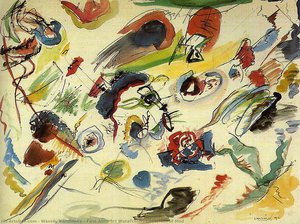
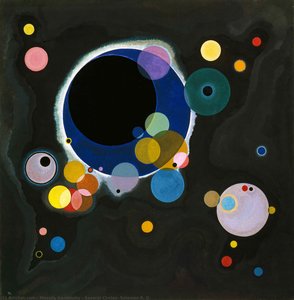
“Jazz Improvisation” is a vibrant and dynamic artwork by the pioneering Russian painter Wassily Kandinsky. Created in 1922 during his time in Germany, this piece exemplifies Kandinsky’s exploration of abstraction as a means to express inner spiritual realities through color and form. It's not a depiction of jazz music itself but rather an attempt to capture its energy, spontaneity, and improvisational nature visually.
Kandinsky was deeply influenced by music, believing that painting could evoke the same emotional responses as sound. He saw parallels between musical composition and visual art, using color and form in a way analogous to melody and harmony. “Jazz Improvisation” emerged during a period of significant artistic experimentation following World War I. The rise of jazz music itself, with its improvisational nature and syncopated rhythms, resonated with Kandinsky’s own artistic philosophy. He was fascinated by the idea of spontaneous creation and sought to translate this into his paintings.
Kandinsky's style in this period is characterized by a loosening of form and an increased emphasis on color as a primary expressive element. He moved away from representational imagery, focusing instead on creating compositions that were purely visual experiences. The painting reflects the influence of Bauhaus principles, emphasizing geometric shapes and dynamic arrangements.
While abstract, “Jazz Improvisation” is not devoid of symbolism. The swirling lines, intersecting planes, and vibrant colors create a sense of movement and energy that mirrors the improvisational nature of jazz music. The composition lacks a central focal point; instead, it’s a dynamic interplay of shapes and hues that draws the viewer's eye across the canvas.
“Jazz Improvisation” is designed to be an immersive experience for the viewer. It’s not about understanding a specific narrative but rather feeling the energy and emotion conveyed through color and form. The painting evokes a sense of spontaneity, freedom, and joyful chaos – qualities that are central to the jazz aesthetic.
Kandinsky's work challenged traditional notions of art, paving the way for abstract expressionism and influencing generations of artists. “Jazz Improvisation” stands as a testament to his innovative approach and his belief in the power of art to express profound spiritual truths through purely visual means. It remains a captivating example of how painting can transcend representation and become a powerful form of emotional communication.


1866 - 1944 , Rusija

Explore the vibrant world of Stuart Davis, a pioneer of American Modernism. Discover his jazz-inspired paintings, signature style & investment potential. Expert insights for art collectors.
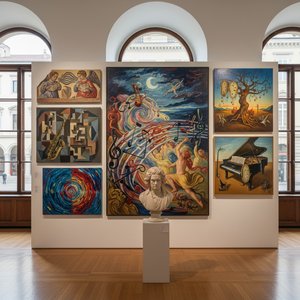
Explore the fascinating history of music's visual representation in art! From ancient symbolism to modern abstraction, discover how artists have captured sound and emotion on canvas. Expert insights & stunning examples.

Explore the life & work of Arthur B. Davies, a pivotal figure in American Modernism. Discover his unique style, role in the 1913 Armory Show, and lasting influence on art history. Learn about collecting Davies' works.

Explore the vibrant world of Gene Davis and the Washington Color School. Discover his iconic stripe paintings, innovative techniques, and lasting impact on American abstract art. A deep dive for collectors & enthusiasts.

Explore the artistic brilliance of the Jazz Age! Discover Art Deco's influence, Modernism’s impact & iconic artists like Tamara de Lempicka. Find museum-quality reproductions and expert art consultation at Most-Famous-Paintings.


Budite u tijeku s najnovijim umjetničkim vijestima, ekskluzivnim ponudama i idejama za dekoraciju.
Recite nam nešto o svom projektu, a naši će stručnjaci za umjetnost pripremiti 3 personalizirana prijedloga umjetnina.
Dopustite nam da odaberemo 3 opcije samo za Vas – Besplatno!


 Pregledaj u stvarnoj veličini
 Pošalji
 Podijeli
 Detalji o umjetničkom djelu

 Preuzmi
 Slični predmeti
 Rentgenska snimka
 Automatska prezentacija

 Prikaži više







 Opcija stakla dostupna je samo za dimenzije manje od 110 cm