x

 Oil On CanvasWallArtAmerican Impressionism
 1910
1910 74.0 x 91.0 cm
 Muzej umjetnosti Metropolitan
Ručno oslikano uljanim bojama na platnu u dimenzijama i okviru po vašem izboru, izrađeno po narudžbi od strane naših umjetnika. ( Kupi print Kupi digitalnu sliku)





























Odaberite jednu od naših unaprijed definiranih veličina koje odgovaraju izvornim proporcijama umjetničkog djela.

Možete unijeti vlastite dimenzije kako bi odgovarale određenom okviru ili prostoru. Ako odabrana veličina ne odgovara proporcijama izvorne slike, izrezat ćemo umjetničko djelo ili proširiti sliku dodatnim ručno oslikanim elementima. Digitalni nacrt bit će vam poslan na odobrenje prije početka proizvodnje.
Imajte na umu da pregled na ekranu ne prikazuje stvarno izrezivanje ili proširivanje. Samo će nacrt točno prikazati konačni sastav.
Iako su dostupne prilagođene veličine, preporučujemo odabir dimenzije s preddefiniranog popisa kako bismo očuvali izvorne proporcije.
Isporuka širom svijeta () u roku od 3-4 tjedna umjesto standardnih 5 tjedana. (20 Kolovoz). Bez kompromisa u kvaliteti.


Fish
Veličina reprodukcije
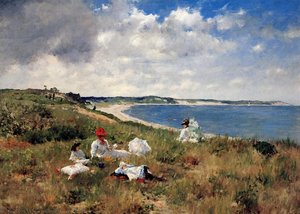
William Merritt Chase's "Fish," painted in 1910, isn’t merely a depiction of aquatic life; it’s a carefully constructed tableau that speaks volumes about the artist’s artistic lineage and his evolving approach to capturing fleeting moments. This captivating still life, rendered in shades of gray with remarkable tonal control, draws heavily from both the dramatic lighting favored by 17th-century Spanish masters and Chase's own training within the vibrant, light-infused atmosphere of Munich. The painting immediately commands attention through its dynamic arrangement – a triangular composition anchored by the imposing striped bass – yet it’s the subtle details, the almost palpable texture of scales and flesh, that truly elevate the work.
Chase's fascination with Spanish still lifes is undeniable. The fluid brushwork, reminiscent of artists like Zurbarán and Murillo, creates a sense of immediacy and vitality within the scene. However, “Fish” isn’t simply a pastiche; it incorporates Chase’s own distinctive style, honed during his time in Munich. This influence manifests in the loose, expressive application of paint, allowing for visible brushstrokes that contribute to the painting's overall texture and dynamism. The dark background, a deliberate choice, serves not as mere backdrop but as a crucial element in highlighting the forms of the fish and creating an atmosphere of quiet contemplation – a stark contrast to the often-brightened interiors of his earlier works.
The artist’s mastery lies in his ability to render texture through subtle variations in tone. The scales of the fish, rendered with meticulous detail, appear rough and reflective, catching the light as if shimmering under an unseen source. Conversely, the flesh is depicted with a smooth, moist quality, conveying a sense of freshness and vitality. This careful manipulation of value – the strategic use of light and shadow – creates a remarkable illusion of three-dimensionality, pulling the viewer into the scene. The painting’s monochromatic palette further emphasizes these tonal shifts, allowing each subtle gradation to carry significant weight.
While “Fish” avoids overt symbolism, it evokes a powerful sense of transience and abundance. The arrangement of the fish – a striped bass, a salmon, and a delicate weakfish – suggests a bounty of nature’s gifts, yet their placement on a simple table hints at their vulnerability and fleeting existence. There's an underlying melancholy woven into the composition, perhaps reflecting the artist’s awareness of mortality or the ephemeral beauty of the natural world. The dark background contributes to this somber mood, creating a space for quiet reflection on the passage of time.
“Fish” stands as a significant example of William Merritt Chase’s contribution to American Impressionism. His ability to capture light and atmosphere with such sensitivity, combined with his deep understanding of artistic tradition – both European and American – solidified his place as one of the movement's leading figures. This painting exemplifies his evolution from earlier, more formally structured works to a looser, more expressive style that prioritized capturing the essence of a moment rather than strict representation. A reproduction of “Fish” offers a beautiful window into Chase’s artistic vision and a testament to the enduring power of still life as a genre.


1849 - 1916 , Sjedinjene Američke Države

Delve into the transformative era of Post-Impressionism. From Seurat’s Pointillism to Cézanne’s structure, explore the history behind the masters. Most-Famous-Paintings.com provides museum-grade, hand-painted oil reproductions for the discerning art enthusiast and collector.

Explore the profound history and technical brilliance of oil on panel painting. From Renaissance masters to modern techniques, discover why this rigid support offers unparalleled precision and permanence for fine art lovers and collectors.


Budite u tijeku s najnovijim umjetničkim vijestima, ekskluzivnim ponudama i idejama za dekoraciju.
Recite nam nešto o svom projektu, a naši će stručnjaci za umjetnost pripremiti 3 personalizirana prijedloga umjetnina.
Dopustite nam da odaberemo 3 opcije samo za Vas – Besplatno!


 Pregledaj u stvarnoj veličini
 Pošalji
 Podijeli
 Detalji o umjetničkom djelu

 Preuzmi
 Slični predmeti
 Rentgenska snimka
 Automatska prezentacija
 Prikaži više







 Opcija stakla dostupna je samo za dimenzije manje od 110 cm