x

Kézzel festett olajvastú vászon, az Ön által választott méretben és keretben, művészeink készítik meglévőre. ( Nyomat rendelése Kép letöltése)





























Válasszon előre meghatározott méreteink közül, amelyek megfelelnek a műalkotás eredeti arányainak.

Ön megadhat saját méreteket egy adott kerethez vagy térhez igazításhoz. Ha a kiválasztott méret nem egyezik az eredeti kép arányával, akkor a műalkotást levágjuk, vagy további kézzel festett elemekkel meghosszabbítjuk a festményt. A gyártás megkezdése előtt küldünk Önnek egy digitális előnézetet jóváhagyásra.
Kérjük, vegye figyelembe, hogy a képernyőn megjelenő előnézet nem tükrözi a tényleges vágást vagy kiterjesztést. Csak az előnézet fog pontosan mutatni a végső kompozíciót.
Bár egyedi méretek állnak rendelkezésre, javasoljuk, hogy válasszon egy méretet az előre meghatározott listából az eredeti arányok megőrzése érdekében.
Világszerte elérhető szállítás () 3-4 hét alatt a szokásos 5 hét helyett. (16 augusztus). A minőség nem kérdőjelezhető.


Girls under Trees
Reprodukció mérete
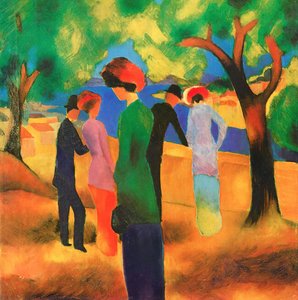
August Macke's “Girls Under Trees” (1914) isn't merely a depiction of children playing in the woods; it’s a vibrant distillation of early 20th-century optimism and a powerful expression of German Expressionism. Painted just before the artist’s tragically short life, this work captures a fleeting moment of communal joy – a scene brimming with youthful energy and a profound connection to nature. Macke masterfully employs bold color and dynamic brushstrokes to convey not just what he saw, but how he *felt* about it: a sense of unburdened happiness and the simple pleasures of life.
Born in Meschede, Germany, in 1887, August Macke was a pivotal figure within the burgeoning movement of German Expressionism. His artistic journey was marked by rapid experimentation, influenced initially by Impressionist techniques before evolving into a uniquely expressive style. The context of his work is crucial; 1914 represents a period of intense artistic innovation across Europe, with artists grappling with modernity and seeking new ways to represent the human experience. Macke’s membership in “Der Blaue Reiter” (The Blue Rider) – a group dedicated to exploring non-representational art and spiritual themes – highlights his engagement with these avant-garde currents. His brief but impactful career was cut short by the outbreak of World War I, leaving behind a legacy of intensely colored and emotionally charged paintings.
Macke’s technique is immediately striking. He utilizes loose, almost frantic brushstrokes to create a sense of movement and spontaneity. The figures aren't rendered with meticulous detail; instead, they are suggested through blocks of color and simplified forms. This approach aligns perfectly with the Expressionist desire to convey emotion rather than objective reality. Notice how he blends the children’s dresses – greens, blues, yellows – seamlessly into the surrounding foliage, dissolving the boundaries between figure and landscape. The composition itself is dynamic, drawing the viewer's eye across the canvas through a carefully orchestrated arrangement of shapes and colors. This technique reflects Macke's interest in integrating elements of the avant-garde, particularly the influence of Orphism—the use of color to create visual rhythms and harmonies.
"Girls Under Trees" resonates with a powerful sense of nostalgia and innocence. The children’s carefree laughter and joyful interaction evoke a longing for simpler times – a sentiment deeply rooted in the anxieties of a rapidly changing world. The trees themselves, rendered as monumental forms, symbolize strength, stability, and connection to nature—themes central to many Expressionist works. Macke's ability to capture this emotional core through his distinctive style elevates the painting beyond a mere depiction of children; it becomes a timeless meditation on joy, community, and the beauty of the natural world. The painting’s enduring appeal lies in its ability to tap into universal human emotions – a reminder that even amidst chaos and uncertainty, moments of pure happiness can be found.


1887 - 1914 , Németország

Explore the visceral power of German Expressionism. From Ernst Ludwig Kirchner to Die Brücke, discover how bold colors and distorted forms unmask raw human emotion in this expert art history guide for collectors and enthusiasts.


Maradjon naprakész a legfrissebb művészeti hírekkel, exkluzív ajánlatokkal és dekorációs ötletekkel.
Írja le nekünk projektjét, és művészeti szakértőink 3 személyre szabott műalkotási javaslatot készítenek Önnek.
Hagyjuk, hogy mi válogassunk ki Önnek 3 legjobb opciót – Ingyenesen!


 Megtekintés
 Küldés
 Megosztás
 Részletek

 Letöltés
 Hasonló darabok
 X-ray felvétel
 Diavetítés


 Összes részlet megjelenítése







 Az üvegkeretes opció csak 110 cm alatti méretben érhető el