x

 1502
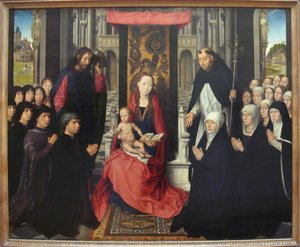
1502 98.0 x 29.0 cm
 Museo Poldi Pezzoli
Vásároljon egy nagy felbontású, javított digitális képet, amely sokkal jobb minőségű, mint az online előnézet.
Minden fájlt szakembereink a legmodernebb eszközök és precíz, kézi retusálás segítségével készítenek el aprólékosan. Gondoskodunk arról, hogy minden kép kivételes tisztasággal, pontos színhelyességgel és részletgazdag finomsággal rendelkezzen.
A végleges fájl 72 órán belül e-mailben megérkezik, professzionális, szerkesztői és nyomtatási környezetbe optimalizálva az azonnali használathoz. Ez ugyanaz a minőség, amelyben a legmeghatározóbb tervezőstúdiók, kiadók és galériák is megbízhatnak.
Töltsön le nagy felbontású fájlt személyes kiállításokhoz, nyomtatáshoz és kreatív projektekhez. ( Nyomat vásárlása Kézzel festett festmény vásárlása)
Amikor a Most-Famous-Paintings.com weboldalt választja, nem csupán egy képet kap – professzionálisan felmagasított digitális műalkotást kap, amely precizitással készült, és amelyet megelégsedési gwarancia tesz biztoslássá. Az alábbiakban automatikusan minden benne 】

A nagy felbontású digitális képmásolatát a megrendelést követő 72 órán belül e-mailben elküldjük Önnek – azonnal használható formátumban.

Műve professzionális módon kerül optimalizálásra fejlett mesterséges intelligencia eszközök és manuális szerkesztés segítségével, biztosítva a maximális részletességet, tisztaságot és színpontosságot.

Véletlenül törölted vagy elvesztetted a fájlodat? Ne aggódj – bármikor ingyenesen újra megküldjük neked.

Élvezze műalkotásait azonnal, vám, illeték vagy szállítási költség nélkül – a digitális letöltések mindig adamentesek.

Professzionális eszközök és színkezelés segítségével garantáljuk, hogy digitális képe a lehető legpontosabban tükrözze az eredeti színeket.

Ha nemມີ elégedett a digitális képpel, 60 napon belül átmunkáljuk azt, vagy 100% visszatérítjük az amountot – kérdés nélkül.

Nem érheted el a teljes elégedettséget? 60 napon belül teljes visszatérítést kapsz a digitális fájlod megérkezése után – kérdés बिना.

Vásároljon 3 képet, spóroljon 10%-et - Vásároljon 5-öt, spóroljon 15%-et - Vásároljon 10+ képet, spóroljon 20%-at. Kiváló kreatív projektekhez, galériákhoz és ügynökségekhez.

In the vibrant, sun-drenched landscape of the Italian High Renaissance, few names capture the essence of Lombard excellence quite like Bernardo Zenale. Born in the town of Treviglio around 1463, Zenale emerged as a pivotal figure whose brushstrokes bridged the gap between the meticulous realism of the local tradition and the revolutionary innovations sweeping through Milan. His early career was marked by a profound dedication to his craft, leading him to join the prestigious Scuola di San Luca painters’ guild by 1481. This period of formal mastery laid the foundation for a lifetime of monumental achievements, as he navigated the complex social and artistic hierarchies of the Duchy of Milan with grace and immense talent.
The heart of Zenale's creative identity was forged through deep-seated collaborations, most notably with his contemporary Bernardino Butinone. Together, these masters worked in a rhythmic harmony that defined much of the period's religious iconography. Their joint efforts on the magnificent polyptych for St. Martin’s Church served as an early testament to Zenale's ability to weave profound spiritual emotion into complex, multi-paneled compositions. This collaborative spirit extended to the very architecture of Lombardy; Zenale was not merely a painter of canvases but a decorator of sacred spaces, contributing significantly to the breathtaking Certosa di Pavia and serving as a vital consultant for the reconstruction of the Duomo di Milano under Giovanni Antonio Amadeo.
As the tides of art history shifted around the turn of the century, so too did Zenale's personal aesthetic. While his early works were deeply rooted in the expressive and detailed style characteristic of Bernardino Luini and Butinone, a transformative influence began to permeate his technique. The arrival of Leonardo da Vinci in Milan acted as a catalyst for change, inspiring Zenale to move toward a more nuanced approach to light, shadow, and human anatomy. This evolution is perhaps most beautifully captured in his polyptych depicting St. Anthony of Padua, where one can observe the subtle integration of sfumato-like softness and a newfound mastery of perspective.
This transition was not a rejection of his roots, but rather an enrichment of them. Zenale managed to retain the structural clarity and devotional intensity required by his patrons while embracing the atmospheric depth that Da Vinci pioneered. His work within the Castello Sforzesco, commissioned by the powerful Ludovico Sforza, stands as a testament to this sophisticated synthesis. In these murals, the artist demonstrated an ability to command large-scale narratives, blending the monumental scale of fresco painting with an intimate, psychological depth that drew viewers into the divine drama.
The historical importance of Bernardo Zenale lies in his role as a cultural bridge. He was an artist who could navigate the demands of the church, the ambitions of the nobility, and the radical shifts in artistic theory. His ability to harmonize the established Lombard tradition with the burgeoning High Renaissance movement ensured that the art of Milan remained at the forefront of European culture. Through his meticulous work on altarpieces and grand-scale frescoes, he helped define a visual language of piety and grandeur that would resonate for generations.
Today, we look back at Zenale's oeuvre as a vital chapter in the story of Italian Renaissance art. His contributions include:
Though his life ended in 1526, the echoes of Zenale's artistry remain etched in the stone and pigment of Northern Italy, reminding us of a time when art was the ultimate expression of both human skill and divine aspiration.

1463 - 1526 , Italy


Maradjon naprakész a legfrissebb művészeti hírekkel, exkluzív ajánlatokkal és dekorációs ötletekkel.
Írja le nekünk projektjét, és művészeti szakértőink 3 személyre szabott műalkotási javaslatot készítenek Önnek.
Hagyjuk, hogy mi válogassunk ki Önnek 3 legjobb opciót – Ingyenesen!


 Előnézet
 Megosztás
 Megosztás
 Részletek

 Letöltés
 Hasonló alkotások
 X-ray felvétel
 Diavetítés
 Tovább olvasom