x
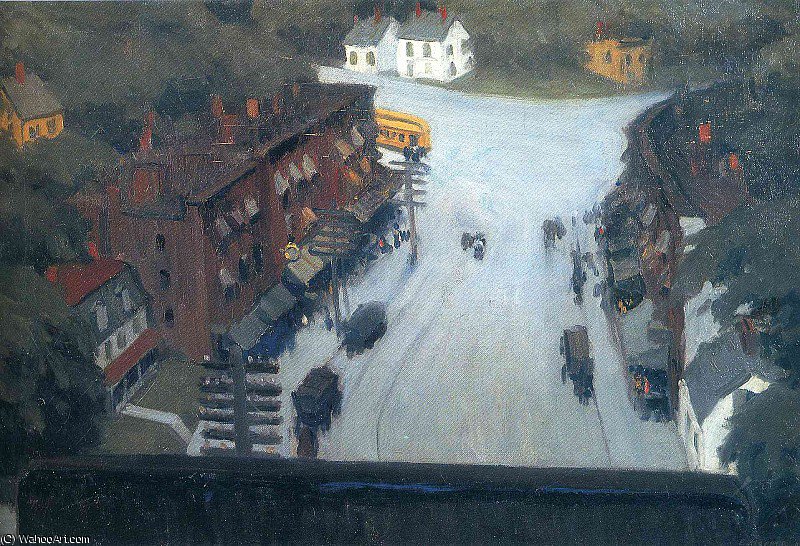
Kézzel festett olajvastú vászon, az Ön által választott méretben és keretben, művészeink készítik meglévőre. ( Nyomat rendelése Kép letöltése)





























Válasszon előre meghatározott méreteink közül, amelyek megfelelnek a műalkotás eredeti arányainak.

Ön megadhat saját méreteket egy adott kerethez vagy térhez igazításhoz. Ha a kiválasztott méret nem egyezik az eredeti kép arányával, akkor a műalkotást levágjuk, vagy további kézzel festett elemekkel meghosszabbítjuk a festményt. A gyártás megkezdése előtt küldünk Önnek egy digitális előnézetet jóváhagyásra.
Kérjük, vegye figyelembe, hogy a képernyőn megjelenő előnézet nem tükrözi a tényleges vágást vagy kiterjesztést. Csak az előnézet fog pontosan mutatni a végső kompozíciót.
Bár egyedi méretek állnak rendelkezésre, javasoljuk, hogy válasszon egy méretet az előre meghatározott listából az eredeti arányok megőrzése érdekében.
Világszerte elérhető szállítás () 3-4 hét alatt a szokásos 5 hét helyett. (19 augusztus). A minőség nem kérdőjelezhető.


untitled (161)
Reprodukció mérete
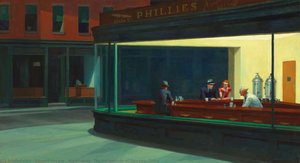
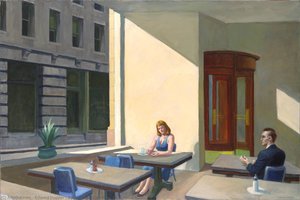
Edward Hopper's "Untitled (161)" – a deceptively simple black and white depiction of a Greenwich Village diner at night – transcends mere representation; it embodies the very essence of American modernism. Completed in 1942, amidst the anxieties of wartime America, this painting isn’t merely about what is seen but profoundly communicates what is felt—a palpable sense of solitude, longing, and unspoken connection.
The genesis of “Untitled (161)” lies in Hopper’s fascination with Ernest Hemingway's literary explorations of loneliness and disillusionment, notably "The Killers" and "A Clean, Well-Lighted Place." As Hopper himself recounted, he was drawn to the pervasive feeling of isolation present in these narratives. The painting emerged during a period marked by significant social upheaval—the Second World War casting its long shadow over American society—and Hopper’s work reflects this mood of quiet apprehension and introspection.
"Untitled (161)" is laden with symbolic significance. The diner itself represents a transient space, a momentary pause in the relentless flow of urban life—a place where individuals exist alongside each other yet remain fundamentally alone. Hopper’s masterful use of light and shadow amplifies this emotional core, highlighting the stark contrast between illumination and darkness, mirroring the internal struggles inherent in human existence.
Jo Hopper's Detailed Observations:Josephine Hopper meticulously documented her husband’s artistic process, adding invaluable insights into the painting’s conception. Her handwritten notes reveal a profound appreciation for Hopper’s technical prowess and his deliberate choices regarding composition and color palette. Notably, she emphasized that Hopper sought to capture “the loneliness of a large city,” reflecting Hemingway's thematic concerns.
"Untitled (161)" remains one of Edward Hopper’s most iconic works, celebrated for its ability to evoke profound feelings of solitude and contemplation. Its enduring appeal stems from its universality—a depiction of human experience that transcends time and place. Most-Famous-Paintings offers high-quality reproductions of this masterpiece, allowing collectors and enthusiasts alike to immerse themselves in the beauty and emotional depth of Hopper’s vision.


1931 - 1967 , Egyesült Államok

Explore the profound history of American Regionalism. Discover how Grant Wood captured the heart of the Midwest through masterpieces like American Gothic. An expert guide to the movement, its cultural impact, and the enduring beauty of American Realism.


Maradjon naprakész a legfrissebb művészeti hírekkel, exkluzív ajánlatokkal és dekorációs ötletekkel.
Írja le nekünk projektjét, és művészeti szakértőink 3 személyre szabott műalkotási javaslatot készítenek Önnek.
Hagyjuk, hogy mi válogassunk ki Önnek 3 legjobb opciót – Ingyenesen!


 Megtekintés
 Küldés
 Megosztás
 Részletek

 Letöltés
 Hasonló darabok
 X-ray felvétel
 Diavetítés
 Összes részlet megjelenítése







 Az üvegkeretes opció csak 110 cm alatti méretben érhető el