x

Múzeumi minőségű giclée vagy vászonnyomat, gyors gyártással és rugalmas finomítási lehetőségekkel. ( Kézzel festett másolat rendelése Kép letöltése)





























Válasszon előre meghatározott méreteink közül, amelyek megfelelnek a műalkotás eredeti arányainak.

Megadhat saját méreteket is egy konkrét kerethez vagy helyszínhez igazítva. Amennyiben a kiválasztott méret nem egyezik az eredeti kép arányokkal, a műalkotást le fogjuk vágni, vagy kiegészítjük a képet tükrözött vagy egyszínű szélekkel. A gyártás megkezdése előtt egy digitális tervezetet küldünk jóváhagyásra.
Kérjük, vegye figyelembe, hogy a képernyőn látható előnézet nem tükrözi a tényleges levágást vagy kiegészítést. Csak a tervezet mutatja pontosan a végső kompozíciót.
Bár az egyedi méretek is elérhetőek, az eredeti arányok megőrzése érdekében azt javasoljuk, hogy válasszon a előre meghatározott listából származó méretet.
Világszerte történő kiszállítás területére mindössze 2 hét alatt, a szokásos 4-5 hét helyett. (19 augusztus)


untitled (3371)
Reprodukció mérete
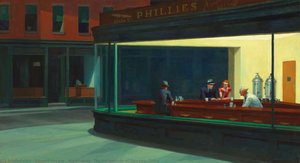
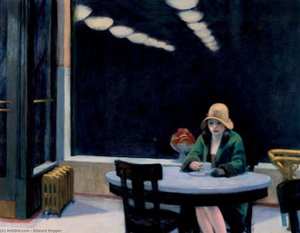
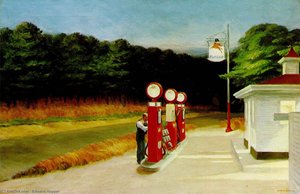
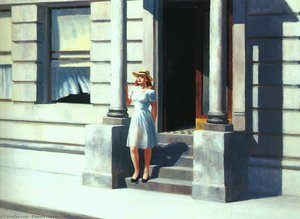
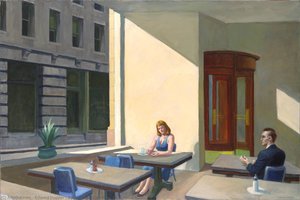
Edward Hopper (1882-1967), born in Nyack, New York, stands as one of the most recognizable figures in American art history. His artistic journey began with a grounding in commercial illustration—a pragmatic path suggested by his parents—yet Hopper swiftly gravitated toward fine art, enrolling at the New York School of Art under William Merritt Chase and Robert Henri.
These formative influences profoundly shaped Hopper’s artistic vision. Chase instilled technical proficiency, while Henri championed expressive realism—a commitment to portraying the world with unflinching honesty. This dedication to capturing the essence of human experience is evident throughout his extensive body of work, cementing his reputation as a chronicler of modern life.
Hopper's distinctive style—characterized by stark contrasts of light and dark, simplified forms, and an almost photographic precision—became synonymous with the mood of the era. He eschewed grand narratives or overtly dramatic gestures, instead focusing on capturing fleeting moments of everyday existence—a deliberate choice that underscores his belief in the power of observation.
Hopper's technique was meticulously honed through years of practice. He favored a restrained palette, primarily utilizing shades of gray and white—a stylistic decision that heightened the impact of his compositions. The artist skillfully manipulated light to sculpt forms and create depth within the canvas, emphasizing the interplay between illumination and darkness.
Detailed brushstrokes—often subtly textured—were employed to render surfaces with remarkable accuracy, capturing the subtle nuances of material texture. This meticulous attention to detail contributes significantly to the artwork’s overall realism and reinforces Hopper's commitment to portraying the world as he perceived it.

1931 - 1967 , Egyesült Államok

Explore the profound history of American Regionalism. Discover how Grant Wood captured the heart of the Midwest through masterpieces like American Gothic. An expert guide to the movement, its cultural impact, and the enduring beauty of American Realism.


Maradjon naprakész a legfrissebb művészeti hírekkel, exkluzív ajánlatokkal és dekorációs ötletekkel.
Írja le nekünk projektjét, és művészeti szakértőink 3 személyre szabott műalkotási javaslatot készítenek Önnek.
Hagyjuk, hogy mi válogassunk ki Önnek 3 legjobb opciót – Ingyenesen!


 Megtekintés
 Küldés
 Megosztás
 Részletek

 Letöltés
 Hasonló darabok
 X-ray felvétel
 Diavetítés
 Összes részlet megjelenítése







 Az üvegkeretes opció csak 110 cm alatti méretben érhető el