Értékelje át műveit
Kedvencek listája Kosár tartalma Cart
x
MegtekintésMegtekintés Műalkotás AR előnézeteMűalkotás AR előnézete Kézzel festett másolat rendelése Kézzel festett másolat rendeléseKép letöltése Kép letöltése KüldésKüldés
RészletekRészletek Kedvencekhez ad Kedvencekhez ad LetöltésLetöltés Hasonló darabokHasonló darabok X-ray felvételX-ray felvétel DiavetítésDiavetítés

The Repentant St. Peter

Witness El Greco’s ‘The Repentant St. Peter’! A Baroque masterpiece showcasing intense emotion & elongated figures. Explore this iconic 1605 painting's dramatic style and spiritual depth.

El Greco: görög származású festő, aki a manierizmus legnagyobb alakja lett! Fedezze fel Toledo képeit, vallási művészetét és egyedi stílusát!

Giclée / Műnyomat

Múzeumi minőségű giclée vagy vászonnyomat, gyors gyártással és rugalmas finomítási lehetőségekkel. (Kézzel festett másolat rendelése Kézzel festett másolat rendeléseKép letöltése Kép letöltése)

P118B $10
P118H $10
P118W $10
P438Z $10
P508JH $12
P508YH $12
P805H $10
P805Z $10
P919BZ $10
P919G $10
P919XJ $10
P959ZH $10
P968JZ $12
W106C $8
W218G $10
W218JH $8
W218Y $10
W307PJ $10
W316G $10
W316PJ $8
W316Y $10
W398PJ $8
W4111J $10
W500HY $15
W500JH $15
W692G $12
W849H $8
W940BG $15
W953PJ $8

Standard
custom
CM
INCH

Válasszon előre meghatározott méreteink közül, amelyek megfelelnek a műalkotás eredeti arányainak.

szélesség
magasság

Megadhat saját méreteket is egy konkrét kerethez vagy helyszínhez igazítva. Amennyiben a kiválasztott méret nem egyezik az eredeti kép arányokkal, a műalkotást le fogjuk vágni, vagy kiegészítjük a képet tükrözött vagy egyszínű szélekkel. A gyártás megkezdése előtt egy digitális tervezetet küldünk jóváhagyásra.
Kérjük, vegye figyelembe, hogy a képernyőn látható előnézet nem tükrözi a tényleges levágást vagy kiegészítést. Csak a tervezet mutatja pontosan a végső kompozíciót.
Bár az egyedi méretek is elérhetőek, az eredeti arányok megőrzése érdekében azt javasoljuk, hogy válasszon a előre meghatározott listából származó méretet.

Világszerte történő kiszállítás területére mindössze 2 hét alatt, a szokásos 4-5 hét helyett. (19 augusztus)

why_choose_icon
Ingyenes globális expressz szállítás
why_choose_icon
Prémium minőségű len vászon
why_choose_icon
Teljes körű szállítási biztosítás
why_choose_icon
Vámvisszatérítési Garancia
why_choose_icon
Hiteles színpontosság garancia
why_choose_icon
60 napos visszaküldési lehetőség (csak hibás termékek esetén)
why_choose_icon
100% pénzvisszatérítési garancia
why_choose_icon
Több darab vásárlása esetén kedvezmény

Összesített ár

$ 68

reproduction

The Repentant St. Peter

Giclée / Műnyomat

Reprodukció mérete

-

Összesített ár

$ 68

Gyors információk

  • Artist: El Greco
  • Influences: Byzantine icons
  • Year: 1605
  • Subject or theme: Religious repentance
  • Artistic style: Expressionistic
  • Location: Phillips Collection
  • Notable elements: Chiaroscuro, elongated figures

Művészeti kvíz

Minden kérdésre csak egy helyes válasz létezik.

Kérdés 1:
What is the primary artistic movement most closely associated with El Greco’s ‘The Repentant St. Peter’?
Kérdés 2:
Which of the following best describes the use of light and shadow (chiaroscuro) in ‘The Repentant St. Peter’?
Kérdés 3:
The crossed keys in ‘The Repentant St. Peter’ symbolize which of the following?
Kérdés 4:
What is a key characteristic of El Greco’s style, evident in ‘The Repentant St. Peter’?
Kérdés 5:
The background foliage in ‘The Repentant St. Peter’ primarily serves to:

Gyűjthető leírása

A Portrait of Profound Sorrow: The Repentant St. Peter

Domenikos Theotokopoulos, universally known as El Greco—“the Greek”—stands as one of the most singular and intensely felt figures in art history. Born in Candia (modern-day Crete) in 1541, his life was a vibrant tapestry woven from Byzantine traditions, Venetian influences, and ultimately, the fiery spirit of Spain. “The Repentant St. Peter,” painted around 1605, is not merely a depiction of a biblical scene; it’s a visceral embodiment of remorse, faith, and the profound struggle between earthly failings and divine grace—a testament to El Greco's unique ability to infuse religious subject matter with an almost unbearable emotional intensity.

The painting immediately commands attention through its dramatic use of chiaroscuro – the stark contrast between light and shadow. El Greco masterfully employs this technique, plunging the viewer into a world of deep darkness punctuated by brilliant highlights that sculpt the figure of St. Peter with startling realism. This isn’t simply an artistic choice; it mirrors the psychological drama unfolding within the scene—the overwhelming weight of guilt and the desperate yearning for redemption. The dark background, adorned with subtly rendered foliage, serves to isolate the saint, intensifying his isolation and emphasizing the gravity of his repentance.

The Elongated Figure: A Signature Style

El Greco’s distinctive style is instantly recognizable—a radical departure from the prevailing Renaissance ideals. His figures are elongated, almost impossibly so, with limbs that stretch and twist in a way that defies anatomical accuracy. This deliberate distortion isn't an error; it’s a conscious decision to convey heightened emotion and spiritual intensity. The figure of St. Peter is no longer a solid, grounded presence; he appears to be dissolving into the darkness, his body contorted in agony as he kneels in prayer. This elongated form, coupled with his flickering brushwork—a technique that creates an almost vibrating sense of movement—is a hallmark of El Greco’s oeuvre and anticipates elements of Expressionism centuries later.

The composition itself is strikingly intimate. El Greco eschews the traditional, grand scale often associated with religious paintings, opting instead for a close-up view that forces the viewer to confront St. Peter's suffering directly. This immediacy—the feeling that we are witnessing a deeply personal moment of confession—is profoundly affecting. The crossed keys, symbols of his role as the first Pope and keeper of Heaven’s gates, hang heavy with significance, representing both his past failures and his renewed commitment to faith.

Symbolism and Historical Context

“The Repentant St. Peter” is deeply rooted in the religious and artistic traditions of its time. El Greco drew heavily on Byzantine iconography, particularly the use of halos and the depiction of saints in moments of intense spiritual struggle. However, he transformed these conventions into something entirely his own—a highly personal expression of faith filtered through a uniquely tormented soul. The painting’s creation coincided with El Greco's period in Toledo, Spain, where he found a receptive audience for his emotionally charged works and established a lasting legacy. Duncan Phillips famously categorized El Greco as a “baroque way,” recognizing his stylistic innovations as precursors to both classical order and romantic emotion – a testament to the artist’s profound influence on subsequent generations of artists.

The painting's placement within The Phillips Collection, alongside works by other masters like Rembrandt and Van Gogh, highlights El Greco’s position as a pivotal figure in art history. His ability to evoke such raw emotion through his distinctive style continues to resonate with viewers today, making “The Repentant St. Peter” not just a beautiful painting but a powerful meditation on faith, guilt, and the enduring human capacity for redemption.
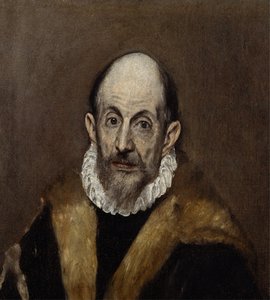

A művész életrajza

Doménikos Theotokópoulos, Known As El Greco – A Life Forged in Faith and Fire

Doménikos Theotokópoulos, universally recognized as El Greco – “the Greek” – stands apart from his contemporaries as a painter whose life and artistic output defied easy categorization. Born in Crete, Greece, around 1541, during the Venetian dominion, his artistic journey unfolded across Venice and Rome before ultimately finding its most profound expression within the spiritual landscape of Spain: Toledo. El Greco wasn’t merely shaped by these locations; he synthesized their diverse influences into a singular style – one that foreshadowed the emotive fervor of Expressionism and the fragmented forms characteristic of Cubism centuries ahead of time. His formative years immersed in Byzantine iconography instilled within him meticulous attention to detail and an instinctive grasp of religious symbolism, establishing a bedrock upon which his distinctive artistic explorations would build. Yet, he resolutely resisted confinement within established traditions, signing his canvases with Greek – “Krḗs” – as a defiant assertion of Cretan identity, even as he embraced new artistic horizons. The genesis of El Greco’s singular style wasn't solely rooted in technique; it stemmed from the fervent religious fervor permeating Crete and the rich artistic heritage bequeathed by Venetian masters.

From Venice to Toledo: A Transformation Marked By Innovation

His relocation to Venice around 1567 constituted a pivotal juncture in his artistic trajectory. Surrounded by an exuberant artistic milieu, El Greco diligently studied the luminaries of his era – Titian, Tintoretto, Veronese – absorbing their mastery of color palettes, compositional strategies, and theatrical lighting effects. He deliberately loosened his brushwork, embracing the sensual qualities inherent in oil paint and elevating the expressive power of his depictions. This Venetian influence is palpably present in early works such as *St. Sebastian* (1600), where anatomical precision harmoniously blends with a dramatic illumination reminiscent of Caravaggio’s style – a testament to his ability to synthesize disparate artistic traditions. Subsequently, his sojourn in Rome exposed him to Mannerism, a stylistic movement characterized by elongated figures, distorted perspectives, and sophisticated compositional arrangements. While he demonstrated considerable talent within the competitive Roman art world, El Greco struggled to garner widespread acclaim due to prevailing aesthetic sensibilities of the time. It was his definitive settlement in Toledo – circa 1577 – that finally liberated him from artistic constraints and allowed his visionary artistic vision to flourish. The city’s fervent religious atmosphere during the Counter-Reformation provided both patronage and an environment conducive to portraying spiritual contemplation with unparalleled intensity.

A Style Defined By Distortion, Emotion, And Spiritual Depth

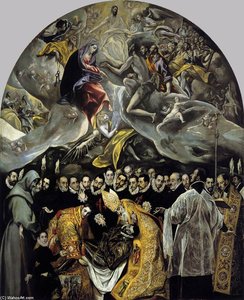
El Greco's stylistic hallmark is instantly recognizable: figures rendered in elongated proportions—a deliberate departure from naturalistic representation—infused with palpable emotion and bathed in dramatic illumination. This isn’t mere stylistic embellishment; it represents a profound philosophical commitment to conveying the unseen realms of consciousness and experience – those realities beyond the confines of observable phenomena. He achieved this feat through masterful manipulation of color—often employing hues that deviated significantly from naturalistic standards—to heighten the emotional resonance of his canvases. Furthermore, El Greco’s lighting techniques—characterized by stark contrasts between light and shadow—created a theatrical effect, drawing viewers into the very core of the depicted scene and mirroring the dramatic narratives found in biblical texts. *The Burial of the Count of Orgaz* (1586-1588), arguably his magnum opus, exemplifies these stylistic principles flawlessly. This monumental painting portrays a miraculous event—the descent of saints to bury a nobleman—with remarkable realism interwoven with ethereal figures embodying divine intervention – demonstrating El Greco’s unparalleled ability to fuse artistic innovation with spiritual contemplation. His distinctive style transcended mere imitation; it constituted an audacious assertion of artistic individuality and a courageous rejection of prevailing aesthetic conventions.

Influences And Artistic Legacy: Echoes Across Centuries

El Greco's artistic heritage extends far beyond his immediate contemporaries, resonating powerfully across subsequent artistic movements. Artists like Picasso and Braque recognized him as a precursor to Cubism—admiring his fragmented forms and unconventional perspectives—demonstrating the enduring influence of his stylistic innovations. Similarly, Expressionists embraced El Greco’s emotive intensity—capturing profound psychological states through bold color palettes and dramatic compositions—affirming his role as a pivotal figure in shaping modern artistic sensibilities. His oeuvre continues to inspire artists today, prompting explorations into themes of faith, spirituality, and human experience. Beyond the realm of art history, El Greco's stylistic legacy persists in contemporary visual culture, influencing designers and filmmakers alike. He remains an artist whose work transcends temporal boundaries—a testament to his enduring capacity for communicating universal truths about the human condition through a singular artistic voice.

Notable Works: Icons Of Spiritual Expression

  • The Burial of the Count of Orgaz (1586-1588): Considered El Greco’s masterpiece, this monumental painting embodies his stylistic hallmarks—elongated figures, dramatic lighting, and masterful blending of realism and spiritual symbolism.
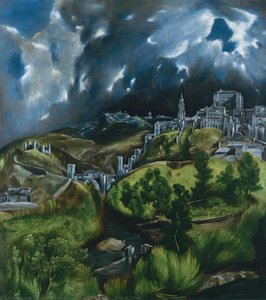
  • View of Toledo (1596-1600): This evocative landscape captures the spirit of Toledo with swirling atmospheric effects and a visionary perspective—a testament to El Greco’s ability to transform observation into profound artistic expression.
  • The Opening of the Fifth Seal (1608-1614): Part of a series exploring biblical themes, this painting showcases El Greco's masterful use of color and composition to convey spiritual awe and existential contemplation.
  • St. Sebastian (1600): This poignant depiction of St. Sebastian exemplifies El Greco’s stylistic prowess—anatomical precision combined with theatrical illumination—creating a powerfully emotive image.
El Greco

El Greco

1541 - 1614 , Ελλάδα

A művészről röviden

  • Artistic Movement Or Style: Mannerizmus, Barrokok
  • Artists Or Movements Influenced By This Artist:
    • Expressionizmus
    • Kubizmus
  • Artists Who Influenced This Artist:
    • Titian
    • Tintoretto
  • Date Of Birth: 1541 Cretében
  • Date Of Death: 1614 Toledoában
  • Full Name: Doménikos Theotokópoulos
  • Nationality: Görög-spanyol
  • Notable Artworks:
    • A Szűz Mária tiszteletére
    • Fray Hortensio Félix Paravicino
    • El Espolio
    • St. Sebastian
  • Place Of Birth: Creta Görögországban
Fedezze fel a műalkotásokat témák, stílusok és jellemzők szerint csoportosítva.