Értékelje át műveit
Kedvencek listája Kosár tartalma Cart
x
MegtekintésMegtekintés Műalkotás AR előnézeteMűalkotás AR előnézete Kézzel festett másolat rendelése Kézzel festett másolat rendeléseKép letöltése Kép letöltése KüldésKüldés
RészletekRészletek Kedvencekhez ad Kedvencekhez ad LetöltésLetöltés Hasonló darabokHasonló darabok X-ray felvételX-ray felvétel DiavetítésDiavetítés

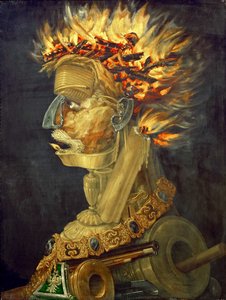
Nature studies

Explore Giuseppe Arcimboldo's whimsical 'Nature Studies,' intricate watercolor portraits crafted from fruits, flowers & more – a unique blend of art and natural symbolism.

Arcimboldo Giuseppe: Egy egyedülálló olasz festő, aki gyümölcsökkel, virágokkal és tárgyakkal alkotott szokatlan, fantáziaszerű portrékat, melyek a reneszánsz szimbolizmus és a szürrealizmus előfutára.

Giclée / Műnyomat

Múzeumi minőségű giclée vagy vászonnyomat, gyors gyártással és rugalmas finomítási lehetőségekkel. (Kézzel festett másolat rendelése Kézzel festett másolat rendeléseKép letöltése Kép letöltése)

P118B $10
P118H $10
P118W $10
P438Z $10
P508JH $12
P508YH $12
P805H $10
P805Z $10
P919BZ $10
P919G $10
P919XJ $10
P959ZH $10
P968JZ $12
W106C $8
W218G $10
W218JH $8
W218Y $10
W307PJ $10
W316G $10
W316PJ $8
W316Y $10
W398PJ $8
W4111J $10
W500HY $15
W500JH $15
W692G $12
W849H $8
W940BG $15
W953PJ $8

Standard
custom
CM
INCH

Válasszon előre meghatározott méreteink közül, amelyek megfelelnek a műalkotás eredeti arányainak.

szélesség
magasság

Megadhat saját méreteket is egy konkrét kerethez vagy helyszínhez igazítva. Amennyiben a kiválasztott méret nem egyezik az eredeti kép arányokkal, a műalkotást le fogjuk vágni, vagy kiegészítjük a képet tükrözött vagy egyszínű szélekkel. A gyártás megkezdése előtt egy digitális tervezetet küldünk jóváhagyásra.
Kérjük, vegye figyelembe, hogy a képernyőn látható előnézet nem tükrözi a tényleges levágást vagy kiegészítést. Csak a tervezet mutatja pontosan a végső kompozíciót.
Bár az egyedi méretek is elérhetőek, az eredeti arányok megőrzése érdekében azt javasoljuk, hogy válasszon a előre meghatározott listából származó méretet.

Világszerte történő kiszállítás területére mindössze 2 hét alatt, a szokásos 4-5 hét helyett. (21 augusztus)

why_choose_icon
Ingyenes globális expressz szállítás
why_choose_icon
Prémium minőségű len vászon
why_choose_icon
Teljes körű szállítási biztosítás
why_choose_icon
Vámvisszatérítési Garancia
why_choose_icon
Hiteles színpontosság garancia
why_choose_icon
60 napos visszaküldési lehetőség (csak hibás termékek esetén)
why_choose_icon
100% pénzvisszatérítési garancia
why_choose_icon
Több darab vásárlása esetén kedvezmény

Összesített ár

$ 68

reproduction

Nature studies

Giclée / Műnyomat

Reprodukció mérete

-

Összesített ár

$ 68

Gyors információk

  • Subject or theme: Rudolf II's power
  • Medium: Oil on parchment
  • Location: Skoklosters Slott, Sweden
  • Movement: Mannerism
  • Title: Nature studies
  • Influences: Renaissance
  • Artist: Giuseppe Arcimboldo

Gyűjthető leírása

Giuseppe Arcimboldo’s “Nature Studies”: A Renaissance Riddle

Giuseppe Arcimboldo (1527-1593) wasn't merely a painter; he was an architect of perception, a master illusionist who transformed the mundane into the magnificent. His "Nature Studies," particularly those featuring vibrant depictions of flora and fauna interwoven to create arresting portraits, stand as testaments to his singular vision and a profound engagement with the intellectual currents of the late Renaissance. These aren’t simple still lifes; they are carefully constructed allegories, brimming with symbolism that speaks volumes about the era's fascination with nature, humanism, and the delicate balance between the earthly and the divine.

Born in Milan, Arcimboldo initially honed his skills as a court painter for the Habsburg emperors in Vienna and Prague. However, it was during his time at Rudolf II’s court in Prague that he truly blossomed, developing his signature style – composite portraits built entirely from meticulously arranged fruits, vegetables, flowers, and even animal parts. This technique wasn't born of mere whimsy; it reflected a deep understanding of Renaissance philosophy, particularly the Neoplatonic belief that all things are interconnected through nature’s divine order. The emperor himself, a renowned collector of curiosities and an avid patron of the arts and sciences, provided the perfect environment for Arcimboldo's inventive spirit to flourish.

A Symphony of Form and Substance

Arcimboldo’s technique was deceptively complex. He didn’t simply glue objects onto a canvas; he painstakingly sculpted them, layering textures and colors to create an illusion of depth and volume. The use of watercolor on parchment – a medium known for its delicate transparency and ability to capture subtle nuances of color – further enhanced the ethereal quality of his works. The careful selection of each element—the precise arrangement of leaves, the ripeness of the fruit, the angle of a flower—was deliberate, contributing to the overall composition’s harmony and conveying specific meanings. The portraits themselves are remarkably detailed, inviting close inspection and revealing an astonishing level of technical skill.

Consider, for example, “The Librarian” (1591), where Arcimboldo transforms a man's head into a towering stack of books, scrolls, and writing implements. Each element—the spectacles perched on the nose, the quill pen held aloft—is not merely decorative but symbolic. The abundance of books represents knowledge and learning, while the inclusion of various instruments (a lute, a trumpet) suggests musicality and intellectual pursuits. Even seemingly random objects, like the curtain forming the man’s beard, carry significance, referencing the organized structure of a library.

Symbolism and Renaissance Ideals

Arcimboldo's work is rich in symbolism, reflecting the core values of the Renaissance. The emphasis on nature—a central theme throughout his oeuvre—mirrors the humanist belief that humans are inherently connected to the natural world. The use of seasonal elements – fruits, vegetables, and flowers – speaks to the cyclical rhythms of life and death, mirroring the Neoplatonic concept of reincarnation. Furthermore, the composite portraits themselves can be interpreted as allegories for the emperor’s reign, embodying his wisdom, power, and connection to the natural order.

The choice of specific objects within each portrait often held particular significance. For instance, in “Vertumnus,” a painting depicting the Roman god of fertility and seasons, Arcimboldo employed an astonishing array of fruits and vegetables—pears, apples, grapes, pumpkins—to create a vibrant representation of Rudolf II’s power and dominion over nature. The inclusion of these elements wasn't arbitrary; it was carefully calculated to convey specific messages about the emperor’s authority and his connection to the natural world.

A Timeless Legacy

Giuseppe Arcimboldo’s “Nature Studies” remain captivating works of art, offering a unique glimpse into the intellectual and artistic landscape of the Renaissance. His innovative technique, combined with his profound understanding of symbolism and humanist ideals, cemented his place as one of the most original and influential artists of his time. Today, these remarkable portraits continue to inspire awe and wonder, reminding us of the power of art to transform our perception of reality and reveal the hidden beauty within the ordinary.

A művész életrajza

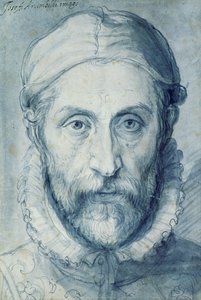
A World Reimagined: The Enigmatic Art of Giuseppe Arcimboldo

Giuseppe Arcimboldo, a name that conjures images both whimsical and profoundly strange, remains one of the most singular figures in Renaissance art. Born in Milan in 1527, his career unfolded against the backdrop of a Europe steeped in intellectual ferment, religious upheaval, and an insatiable curiosity about the natural world. While initially recognized for more conventional works – frescoes adorning cathedrals and portraits adhering to established courtly standards – Arcimboldo’s enduring legacy rests upon a series of composite heads constructed entirely from meticulously arranged objects: fruits, vegetables, flowers, books, even musical instruments. These weren't mere playful exercises in visual trickery; they were complex allegories, imbued with symbolism that resonated deeply within the Renaissance worldview and continue to fascinate audiences today. His father, Biagio Arcimboldo, was an artist himself, providing young Giuseppe with early artistic training and likely influencing his initial foray into design work for stained glass windows and frescoes at Milan Cathedral beginning around 1549. This foundational experience honed his technical skill and eye for detail—qualities that would become hallmarks of his later, more unconventional creations.

Early Years and Artistic Foundations

Giuseppe Arcimboldo’s artistic journey began within a family steeped in the traditions of art. His father, Biagio Arcimboldo, was himself a painter, working primarily as a designer for stained glass windows and frescoes within the grand cathedral of Milan. This early exposure to craftsmanship and visual storytelling undoubtedly shaped young Giuseppe's developing skills. He received his initial training at the Duomo, learning the techniques of fresco painting and the intricacies of creating intricate designs for religious imagery. This period instilled in him a deep appreciation for detail, color theory, and the ability to translate complex ideas into visually compelling forms. It’s believed that this foundation in traditional artistic practices provided a crucial springboard for his later experimentation with more unconventional approaches. The influence of the Milanese art scene—a hub of creativity during the Renaissance—likely fostered a spirit of innovation and a willingness to challenge established norms, qualities that would ultimately define Arcimboldo's unique style.

Courtly Commissions and the Rise of a Unique Style

Arcimboldo’s trajectory took a significant turn in 1562 when he was appointed court portraitist to Ferdinand I at the Habsburg court in Vienna. This marked the beginning of over two decades serving as an artistic polymath for three successive Habsburg rulers: Maximilian II and his son, Rudolf II. This appointment thrust him into the heart of European power, providing him with unparalleled access to imperial patronage and a stimulating environment for creative exploration. Beyond painting portraits – though even these often displayed subtle eccentricities – Arcimboldo’s duties encompassed costume design, festival decorations, and the organization of imperial collections. It was within this environment of refined taste and intellectual curiosity that his signature style began to blossom. The courtly demand for novelty and spectacle provided fertile ground for experimentation, allowing him to move beyond traditional portraiture towards the creation of his celebrated “composite heads.” These weren’t born from a sudden impulse but evolved gradually, building upon Renaissance fascination with puzzles, riddles, and the exploration of hidden meanings within seemingly ordinary objects. The influence of earlier artists who experimented with *trompe l'oeil* effects and distorted perspectives can be detected, yet Arcimboldo synthesized these elements into something entirely his own—a unique visual language that challenged conventional notions of representation.

Decoding the Symbolism: More Than Meets the Eye

To dismiss Arcimboldo’s work as mere whimsicality is to overlook its profound intellectual depth. Each object within his composite portraits was carefully chosen, laden with symbolic meaning related to the sitter's character, profession, or social status. *The Librarian*, for example, isn’t simply a face constructed from books; it’s a subtle critique of scholarly pretension—a commentary on those who amass knowledge without truly engaging with its content. The animal tails forming the beard represent dusters, hinting at neglected volumes gathering dust on shelves. Similarly, his portraits of the seasons – particularly *Vertumnus*, depicting Emperor Rudolf II as the Roman god of gardens and change – are rich in botanical symbolism, reflecting the emperor’s patronage of science and natural history. These weren't intended to be immediately deciphered; they were designed to provoke contemplation, inviting viewers to unravel layers of meaning hidden within the seemingly playful arrangement of objects. The very act of constructing a human likeness from inanimate matter served as a meditation on the interconnectedness of all things—a reflection of Renaissance Neoplatonism’s belief in the underlying harmony of the universe.

Legacy and Rediscovery: A Precursor to Surrealism

Despite his success during his lifetime, Arcimboldo's reputation waned in the centuries following his death in 1593. His work was often relegated to the realm of curiosities—appreciated for its technical skill but dismissed as lacking serious artistic merit. It wasn’t until the 20th century that a renewed appreciation for his art emerged, fueled by the rise of Surrealism. Artists like Salvador Dalí recognized in Arcimboldo a kindred spirit—a visionary who dared to challenge conventional perceptions and explore the subconscious through unexpected juxtapositions of imagery. The influence of Arcimboldo can be seen in Dalí’s own dreamlike compositions and his fascination with metamorphosis and illusion. Today, Arcimboldo is celebrated as a pivotal figure in art history—a precursor to Surrealism whose innovative use of symbolism and playful distortion continues to inspire artists and captivate audiences worldwide. His paintings are housed in prestigious museums such as the Kunsthistorisches Museum in Vienna and the Louvre in Paris, ensuring that his unique vision will continue to resonate for generations to come. His legacy is a testament to the enduring power of imagination and the ability of art to transform our understanding of the world around us.

Key Achievements

* **Innovative Portraiture:** Arcimboldo revolutionized portrait painting by moving beyond traditional representations, creating composite heads that were both visually striking and intellectually stimulating. * **Symbolic Mastery:** His works are rich in symbolism, reflecting Renaissance philosophical ideas and offering layers of interpretation for viewers. * **Courtly Influence:** He served as a key artistic figure at the Habsburg court, shaping trends in design, decoration, and costume. * **Precursor to Surrealism:** His unconventional approach paved the way for later surrealist artists, demonstrating the power of dreamlike imagery and unexpected juxtapositions.
Arcimboldo

Arcimboldo

1527 - 1593 , Olaszország

A művészről röviden

  • Artistic Movement Or Style: Mannerizmus, Surrealizmus
  • Artists Or Movements Influenced By This Artist: ['Salvador Dalí']
  • Artists Who Influenced This Artist: ['Leonardo da Vinci']
  • Date Of Birth: 1527. ápril 5.
  • Date Of Death: 1593. július 11.
  • Full Name: Giuseppe Arcimboldo
  • Nationality: Olasz
  • Notable Artworks:
    • A négy évszak
    • Könyvtár
    • Vertumnus
  • Place Of Birth: Milan, Olaszország
Fedezze fel a műalkotásokat témák, stílusok és jellemzők szerint csoportosítva.