x

Múzeumi minőségű giclée vagy vászonnyomat, gyors gyártással és rugalmas finomítási lehetőségekkel. ( Kézzel festett másolat rendelése Kép letöltése)





























Válasszon előre meghatározott méreteink közül, amelyek megfelelnek a műalkotás eredeti arányainak.

Megadhat saját méreteket is egy konkrét kerethez vagy helyszínhez igazítva. Amennyiben a kiválasztott méret nem egyezik az eredeti kép arányokkal, a műalkotást le fogjuk vágni, vagy kiegészítjük a képet tükrözött vagy egyszínű szélekkel. A gyártás megkezdése előtt egy digitális tervezetet küldünk jóváhagyásra.
Kérjük, vegye figyelembe, hogy a képernyőn látható előnézet nem tükrözi a tényleges levágást vagy kiegészítést. Csak a tervezet mutatja pontosan a végső kompozíciót.
Bár az egyedi méretek is elérhetőek, az eredeti arányok megőrzése érdekében azt javasoljuk, hogy válasszon a előre meghatározott listából származó méretet.
Világszerte történő kiszállítás területére mindössze 2 hét alatt, a szokásos 4-5 hét helyett. (16 augusztus)


Nagyforma
Reprodukció mérete
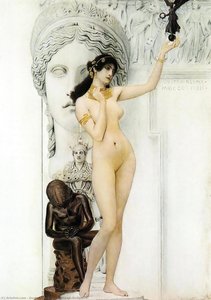
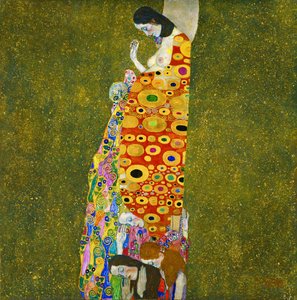
Gustav Klimt, a titan of Austrian symbolist art, remains eternally fascinated by the female form – not merely as an object of beauty, but as a vessel for profound emotion and intricate symbolism. His 1905-06 masterpiece, “Nude,” is arguably one of his most compelling explorations of this theme, a mesmerizing study in color, line, and the very essence of desire. More than just a portrait, it’s an invitation to contemplate the delicate balance between vulnerability and power, spirituality and earthly pleasure – a core tenet of Klimt's artistic vision.
Born in Baumgarten near Vienna in 1862, Klimt’s early life was shaped by his father’s profession as a gold engraver. This familial connection to the precious metal subtly permeated his work, manifesting not just in the opulent use of gold leaf – a hallmark of his later style – but also in an inherent appreciation for texture and luxurious detail. His formative years at the Vienna Kunstgewerbeschule instilled a solid technical foundation, yet it was Klimt’s relentless pursuit of artistic innovation that truly defined him, leading him to challenge academic conventions and forge his own distinctive path.
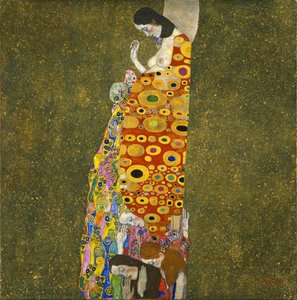
“Nude” immediately captivates with its reclining nude, presented in a lavishly decorated chamber. The figure, bathed in warm, saturated hues of gold, ochre, and crimson, is positioned on the bed, her gaze directed towards another woman lying nearby. This intimate scene isn’t simply about physical beauty; Klimt masterfully employs color to evoke mood and emotion. The deep reds suggest passion and desire, while the golds symbolize wealth, divinity, and perhaps even a hint of melancholy. The use of line is equally significant – flowing curves define the body's contours, creating a sense of movement and fluidity, contrasting with the sharp, geometric patterns that dominate the background.
Klimt’s technique is characterized by meticulous layering of paint, often applied in thin glazes to achieve remarkable luminosity. The gold leaf, meticulously applied, isn’t merely decorative; it adds a tactile quality to the painting, inviting the viewer to almost reach out and touch its shimmering surface. The background itself is a complex tapestry of intricate patterns – inspired by ancient Egyptian and Greek art, as well as the burgeoning Art Nouveau movement – creating a visually rich and symbolic environment that elevates the central figure.
“Nude” is laden with symbolism, inviting multiple interpretations. The reclining pose itself references classical depictions of Venus, but Klimt imbues it with a distinctly modern sensibility. The two women together represent a complex interplay of desire and companionship – perhaps even hinting at homoerotic undertones, though Klimt deliberately avoided explicit labeling. The ornate background, adorned with swirling motifs and geometric shapes, isn’t merely decorative; it acts as a visual metaphor for the inner world of the figures, reflecting their thoughts, emotions, and spiritual aspirations.
The presence of smaller, almost ethereal figures scattered throughout the scene adds another layer of complexity. These diminutive forms – often interpreted as representations of female spirits or ancestral presences – suggest a connection to the past and a reverence for feminine power. The overall effect is one of dreamlike ambiguity, prompting viewers to engage in a dialogue with the painting’s hidden meanings.
Klimt's "Nude" stands as a testament to his artistic genius and his profound understanding of human emotion. Whether you are an art enthusiast, a collector seeking a statement piece, or simply someone looking for a captivating work of art to adorn your home or office, a high-quality reproduction offers a beautiful way to experience the power and allure of this iconic masterpiece. At Most-Famous-Paintings.com, we offer meticulously hand-painted reproductions that capture the essence of Klimt’s vision, allowing you to bring this mesmerizing artwork into your life with confidence and pride.

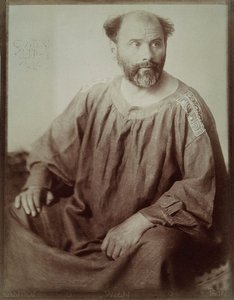
1862 - 1918 , Ausztria

Explore the profound history of gold leaf and gilding in Byzantine and Renaissance art. Discover how this sacred technique transformed religious iconography into celestial phenomena through light, symbolism, and unparalleled craftsmanship.

Explore the profound impact of the Vienna Secession movement. Discover how visionaries like Gustav Klimt revolutionized modern art through symbolism, gold leaf, and the concept of Gesamtkunstwerk in this expert-led historical guide.


Maradjon naprakész a legfrissebb művészeti hírekkel, exkluzív ajánlatokkal és dekorációs ötletekkel.
Írja le nekünk projektjét, és művészeti szakértőink 3 személyre szabott műalkotási javaslatot készítenek Önnek.
Hagyjuk, hogy mi válogassunk ki Önnek 3 legjobb opciót – Ingyenesen!


 Megtekintés
 Küldés
 Megosztás
 Részletek

 Letöltés
 Hasonló darabok
 X-ray felvétel
 Diavetítés

 Összes részlet megjelenítése







 Az üvegkeretes opció csak 110 cm alatti méretben érhető el