Kedvencek listája Kosár tartalma Cart
x
MegtekintésMegtekintés Műalkotás AR előnézeteMűalkotás AR előnézete Nyomat rendelése Nyomat rendeléseKézzel festett másolat rendelése Kézzel festett másolat rendelése KüldésKüldés
RészletekRészletek Kedvencekhez ad Kedvencekhez ad LetöltésLetöltés Hasonló darabokHasonló darabok X-ray felvételX-ray felvétel DiavetítésDiavetítés

Bacchanale

Gustave Moreau’s "Bacchanale" plunges viewers into a dreamlike Symbolist scene of primal ecstasy and childbirth within a shadowy forest grove, showcasing the artist's masterful blend of Impressionism and psychological depth. Discover this iconic artwork and bring its enigmatic beauty home.

Fedezd fel Gustave Moreau szimbolikus világát! A 19. századi francia festő, aki mitológiai és vallási témákkal alkotott, a képzelet és az álom mestere. Érdemes megnézni a 'Salomé táncol előtted Hérodé' művét!

Vásároljon nagy felbontású, javított digitális képet, amely minőségében messze felülmúlja az online előnézetet.

Minden fájlt szakembereink a legmodernebb eszközök és precíz, kézi retusálás segítségével készítenek el aprólékosan. Gondoskodunk arról, hogy minden kép kivételes tisztasággal, pontos színhelyességgel és részletgazdag finomsággal rendelkezzen.

A végleges fájl 72 órán belül e-mailben megérkezik, professzionális, szerkesztői és nyomtatási környezetbe optimalizálva az azonnali használathoz. Ez ugyanaz a minőség, amelyben a legmeghatározóbb tervezőstúdiók, kiadók és galériák is megbízhatnak.

Digitális kép

Töltsön le nagy felbontású fájlt személyes kiállításokhoz, nyomtatáshoz és kreatív projektekhez. (Nyomat rendelése Nyomat rendeléseKézzel festett másolat rendelése Kézzel festett másolat rendelése)

Összesített ár

$ 24,90

Minden digitális kép rendeléséhez tartozó extrák

Szakértői digitális kézbesítés, garantáltan

Amikor a Most-Famous-Paintings.com szolgáltatást választja, nem csupán egy képet kap – professzionálisan felmagasított digitális műalkotást kap, amely precizitással készült, és amelyet megelégsedési gwarancia tesz biztoslássá. Az alábbiakban automatikusan minden benne 】

shipping_icon
Gyors e-mail teslimítés

A nagy felbontású digitális képmásolatát a megrendelést követő 72 órán belül e-mailben elküldjük Önnek – azonnal használható formátumban.

canvas_icon
MI-alapú digitális fejlesztésű fájl

Műve professzionális módon kerül optimalizálásra fejlett mesterséges intelligencia eszközök és manuális szerkesztés segítségével, biztosítva a maximális részletességet, tisztaságot és színpontosságot.

insurance_icon
Örök életű ingyenes újradelivery

Véletlenül törölted vagy elvesztetted a fájlodat? Ne aggódj – bármikor ingyen újra megküldjük neked.

tax_icon
Nincs importköltség – soha

Élvezze műalkotásait azonnal, vám, illeték vagy szállítási költség nélkül – a digitális letöltések mindig adamentesek.

color_icon
Színpontosság garantálása

Professzionális eszközök és színkezelés segítségével garantáljuk, hogy digitális képe a lehető legpontosabban tükrözze az eredeti színeket.

return_icon
60 napos elégedettségi garancia

Ha nemມີ elégedett a digitális képpel, 60 napon belül átmunkáljuk azt, vagy 100% visszatérítjük az amountot – kérdés nélkül.

guarantee_icon
100% Pénzvisszatérítési garancia

Nem érheted el a teljes elégedettséget? 60 napon belül teljes visszatérítést kapsz a digitális fájlod megérkezése után – kérdés nélkül.

discount_icon
Tömegrendelési kedvezmények

Vásároljon 3 képet, spóroljon 10%-et - Vásároljon 5-öt, spóroljon 15%-et - Vásároljon 10+ képet, spóroljon 20%-at. Kiváló kreatív projektekhez, galériákhoz és ügynökségekhez.

Gyors információk

  • Notable elements or techniques: Dreamlike imagery; Symbolic representation
  • Artist: Gustave Moreau
  • Medium: Oil on canvas
  • Location: Musée national Gustave Moreau
  • Title: Bacchanale
  • Movement: Symbolism

A gyűjtemény részletei

Gustave Moreau’s Bacchanale: A Descent into Mythic Ecstasy

Moreau's "Bacchanale," painted circa 1890, stands as a cornerstone of Symbolist art—a mesmerizing tableau that transcends mere representation to embody profound psychological and spiritual exploration. Captured in oil on canvas, the artwork depicts a dramatic scene unfolding within a shadowy forest grove, dominated by a woman undergoing childbirth amidst a throng of nude figures. This isn’t simply a depiction of human anatomy; it's an invocation of primal forces—a visual manifestation of Dionysian ecstasy and the fecundity of nature itself.

Style and Technique: Dreamlike Impressionism

Moreau eschewed the objective realism championed by his contemporaries, opting instead for a style that blended elements of Impressionism with Symbolist principles. Like Monet and Renoir before him, he skillfully employed broken brushstrokes to capture fleeting light effects—particularly the dappled illumination filtering through the dense foliage. However, unlike Impressionists focused on capturing sensory experience, Moreau prioritized conveying inner emotion and subconscious imagery. His meticulous layering of paint creates an illusionistic depth that draws viewers into a dreamlike realm, mirroring the psychological turmoil at the heart of the scene. The artist’s masterful use of color—deep reds, greens, and blues—intensifies the dramatic atmosphere and underscores the painting's symbolic significance.

Historical Context: Nietzschean Influence & The Quest for Transcendence

Moreau’s artistic vision was deeply rooted in the intellectual ferment of late 19th-century Europe, particularly influenced by Friedrich Nietzsche’s philosophy of eternal recurrence and his critique of Christian morality. Nietzsche argued that humanity must confront its own mortality and embrace the chaotic beauty of existence—a sentiment powerfully reflected in Moreau's depiction of childbirth as a symbol of rebirth and renewal. The painting aligns with broader Symbolist concerns regarding mythology, religion, and the exploration of the unconscious mind—themes prevalent throughout European art at the time. It represents a deliberate rejection of bourgeois values and an affirmation of primal instincts.

Symbolism Unleashed: Fertility, Sacrifice & Dionysian Ritual

The imagery within "Bacchanale" is laden with symbolic references. The woman in labor embodies both vulnerability and divine potential—a representation of feminine strength confronting the inevitability of death while simultaneously initiating a new life cycle. Surrounding her are nude figures engaged in ritualistic gestures, mirroring ancient Dionysiac rites dedicated to celebrating fertility and overcoming fear. The dogs flanking the central figure serve as guardians of sacred space and symbolize primal instincts – reminding us of our connection to nature and the darker aspects of human experience. Moreau’s deliberate use of symbolism elevates the painting beyond a mere visual spectacle; it invites contemplation on fundamental questions about life, death, and spirituality.

Emotional Impact: A Profound Meditation on Existence

Moreau's "Bacchanale" doesn’t offer comfort or reassurance but confronts viewers with an unsettling yet undeniably captivating vision of human existence. The painting evokes feelings of awe, terror, and ecstasy—reflecting the artist’s own preoccupation with confronting mortality and embracing the irrational forces that shape our inner lives. It remains a testament to Moreau's ability to transform psychological anxieties into breathtaking artistic beauty—a masterpiece that continues to inspire artists and collectors alike. Its haunting stillness speaks volumes about the complexities of human experience and the enduring power of mythic symbolism.

A művész életrajza

A Dream Weaver of Symbolism: The Life and Art of Gustave Moreau

Gustave Moreau, a name inextricably linked to the ethereal beauty and profound mysteries of Symbolist painting, emerged from 19th-century Paris as an artist utterly distinct in his vision. Born in 1826 into a comfortable bourgeois family—his father a respected architect and archivist—Moreau’s early life was steeped not just in material comfort, but also in a deep appreciation for art and intellectual curiosity. From a remarkably young age, he displayed a prodigious talent for drawing, nurtured initially through traditional academic training at the École des Beaux-Arts under the guidance of figures like François-Édouard Picot. However, Moreau’s artistic trajectory swiftly diverged from the prevailing Realist and Impressionist currents dominating his time; he possessed little interest in capturing fleeting moments or rendering objective reality. Instead, he was driven by a profound desire to unlock the hidden realms of myth, religion, and the intricate workings of the human psyche – translating these inner landscapes onto canvas through a meticulously detailed and intensely colored visual language. His artistic journey became an inward exploration, a process of distilling subjective emotions and spiritual yearnings into tangible forms, employing an obsessive attention to detail and a palette often rich with opulent hues.

The Forge of Imagination: Influences and Artistic Development

Moreau’s artistic development wasn't forged in isolation; rather, it blossomed from a confluence of diverse influences. While consciously rejecting the dominant trends of his era, he drew inspiration from a remarkably broad range of sources. The dramatic use of color and exotic subject matter found in the works of Eugène Delacroix ignited within him a passionate fascination with narrative painting imbued with intense emotional resonance. He held Renaissance masters—Michelangelo and Leonardo da Vinci, in particular—in the highest esteem, deeply admiring their mastery of composition, anatomical precision, and their remarkable ability to penetrate the complexities of human psychology. Yet, Moreau’s genius lay not merely in imitation; he skillfully synthesized these influences – the dynamism of Delacroix, the anatomical rigor of the Renaissance giants – into something entirely new and uniquely his own. His pivotal journey to Italy during the 1850s proved transformative, immersing him completely within the art of antiquity and the Italian Renaissance. This experience provided a veritable treasure trove of motifs, stylistic cues, and artistic precedents that would subsequently populate his future works. Moreau meticulously copied Old Master paintings – not as mere reproductions, but as a deliberate process of absorbing their techniques, understanding their compositional strategies, and unlocking the secrets behind their enduring power. He sought to distill the essence of these masterpieces, translating them into his own distinctive visual vocabulary.

A World of Symbols: Themes and Techniques

Moreau’s paintings are not simply illustrations of myths or biblical stories; they are complex allegories designed to provoke contemplation and invite multiple interpretations. He didn't approach narratives like those of Salome, Orpheus, Jupiter and Semele, or countless others, with a desire to retell them literally. Instead, he delved into their underlying psychological and spiritual truths – exploring themes of temptation, loss, redemption, beauty, and the eternal struggle between good and evil. His canvases are often teeming with symbolic imagery: serpents representing deceitful desires, jewels embodying earthly vanities, and figures embodying abstract concepts such as grief, longing, or divine grace. Moreau masterfully created an atmosphere of dreamlike enchantment through intricate detail, rich textures, and a frequently unsettling juxtaposition of light and shadow. His technique was characterized by a painstaking layering of paint—a deliberate process that built up surfaces shimmering with iridescent colors and evoking a profound sense of otherworldliness. The strategic use of gold leaf further amplified this effect, lending his works a Byzantine quality that underscored their spiritual dimension. Crucially, Moreau wasn’t primarily concerned with capturing realistic textures or perspectives; instead, he prioritized the expressive power of color and form to convey mood, emotion, and deeper meaning.

Legacy and Influence: The Enduring Power of Symbolism

Though initially met with mixed reactions from the Parisian art establishment, Gustave Moreau gradually gained recognition as a central figure in the burgeoning Symbolist movement during the 1890s. Unlike some of his contemporaries who actively sought public acclaim, he remained largely reclusive, preferring to dedicate himself entirely to his artistic practice within the confines of his studio and home. However, his influence was undeniable. In 1893, he accepted a prestigious professorship at the École des Beaux-Arts, where he profoundly impacted generations of aspiring artists – including Henri Matisse and Georges Rouault – encouraging them to embrace imagination, symbolism, and individual expression, urging them to break free from conventional artistic constraints. Moreau’s legacy extends far beyond his own lifetime. His paintings continue to resonate with audiences today, offering glimpses into the hidden depths of the human soul and reminding us of the transformative power of art to transcend the boundaries of reality. The Musée Gustave Moreau, housed within his former studio and home in Paris, stands as a poignant testament to his enduring artistic vision—a sanctuary where visitors can immerse themselves fully in the captivating world of this extraordinary artist.

Notable Works

  • Salome Dancing before Herod: Perhaps his most iconic work, this painting exemplifies Moreau’s opulent style and his fascination with biblical narratives, capturing a moment of both beauty and impending doom.
  • Jupiter and Semele: A dramatic depiction of the Greek myth, showcasing Moreau's exceptional skill in composition, color orchestration, and conveying a sense of overwhelming power.
  • Orpheus: Several paintings by Moreau explore the myth of Orpheus, reflecting themes of loss, grief, artistic inspiration, and the bittersweet nature of beauty.
  • The Apparition: Demonstrates his ability to create ethereal and otherworldly scenes, often imbued with a sense of mystery and melancholy.
  • Desdemona: A poignant portrayal of Shakespeare’s tragic heroine, capturing her despair and vulnerability with remarkable sensitivity.

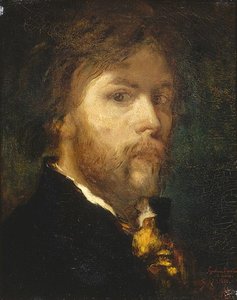
Gustáv Moreau

Gustáv Moreau

1826 - 1898 , Francia

Érdekességek

  • Artistic Movement Or Style: Szimbolizmus
  • Artists Or Movements Influenced By This Artist:
    • Matisse
    • Rouault
  • Artists Who Influenced This Artist:
    • Delacroix
    • Michelangelo
    • Da Vinci
  • Date Of Birth: 1826. április 6.
  • Date Of Death: 1898. április 18.
  • Full Name: Gustave Moreau
  • Nationality: Francia
  • Notable Artworks:
    • Salomé táncol
    • Jupiter és Semele
    • Orfeusz
    • A megjelenés
    • Desdemona
  • Place Of Birth: Párizs, Franciaország