x
Múzeumi minőségű giclée vagy vászonnyomat, gyors gyártással és rugalmas finomítási lehetőségekkel. ( Kézzel festett másolat rendelése Kép letöltése)
Válasszon előre meghatározott méreteink közül, amelyek megfelelnek a műalkotás eredeti arányainak.

Megadhat saját méreteket is egy konkrét kerethez vagy helyszínhez igazítva. Amennyiben a kiválasztott méret nem egyezik az eredeti kép arányokkal, a műalkotást le fogjuk vágni, vagy kiegészítjük a képet tükrözött vagy egyszínű szélekkel. A gyártás megkezdése előtt egy digitális tervezetet küldünk jóváhagyásra.
Kérjük, vegye figyelembe, hogy a képernyőn látható előnézet nem tükrözi a tényleges levágást vagy kiegészítést. Csak a tervezet mutatja pontosan a végső kompozíciót.
Bár az egyedi méretek is elérhetőek, az eredeti arányok megőrzése érdekében azt javasoljuk, hogy válasszon a előre meghatározott listából származó méretet.
Világszerte történő kiszállítás területére mindössze 2 hét alatt, a szokásos 4-5 hét helyett. (18 augusztus)


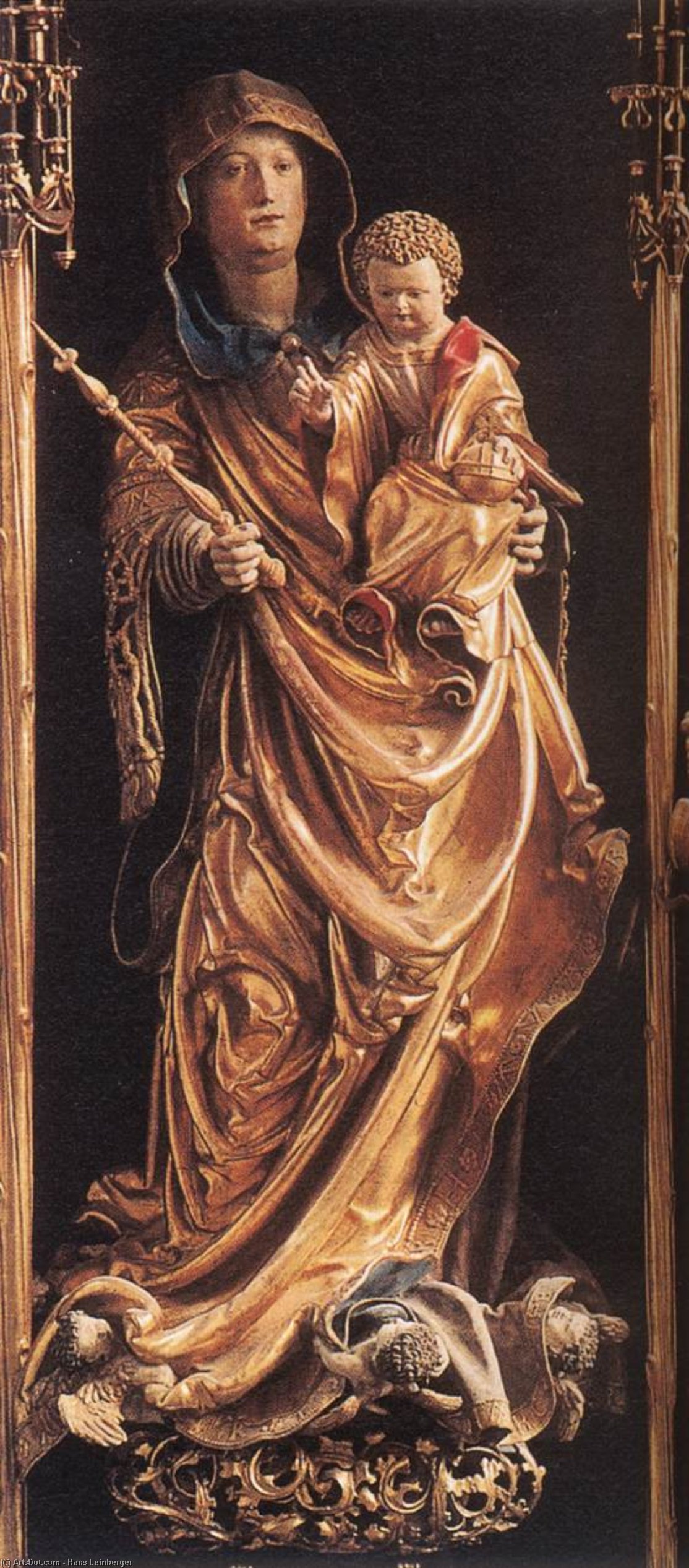
Virgin and Child
Reprodukció mérete

Hans Leinberger (c.1475/1480 – after 1531) remains a figure shrouded in some mystery, yet his legacy endures as one of Altbayern’s most prominent sculptors of the Early Renaissance. While biographical details are scarce—his birthplace and precise artistic education remain elusive—scholarly research has illuminated his remarkable career and contribution to German art history.
Leinberger emerged onto the artistic scene around 1510 in Landshut, Bavaria, where he established a workshop that would become synonymous with innovation and stylistic refinement. His patron, Louis X, Duke of Bavaria, recognized Leinberger’s talent and commissioned significant projects, notably the monumental statue of Albert IV for Innsbruck’s Hofkirche—a testament to Dürer's influence and Leinberger’s ability to capture regal dignity.
Leinberger's artistic style is characterized by its sensitivity to detail and its ability to convey psychological depth—qualities that distinguish him from earlier Gothic sculptors. His work embodies the humanist impulse to represent human form accurately, while simultaneously honoring religious dogma. Leinberger’s enduring influence can be seen in subsequent generations of Bavarian sculptors who adopted his techniques and aesthetic sensibilities.
Despite the paucity of surviving sculptures—only two Madonna figures remain—Leinberger's contribution to German Renaissance art is undeniable. He stands as a symbol of Altbayern’s artistic flourishing during Louis X’s reign, securing his place among the masters of his time and cementing his legacy as a sculptor who seamlessly blended Gothic tradition with humanist innovation.

1478 - 1531 , Germany


Maradjon naprakész a legfrissebb művészeti hírekkel, exkluzív ajánlatokkal és dekorációs ötletekkel.
Írja le nekünk projektjét, és művészeti szakértőink 3 személyre szabott műalkotási javaslatot készítenek Önnek.
Hagyjuk, hogy mi válogassunk ki Önnek 3 legjobb opciót – Ingyenesen!


 Megtekintés
 Küldés
 Megosztás
 Részletek

 Letöltés
 Hasonló darabok
 X-ray felvétel
 Diavetítés

 Összes részlet megjelenítése




































 Az üvegkeretes opció csak 110 cm alatti méretben érhető el