x

 Oil On PanelEarly Netherlandish
 1434
1434 57.0 x 52.0 cm
 Staatliche Museen zu Berlin
Vásároljon egy nagy felbontású, javított digitális képet, amely sokkal jobb minőségű, mint az online előnézet.
Minden fájlt szakembereink a legmodernebb eszközök és precíz, kézi retusálás segítségével készítenek el aprólékosan. Gondoskodunk arról, hogy minden kép kivételes tisztasággal, pontos színhelyességgel és részletgazdag finomsággal rendelkezzen.
A végleges fájl 72 órán belül e-mailben megérkezik, professzionális, szerkesztői és nyomtatási környezetbe optimalizálva az azonnali használathoz. Ez ugyanaz a minőség, amelyben a legmeghatározóbb tervezőstúdiók, kiadók és galériák is megbízhatnak.
Töltsön le nagy felbontású fájlt személyes kiállításokhoz, nyomtatáshoz és kreatív projektekhez. ( Nyomat vásárlása Kézzel festett festmény vásárlása)
Amikor a Most-Famous-Paintings.com weboldalt választja, nem csupán egy képet kap – professzionálisan felmagasított digitális műalkotást kap, amely precizitással készült, és amelyet megelégsedési gwarancia tesz biztoslássá. Az alábbiakban automatikusan minden benne 】

A nagy felbontású digitális képmásolatát a megrendelést követő 72 órán belül e-mailben elküldjük Önnek – azonnal használható formátumban.

Műve professzionális módon kerül optimalizálásra fejlett mesterséges intelligencia eszközök és manuális szerkesztés segítségével, biztosítva a maximális részletességet, tisztaságot és színpontosságot.

Véletlenül törölted vagy elvesztetted a fájlodat? Ne aggódj – bármikor ingyenesen újra megküldjük neked.

Élvezze műalkotásait azonnal, vám, illeték vagy szállítási költség nélkül – a digitális letöltések mindig adamentesek.

Professzionális eszközök és színkezelés segítségével garantáljuk, hogy digitális képe a lehető legpontosabban tükrözze az eredeti színeket.

Ha nemມີ elégedett a digitális képpel, 60 napon belül átmunkáljuk azt, vagy 100% visszatérítjük az amountot – kérdés nélkül.

Nem érheted el a teljes elégedettséget? 60 napon belül teljes visszatérítést kapsz a digitális fájlod megérkezése után – kérdés बिना.

Vásároljon 3 képet, spóroljon 10%-et - Vásároljon 5-öt, spóroljon 15%-et - Vásároljon 10+ képet, spóroljon 20%-at. Kiváló kreatív projektekhez, galériákhoz és ügynökségekhez.
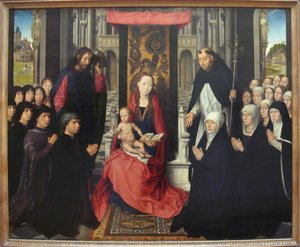
Jacques Daret's "Visitation," painted in 1434-35 during the vibrant artistic milieu of Arras, Belgium, is more than just a religious depiction; it’s a masterclass in Early Netherlandish realism and a poignant meditation on faith, family, and divine grace. This panel painting, now housed within the Gemäldegalerie in Berlin, offers a remarkably intimate glimpse into a pivotal moment from Luke's Gospel – the visit of Mary to Elizabeth, foretelling the birth of John the Baptist. Daret’s skill lies not merely in his technical proficiency but in his ability to imbue this biblical narrative with an almost palpable sense of serenity and profound spiritual significance.
The composition is meticulously balanced, reflecting the influence of Robert Campin, Daret's acknowledged master. The central figures – Mary and Elizabeth – are positioned within a carefully constructed architectural setting, a modest room suggesting domestic tranquility. Daret’s use of linear perspective, though subtly applied, creates a sense of depth and spatial awareness uncommon for the period. Geometric shapes—rectangles defining the walls, ovals forming the faces—are rendered with an astonishing level of detail, showcasing the artist's command of form and his dedication to precise observation. The color palette is restrained yet luminous; rich reds and blues dominate Mary’s garments, contrasting beautifully with the muted tones of Elizabeth’s robes, drawing the viewer’s eye to the central interaction.
Beyond its formal qualities, “Visitation” is laden with symbolic meaning. The halo above Mary's head immediately signifies her divine status and role as the mother of God. Elizabeth’s hand resting gently on Mary’s arm symbolizes mutual support and blessing – a visual representation of the spiritual connection between these two women. The staff held by the monk, subtly included in the background, serves as a reminder of his vocation and the importance of religious devotion within the community. Even the landscape—a rolling, verdant vista—holds symbolic weight, representing the earthly realm from which this miraculous event unfolds.
The inclusion of the angel, hovering discreetly above, reinforces the divine intervention at play. Its wings are rendered with a delicate grace, and its expression conveys both reverence and anticipation. The gesture of blessing – a raised hand – further emphasizes the sacred nature of the encounter. Daret’s careful attention to these details elevates the painting beyond a simple illustration of a biblical story; it becomes a visual poem exploring themes of faith, lineage, and divine providence.
Daret's mastery is evident in his meticulous application of oil paint on panel. The technique employed—extensive layering and glazing—creates an astonishingly smooth surface, rich with subtle color variations and luminous highlights. The artist skillfully manipulated light to sculpt the figures’ forms, emphasizing their volume and creating a sense of three-dimensionality. Close examination reveals the painstaking process involved in building up these layers of paint, each brushstroke contributing to the overall effect of depth and realism.
The use of gold leaf—particularly in the halo and the angel's garments—adds a touch of opulence and further enhances the painting’s spiritual aura. The panel itself, likely made of poplar wood, provides a stable foundation for this intricate work. Daret’s commitment to quality materials and his refined technique are testaments to his artistic skill and dedication.
"Visitation" offers a valuable window into the artistic and cultural landscape of 15th-century Flanders. It exemplifies the growing influence of Early Netherlandish painting, characterized by its realism, attention to detail, and profound psychological insight. Daret’s work stands alongside that of other masters of the period—Robert Campin, Rogier van der Weyden, and Jan van Eyck—contributing to a rich artistic tradition that continues to inspire artists today. Reproductions of this captivating artwork capture not only its visual beauty but also the profound spiritual message at its heart.


1404 - 1470


Maradjon naprakész a legfrissebb művészeti hírekkel, exkluzív ajánlatokkal és dekorációs ötletekkel.
Írja le nekünk projektjét, és művészeti szakértőink 3 személyre szabott műalkotási javaslatot készítenek Önnek.
Hagyjuk, hogy mi válogassunk ki Önnek 3 legjobb opciót – Ingyenesen!


 Előnézet
 Megosztás
 Megosztás
 Részletek

 Letöltés
 Hasonló alkotások
 X-ray felvétel
 Diavetítés
 Tovább olvasom