x

Kézzel festett olajvastú vászon, az Ön által választott méretben és keretben, művészeink készítik meglévőre. ( Nyomat rendelése Kép letöltése)





























Válasszon előre meghatározott méreteink közül, amelyek megfelelnek a műalkotás eredeti arányainak.

Ön megadhat saját méreteket egy adott kerethez vagy térhez igazításhoz. Ha a kiválasztott méret nem egyezik az eredeti kép arányával, akkor a műalkotást levágjuk, vagy további kézzel festett elemekkel meghosszabbítjuk a festményt. A gyártás megkezdése előtt küldünk Önnek egy digitális előnézetet jóváhagyásra.
Kérjük, vegye figyelembe, hogy a képernyőn megjelenő előnézet nem tükrözi a tényleges vágást vagy kiterjesztést. Csak az előnézet fog pontosan mutatni a végső kompozíciót.
Bár egyedi méretek állnak rendelkezésre, javasoljuk, hogy válasszon egy méretet az előre meghatározott listából az eredeti arányok megőrzése érdekében.
Világszerte elérhető szállítás () 3-4 hét alatt a szokásos 5 hét helyett. (20 augusztus). A minőség nem kérdőjelezhető.


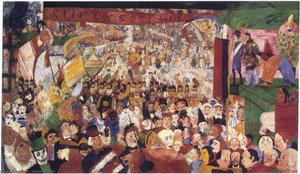
1933 Ensor dans son atelier ou Ensor a l' harmonium
Reprodukció mérete
Ensor’s work emerged during a period of significant artistic upheaval—the early 20th century witnessed the rise of expressionism, spearheaded by artists like Edvard Munch and Ernst Ludwig Kirchner. Rejecting academic conventions, Ensor sought to capture subjective experience rather than objective reality, mirroring the broader intellectual currents of his era. His fascination with masks and grotesque imagery reflected a preoccupation with psychological complexities and anxieties about societal norms—themes that resonated powerfully with audiences grappling with the uncertainties of wartime Europe.
Beyond its formal elements, “1933 Ensor dans son atelier ou Ensor a l' harmonium” is laden with symbolic significance. The organ itself represents authority and tradition, juxtaposed against the faces of the audience—each gaze scrutinizing Ensor’s performance. This visual tension underscores the artist’s struggle to assert individuality amidst societal pressures. Furthermore, Ensor’s deliberate use of unsettling imagery – distorted perspectives and grotesque figures – invites contemplation on themes of isolation, fear, and the darker recesses of human consciousness.
James Ensor's influence extends far beyond his own lifetime. Artists who followed embraced similar stylistic approaches, exploring psychological landscapes and confronting uncomfortable truths about the human condition. “1933 Ensor dans son atelier ou Ensor a l' harmonium” serves as a testament to Ensor’s enduring legacy—a captivating artwork that continues to inspire artists and collectors alike. To experience this masterpiece in exquisite detail, explore Most-Famous-Paintings.com for high-quality reproductions crafted with meticulous care.


1860 - 1949 , Belgium

Explore the profound history of Surrealist Expressionism. Discover how artists blended dream logic with raw emotion to navigate post-war trauma through masterful, evocative imagery and psychological depth.


Maradjon naprakész a legfrissebb művészeti hírekkel, exkluzív ajánlatokkal és dekorációs ötletekkel.
Írja le nekünk projektjét, és művészeti szakértőink 3 személyre szabott műalkotási javaslatot készítenek Önnek.
Hagyjuk, hogy mi válogassunk ki Önnek 3 legjobb opciót – Ingyenesen!


 Megtekintés
 Küldés
 Megosztás
 Részletek

 Letöltés
 Hasonló darabok
 X-ray felvétel
 Diavetítés

 Összes részlet megjelenítése







 Az üvegkeretes opció csak 110 cm alatti méretben érhető el