x

Kézzel festett olajvastú vászon, az Ön által választott méretben és keretben, művészeink készítik meglévőre. ( Váltás nyomtatványra Képváltás)





























Válasszon előre meghatározott méreteink közül, amelyek megfelelnek a műalkotás eredeti arányainak.

Ön megadhat saját méreteket egy adott kerethez vagy térhez igazításhoz. Ha a kiválasztott méret nem egyezik az eredeti kép arányával, akkor a műalkotást levágjuk, vagy további kézzel festett elemekkel meghosszabbítjuk a festményt. A gyártás megkezdése előtt küldünk Önnek egy digitális előnézetet jóváhagyásra.
Kérjük, vegye figyelembe, hogy a képernyőn megjelenő előnézet nem tükrözi a tényleges vágást vagy kiterjesztést. Csak az előnézet fog pontosan mutatni a végső kompozíciót.
Bár egyedi méretek állnak rendelkezésre, javasoljuk, hogy válasszon egy méretet az előre meghatározott listából az eredeti arányok megőrzése érdekében.
Világszerte elérhető szállítás () 3-4 hét alatt a szokásos 5 hét helyett. (8 augusztus). A minőség nem kérdőjelezhető.


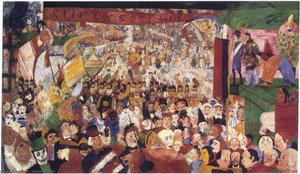
Carnival in Flanders
A reprodukció mérete
James Ensor's “Carnival in Flanders,” painted in 1931, isn’t merely a depiction of a Belgian fête; it’s a meticulously crafted psychological portrait rendered in oil on canvas—a testament to the artist’s unwavering fascination with unsettling imagery and social critique. Created during the height of Expressionism, this artwork transcends its surface appearance, inviting viewers into a darkly humorous contemplation of human behavior and societal anxieties.
Symbolism & Emotional Impact: The central figure, holding an umbrella amidst a throng of others, embodies both vulnerability and defiance. Surrounding him are six umbrellas – a visual motif that Ensor frequently utilized to represent protection from external forces and the illusion of control. Notably, perched atop one of the figures is a bird—a symbol of freedom yet also of fragility, mirroring the precariousness of human existence within the spectacle of carnival.
Ensor’s masterful use of color contributes significantly to the artwork's emotional resonance. Dominant hues of crimson and ochre clash dramatically against muted browns and greens, creating a visual tension that mirrors the psychological turmoil depicted in the scene. The artist’s deliberate distortion of perspective further enhances this unsettling effect, immersing viewers in an atmosphere of disorientation and unease.
A reproduction of “Carnival in Flanders” offers an opportunity to engage with Ensor's profound artistic insights—a captivating glimpse into a world where joy masks despair and spectacle conceals unsettling truths. Its enduring power lies in its ability to provoke contemplation and challenge conventional perceptions of beauty and morality.


1860 - 1949 , Belgium
Fedezze fel James Abbott McNeill Whistler 25 legszebb művét! Ismerje meg a Nocturnok, portrék és az amerikai impresszionizmus mesterét. Elegáns faliképek otthonába – Most-Famous-Paintings.com kínálatából. Böngésszen online!

Fedezze fel Sir Alfred James Munnings 25 legszebb festményét! Ismerje meg a vidéki Anglia és a lovak mesterének életművét, technikáját és inspirációit. Vásároljon exkluzív reprodukciókat a Most-Famous-Paintings.com-on – múzeumi minőségben!

Fedezze fel a Metropolitan Művészeti Múzeum 25 legikonikusabb műalkotását! Monet, Van Gogh, Rembrandt és más mesterek remekműveinek történeteit olvassa el. Inspirálódjon otthon dekorációjához – magas minőségű festmény reprodukciók a Most-Famous-Paintings.com-on!

Explore the unsettling yet captivating world of James Ensor, a pioneer of Expressionism. Discover his satirical masterpieces, symbolic imagery & lasting influence on modern art. High-quality reproductions available at Most-Famous-Paintings.

Fedezze fel a detroiti Művészeti Intézet 25 legikonikusabb műalkotását! Rembrandt, Monet, Van Gogh és más mesterek történetei. Vászonképek reprodukciói, inspiráló dekoráció otthonába – Most-Famous-Paintings.com.


Maradjon naprakész a legfrissebb művészeti hírekkel, exkluzív ajánlatokkal és dekorációs ötletekkel.
Írja le nekünk projektjét, és művészeti szakértőink 3 személyre szabott műalkotási javaslatot készítenek Önnek.
Hagyjuk, hogy mi válogassunk ki Önnek 3 legjobb opciót – Ingyenesen!


 Előnézet
 Megosztás
 Megosztás
 Részletek

 Letöltés
 Hasonló alkotások
 X-ray felvétel
 Diavetítés
 Tovább olvasom







 Az üvegkeretes opció csak 110 cm alatti méretben érhető el