


x

Múzeumi minőségű giclée vagy vászonnyomat, gyors gyártással és rugalmas finomítási lehetőségekkel. ( Kézzel festett másolat rendelése Kép letöltése)
Válasszon előre meghatározott méreteink közül, amelyek megfelelnek a műalkotás eredeti arányainak.

Megadhat saját méreteket is egy konkrét kerethez vagy helyszínhez igazítva. Amennyiben a kiválasztott méret nem egyezik az eredeti kép arányokkal, a műalkotást le fogjuk vágni, vagy kiegészítjük a képet tükrözött vagy egyszínű szélekkel. A gyártás megkezdése előtt egy digitális tervezetet küldünk jóváhagyásra.
Kérjük, vegye figyelembe, hogy a képernyőn látható előnézet nem tükrözi a tényleges levágást vagy kiegészítést. Csak a tervezet mutatja pontosan a végső kompozíciót.
Bár az egyedi méretek is elérhetőek, az eredeti arányok megőrzése érdekében azt javasoljuk, hogy válasszon a előre meghatározott listából származó méretet.
Világszerte történő kiszállítás területére mindössze 2 hét alatt, a szokásos 4-5 hét helyett. (15 augusztus)


Figures
Reprodukció mérete

To encounter the work of Magdalena Abakanowicz is to step into a visceral landscape where the boundaries between organic matter and human emotion dissolve. Born Marta Magdalena Abakanowicz in 1930 in the quiet, noble estate of Falenty, Poland, her early life was shadowed by the profound traumas of the twentieth century. The Nazi occupation of her homeland during World War II was not merely a historical backdrop but a formative crucible; witnessing the resilience and resistance of her family instilled in her a lifelong preoccupation with the themes of survival, vulnerability, and the collective struggle of the human spirit. This early exposure to the fragility of existence would later manifest in sculptures that feel as though they are breathing, decaying, and enduring all at once.
Her artistic education took place within the rigid confines of the Academy of Fine Arts in Sopot and Warsaw during the 1950s, a period dominated by the suffocating aesthetic of Socialist Realism. This state-imposed doctrine demanded art that served as propaganda, yet Abakanowicz found a way to subvert these constraints through the medium of fiber. By turning away from the hard, didactic lines of traditional sculpture and toward the soft, tactile world of textiles, she began to develop a language that was entirely her own. She moved beyond the decorative, transforming woven strands into monumental, three-scale entities that challenged the very definition of what sculpture could be.
In the 1960s, Abakanowicz achieved international renown through the creation of her "abakans"—massive, organic forms crafted from interwoven jute and hessian. These were not mere tapestries hung upon a wall; they were woven forms that descended from ceilings like heavy, biological organisms. These works pioneered a new form of installation art, creating immersive environments that functioned as both objects and spaces. The texture of the coarse fibers, combined with their ambiguous, hollow shapes, evoked a sense of primordial life and existential dread. To walk among the abakans was to navigate a forest of textile shadows, reflecting the anxieties of a generation living under the watchful eye of communist surveillance.
As her career progressed into the 1970s, Abakanowicz’s focus shifted from the purely abstract toward the figurative, though never without maintaining her signature sense of ambiguity. She began to create fragmented, headless, and limb-less human forms that appeared as if they were emerging from—or being consumed by—the earth itself. These sculptures, often cast in bronze, wood, or clay, spoke to the loss of individuality within a mass society. Her ability to use materials like stone and metal to mimic the softness of flesh or the roughness of bark allowed her to explore the human condition with an unflinching, almost haunting honesty.
The significance of Abakanowicz’s contribution to contemporary art cannot be overstated. She bridged the gap between the traditional craft of weaving and the avant-garde movements of Postminimalism, proving that "soft" materials could carry the weight of profound political and philosophical inquiry. Her influence stretched far beyond the borders of Poland, as she served as a professor in Poznań and later as a visiting professor at UCLA, sharing her radical vision with a global audience.
Her achievements are marked by numerous prestigious accolades, including:
Today, her work remains a haunting presence in the world's most esteemed institutions, from the Tate Modern to the National Museum of Women in the Arts. Whether through the towering, hollowed-out figures of her public installations or the intimate, textured surfaces of her early textiles, Magdalena Abakanowicz continues to remind us of our shared capacity for both immense strength and profound fragility. She remains an artist who did not merely represent the human form, but captured its very essence—the struggle to remain whole in a world that seeks to fragment us.

1930 - 2017 , Poland
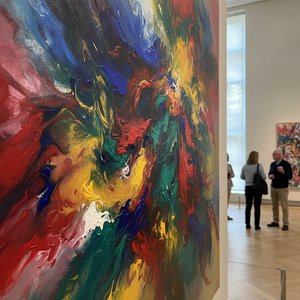
Explore the profound emotional depth of Lyrical Abstraction. Discover how masters like Raymond Parker used color and form to bridge Impressionism and Abstract Expressionism. Learn about this pivotal movement through our expert-led art history guide.

Explore the profound emotional depth of Color Field painting. Discover the history of mid-century abstraction, from Rothko to Newman, and learn how pure color transforms the viewer's experience through our expert art history guide.

Explore the profound history of sculpture, from classical realism to modern abstraction. Discover the mastery of form, texture, and medium through an expert art-historical lens designed for discerning collectors and enthusiasts.


Maradjon naprakész a legfrissebb művészeti hírekkel, exkluzív ajánlatokkal és dekorációs ötletekkel.
Írja le nekünk projektjét, és művészeti szakértőink 3 személyre szabott műalkotási javaslatot készítenek Önnek.
Hagyjuk, hogy mi válogassunk ki Önnek 3 legjobb opciót – Ingyenesen!


 Megtekintés
 Küldés
 Megosztás
 Részletek

 Letöltés
 Hasonló darabok
 X-ray felvétel
 Diavetítés


 Összes részlet megjelenítése




































 Az üvegkeretes opció csak 110 cm alatti méretben érhető el


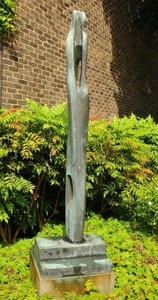


![Quatre Femmes Sur Socle [four Women On A Base] — Alberto Giacometti, Modern Sculpture](/media/artworks/images/thumbnails/af/1c/af1c7b0533bc4d66a62125d60bfa22c1.jpg)

