x

 Olajfestmény vászononFalfeliratok és faldekorációFigurative Expressionism
 1926Modern
 36.0 x 39.0 cm
Múzeumi minőségű giclée vagy vászonnyomat, gyors gyártással és rugalmas finomítási lehetőségekkel. ( Kézzel festett másolat rendelése Kép letöltése)





























Válasszon előre meghatározott méreteink közül, amelyek megfelelnek a műalkotás eredeti arányainak.

Megadhat saját méreteket is egy konkrét kerethez vagy helyszínhez igazítva. Amennyiben a kiválasztott méret nem egyezik az eredeti kép arányokkal, a műalkotást le fogjuk vágni, vagy kiegészítjük a képet tükrözött vagy egyszínű szélekkel. A gyártás megkezdése előtt egy digitális tervezetet küldünk jóváhagyásra.
Kérjük, vegye figyelembe, hogy a képernyőn látható előnézet nem tükrözi a tényleges levágást vagy kiegészítést. Csak a tervezet mutatja pontosan a végső kompozíciót.
Bár az egyedi méretek is elérhetőek, az eredeti arányok megőrzése érdekében azt javasoljuk, hogy válasszon a előre meghatározott listából származó méretet.
Világszerte történő kiszállítás területére mindössze 2 hét alatt, a szokásos 4-5 hét helyett. (18 augusztus)


Újjáépítés
Reprodukció mérete
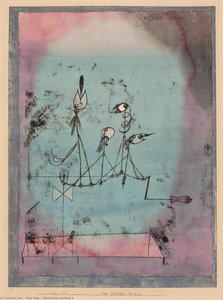
Paul Klee’s “Reconstructing” (1926) isn't merely a painting; it’s an invitation. An invitation to wander through a fragmented landscape, a memory palace built of color and line, where the familiar dissolves into the dreamlike. This work, housed within the Zentrum Paul Klee in Bern, stands as a cornerstone of Figurative Expressionism – a movement that dared to return to recognizable forms while simultaneously embracing raw emotion and an intensely personal visual language. It’s a piece that whispers stories of rebuilding, of recollection, and of the inherent beauty found within imperfection.
The composition immediately captivates with its deliberate asymmetry. There's no single point of focus; instead, the eye is drawn on a meandering journey across the canvas, encountering a network of geometric shapes – squares, rectangles, circles, triangles – arranged against a warm, muted background that seems to breathe with an underlying cream or beige hue. These forms aren’t sharply defined; they bleed into one another, suggesting not concrete buildings but rather echoes of structures, hints of staircases, and glimpses of windows—fragments of a world being recalled or perhaps, actively reconstructed.
“Reconstructing” emerged from the fertile ground of the late 1920s, a reaction against the increasingly conceptual currents dominating the art scene. It’s deeply rooted in the earlier German Expressionists – artists like Emil Nolde and Ernst Ludwig Kirchner – who prioritized emotional intensity over strict representation. However, Klee wasn't simply echoing their style; he was forging his own path, blending elements of Cubism with Surrealism to create a uniquely expressive vision. This movement represented a powerful return to self-expression in European art after periods dominated by American artistic trends, a desire to capture the subjective experience and imbue objects with profound feeling.
Klee’s approach was profoundly intellectual. He wasn't simply painting what he *saw*; he was exploring the underlying structures of form and design, treating color theory as a language in itself. His work is characterized by an almost musical quality – a sense of arrangement and balance that reflects his deep appreciation for music. This exploration of structure and emotion became a defining characteristic of his oeuvre.
The title, “Reconstructing,” is crucial to understanding the painting’s emotional core. It suggests not just physical rebuilding but also the act of remembering – piecing together fragments of experience, lost memories, or perhaps even dreams. The dominant circular form in the upper center acts as a visual anchor, drawing the eye and hinting at wholeness amidst the chaos. The warm color palette—yellows, oranges, and reds—contributes to this feeling of warmth and nostalgia, while the rough handling of materials – evident in the translucent watercolor technique – adds an element of vulnerability and emotional intensity.
Looking closer, one might interpret the lines as pathways, the shapes as echoes of structures, and the overall composition as a visual representation of the process of rebuilding. It’s a painting that invites contemplation, encouraging viewers to project their own memories and experiences onto its surface. “Reconstructing” is not about depicting reality; it's about capturing the *feeling* of remembering.
Klee’s masterful use of watercolor – or a similar translucent medium – is central to the painting’s evocative quality. The layering of colors creates depth, texture, and an atmospheric haze that blurs the boundaries between form and background. The visible brushstrokes add a sense of immediacy and spontaneity, while the deliberate blurring of edges contributes to the dreamlike atmosphere. It's a testament to Klee’s ability to transform simple materials into works brimming with emotion and complexity.

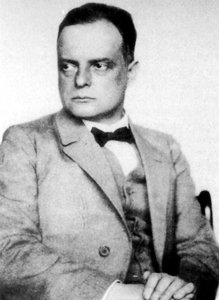
1879 - 1940 , Svájc
Explore the profound emotional depth of Lyrical Abstraction. Discover how masters like Raymond Parker used color and form to bridge Impressionism and Abstract Expressionism. Learn about this pivotal movement through our expert-led art history guide.

Explore the profound emotional depth of Color Field painting. Discover the history of mid-century abstraction, from Rothko to Newman, and learn how pure color transforms the viewer's experience through our expert art history guide.

Explore the profound history and emotional depth of Abstract Expressionism. From Jackson Pollock to Mark Rothko, master the nuances of the New York School through our expert art history guide. Discover museum-quality hand-painted reproductions for your collection.


Maradjon naprakész a legfrissebb művészeti hírekkel, exkluzív ajánlatokkal és dekorációs ötletekkel.
Írja le nekünk projektjét, és művészeti szakértőink 3 személyre szabott műalkotási javaslatot készítenek Önnek.
Hagyjuk, hogy mi válogassunk ki Önnek 3 legjobb opciót – Ingyenesen!


 Megtekintés
 Küldés
 Megosztás
 Részletek

 Letöltés
 Hasonló darabok
 X-ray felvétel
 Diavetítés
 Összes részlet megjelenítése







 Az üvegkeretes opció csak 110 cm alatti méretben érhető el