x

Kézzel festett olajvastú vászon, az Ön által választott méretben és keretben, művészeink készítik meglévőre. ( Nyomat rendelése Kép letöltése)





























Válasszon előre meghatározott méreteink közül, amelyek megfelelnek a műalkotás eredeti arányainak.

Ön megadhat saját méreteket egy adott kerethez vagy térhez igazításhoz. Ha a kiválasztott méret nem egyezik az eredeti kép arányával, akkor a műalkotást levágjuk, vagy további kézzel festett elemekkel meghosszabbítjuk a festményt. A gyártás megkezdése előtt küldünk Önnek egy digitális előnézetet jóváhagyásra.
Kérjük, vegye figyelembe, hogy a képernyőn megjelenő előnézet nem tükrözi a tényleges vágást vagy kiterjesztést. Csak az előnézet fog pontosan mutatni a végső kompozíciót.
Bár egyedi méretek állnak rendelkezésre, javasoljuk, hogy válasszon egy méretet az előre meghatározott listából az eredeti arányok megőrzése érdekében.
Világszerte elérhető szállítás () 3-4 hét alatt a szokásos 5 hét helyett. (20 augusztus). A minőség nem kérdőjelezhető.


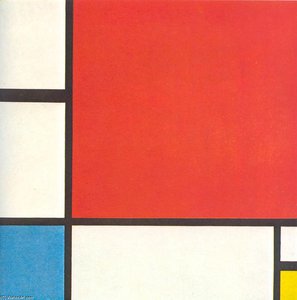
Composition No. 8
Reprodukció mérete
Piet Mondrian’s “Composition No. 8,” created in 1921, stands as an undeniable emblem of Neoplasticism – a movement that fundamentally reshaped the landscape of early twentieth-century art and continues to resonate with contemporary sensibilities. More than just a painting; it's a manifesto of pure abstraction, distilled into its most elemental components: black lines intersecting rectangular shapes filled with vibrant hues of red, yellow, and blue.
The artwork’s visual impact is immediately arresting due to its uncompromising geometric rigor. Mondrian meticulously crafted this piece using oil paint on canvas, rejecting any illusionistic representation in favor of a flattened plane where forms exist solely as discrete entities governed by mathematical precision. The grid structure—a hallmark of De Stijl—dominates the composition, dividing the canvas into orthogonal zones that convey an unparalleled sense of order and balance.
Beyond its formal elegance lies a profound symbolic significance. Mondrian’s intention wasn't merely to depict visual elements; he sought to express universal harmonies underlying the natural world. The selection of primary colors – red, yellow, and blue – represents fundamental forces of nature, mirroring the belief that these hues embody the essence of existence itself. Simultaneously, the black lines serve as structural anchors, emphasizing stability and conveying a deliberate rejection of organic forms—a conscious departure from Impressionism and Cubism.
Technically speaking, Mondrian approached his task with unwavering dedication. He painstakingly measured and aligned each line to achieve perfect proportions, ensuring that every element contributed to the overall equilibrium. The application of color is remarkably flat and unmodulated; there’s no blending or shading—a deliberate stylistic choice designed to heighten the painting's clarity and purity.
“Composition No. 8” transcends its aesthetic qualities to become a powerful statement about artistic philosophy. It embodies the spirit of modernity, reflecting a desire for rational thought and an unwavering belief in the transformative potential of geometric abstraction. Its enduring appeal lies not only in its visual beauty but also in its ability to inspire contemplation on fundamental questions concerning form, color, and the pursuit of universal harmony—a legacy that continues to captivate art historians and collectors alike.

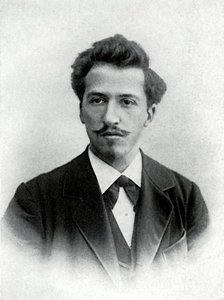
1872 - 1944 , Hollandia

Discover the profound intersection of geometry and emotion in Cubist Expressionism. Explore art history through our expert analysis of modern masters and find museum-quality, hand-painted oil reproductions of iconic masterpieces for your collection.

Master the complexities of Geometric Abstraction. Our expert guide explores the evolution from Cubist deconstruction to Bauhaus precision, decoding the power of shape and form. Perfect for art students seeking deep historical context and academic insight into modern masterpieces.

Explore the profound impact of Minimalism and Geometric Abstraction. From Mondrian to Malevich, discover how stripping art to its essential forms revolutionized modern aesthetics through our expert-led historical guide.


Maradjon naprakész a legfrissebb művészeti hírekkel, exkluzív ajánlatokkal és dekorációs ötletekkel.
Írja le nekünk projektjét, és művészeti szakértőink 3 személyre szabott műalkotási javaslatot készítenek Önnek.
Hagyjuk, hogy mi válogassunk ki Önnek 3 legjobb opciót – Ingyenesen!


 Megtekintés
 Küldés
 Megosztás
 Részletek

 Letöltés
 Hasonló darabok
 X-ray felvétel
 Diavetítés
 Összes részlet megjelenítése







 Az üvegkeretes opció csak 110 cm alatti méretben érhető el