x

Kézzel festett olajvastú vászon, az Ön által választott méretben és keretben, művészeink készítik meglévőre. ( Nyomat rendelése Kép letöltése)





























Válasszon előre meghatározott méreteink közül, amelyek megfelelnek a műalkotás eredeti arányainak.

Ön megadhat saját méreteket egy adott kerethez vagy térhez igazításhoz. Ha a kiválasztott méret nem egyezik az eredeti kép arányával, akkor a műalkotást levágjuk, vagy további kézzel festett elemekkel meghosszabbítjuk a festményt. A gyártás megkezdése előtt küldünk Önnek egy digitális előnézetet jóváhagyásra.
Kérjük, vegye figyelembe, hogy a képernyőn megjelenő előnézet nem tükrözi a tényleges vágást vagy kiterjesztést. Csak az előnézet fog pontosan mutatni a végső kompozíciót.
Bár egyedi méretek állnak rendelkezésre, javasoljuk, hogy válasszon egy méretet az előre meghatározott listából az eredeti arányok megőrzése érdekében.
Világszerte elérhető szállítás () 3-4 hét alatt a szokásos 5 hét helyett. (20 augusztus). A minőség nem kérdőjelezhető.


La pensée parfaite
Reprodukció mérete
René Magritte's La Pensée Parfaite (1948) isn’t merely a painting; it’s an invitation to question the very foundations of perception. This deceptively simple image – a solitary, leafless tree silhouetted against a sky dominated by four distinct seasons – possesses a profound and unsettling power. It resides within the heart of Surrealism, a movement dedicated to unlocking the hidden realms of the unconscious mind, yet Magritte’s approach transcends mere dream imagery. Instead, he employs a meticulous logic, a calculated disruption of familiar visual cues that forces the viewer to confront their own assumptions about how they interpret the world.
The painting emerged during a period in Magritte's career marked by a shift towards a more restrained and evocative palette. Following his time in Paris, he returned to Brussels and established a studio with his brother, Paul. This return coincided with a renewed interest in Impressionism, particularly the soft, atmospheric qualities of Renoir’s work. Magritte consciously adopted this approach – the muted colors, the delicate light – to amplify the painting's dreamlike quality, creating an effect that is both alluring and subtly disorienting. The tree itself, rendered with a remarkable lack of detail, becomes a focal point, its stark silhouette acting as a visual anchor within this shifting landscape.
The most immediate element to grasp in *La Pensée Parfaite* is the juxtaposition of seasons. Each season – represented by distinct colors and textures – occupies a portion of the sky, creating an impossible, simultaneous tableau. This deliberate contradiction isn’t simply decorative; it's a core component of Magritte’s strategy for challenging our understanding of reality. He’s not depicting a literal scene but rather constructing a visual metaphor for the complexities of thought itself. The tree, often interpreted as representing the mind or intellect, stands at the center of this symbolic arrangement, seemingly contemplating – or perhaps struggling to reconcile – these disparate elements.
The leafless nature of the tree is particularly significant. Leaves are intrinsically linked to growth, change, and the passage of time. Their absence suggests a frozen state, a moment suspended in contemplation. It’s as if the mind has become trapped within its own processes, unable to fully embrace or understand the flow of experience. The white cloth draped over the tree's branches further obscures any clear definition, adding another layer of ambiguity and reinforcing the painting’s central theme: the difficulty of grasping complete knowledge or truth.
Despite its complex symbolism, *La Pensée Parfaite* is executed with remarkable precision. Magritte's technique relies heavily on meticulous detail and a careful manipulation of perspective. He employs a limited color palette – primarily blues, greens, and browns – to create a sense of harmony and restraint. The brushstrokes are subtle and controlled, contributing to the painting’s overall feeling of stillness and contemplation. Notably, Magritte often used a technique called “trompe-l'œil,” or trickery of the eye, to further blur the boundaries between reality and representation – a strategy he employed throughout his career.
The painting’s impact extends beyond its visual appeal; it invites introspection. It prompts us to consider how our perceptions are shaped by our experiences, memories, and unconscious biases. *La Pensée Parfaite* is not simply a beautiful image but a profound meditation on the nature of reality, perception, and the elusive quality of thought itself – a timeless masterpiece that continues to resonate with viewers today.
Most-Famous-Paintings offers meticulously crafted hand-painted reproductions of René Magritte’s *La Pensée Parfaite*, allowing you to bring this iconic Surrealist work into your home or office. Our artists replicate the painting's subtle nuances, color depth, and textural details with exceptional accuracy, ensuring a faithful representation of Magritte’s genius. Choose from a range of sizes and canvas materials to perfectly complement your décor. A reproduction of *La Pensée Parfaite* is more than just art; it’s an invitation to engage in a continuous dialogue with one of the 20th century's most influential artists.

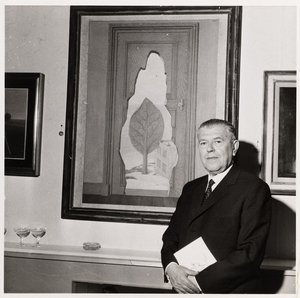
1898 - 1967 , Belgium

Explore the profound mystery of René Magritte’s 'The Treachery of Images.' Dive into an expert analysis of his Surrealist philosophy, the paradox of representation, and how he challenged reality through the interplay of language and visual perception.

Explore the profound depths of Surrealism. From Dalí’s dreamscapes to Magritte’s enigmas, master the history of the subconscious mind through our expert art guide and discover museum-quality oil reproductions of the world's most iconic surrealist masterpieces.


Maradjon naprakész a legfrissebb művészeti hírekkel, exkluzív ajánlatokkal és dekorációs ötletekkel.
Írja le nekünk projektjét, és művészeti szakértőink 3 személyre szabott műalkotási javaslatot készítenek Önnek.
Hagyjuk, hogy mi válogassunk ki Önnek 3 legjobb opciót – Ingyenesen!


 Megtekintés
 Küldés
 Megosztás
 Részletek

 Letöltés
 Hasonló darabok
 X-ray felvétel
 Diavetítés
 Összes részlet megjelenítése







 Az üvegkeretes opció csak 110 cm alatti méretben érhető el