


x

 Készíttetnék festményként Kép letöltése
 Megosztás
 Részletek
 Kedvencekhez ad
 Letöltés
 Hasonló alkotások
 X-ray felvétel
 Diavetítés
Múzeumi minőségű giclée vagy vászonnyomat, gyors gyártással és rugalmas finomítási lehetőségekkel.





























Válasszon előre meghatározott méreteink közül, amelyek megfelelnek a műalkotás eredeti arányainak.

Megadhat saját méreteket is egy konkrét kerethez vagy helyszínhez igazítva. Amennyiben a kiválasztott méret nem egyezik az eredeti kép arányokkal, a műalkotást le fogjuk vágni, vagy kiegészítjük a képet tükrözött vagy egyszínű szélekkel. A gyártás megkezdése előtt egy digitális tervezetet küldünk jóváhagyásra.
Kérjük, vegye figyelembe, hogy a képernyőn látható előnézet nem tükrözi a tényleges levágást vagy kiegészítést. Csak a tervezet mutatja pontosan a végső kompozíciót.
Bár az egyedi méretek is elérhetőek, az eredeti arányok megőrzése érdekében azt javasoljuk, hogy válasszon a előre meghatározott listából származó méretet.
Világszerte történő kiszállítás területére 2 hét alatt, a szokásos 4-5 hét helyett. 23 július


Window
A reprodukció mérete
Robert Delaunay’s “Window,” painted in 1912, stands as an emblem of Orphism – a movement that irrevocably altered the course of European art. More than just depicting a simple pane of glass, Delaunay sought to distill the very experience of perceiving light and color into a powerfully abstract composition. It's a piece that invites contemplation not merely about what is seen but about how it feels.
Born from the disillusionment following World War I, Orphism rejected representational art altogether. Instead, artists like Delaunay prioritized pure color – hues divorced from any illusion of naturalistic form – as their primary expressive tool. This approach stemmed directly from Cezanne’s influence; Delaunay believed that Cezanne had unlocked a fundamental truth about painting by reducing objects to their constituent geometric shapes.
Delaunay employed a technique characterized by layered paint application – often using encaustic wax alongside oil paints – creating surfaces imbued with luminous depth. The window itself is constructed from interlocking rectangles and squares of vibrant color, meticulously arranged to generate visual dynamism. Notice the subtle gradations within each shape; Delaunay skillfully manipulated pigment density to achieve an ethereal quality that transcends mere optical illusion.
“Window” emerged during a period of profound societal upheaval following the Great War. Artists were grappling with trauma, questioning established values, and desperately seeking new ways to communicate their experiences. Orphism responded to this anxiety by offering an antidote – a celebration of beauty and harmony amidst chaos. It represented a decisive break from Impressionism’s focus on capturing fleeting moments of sensory perception.
The window itself serves as a potent symbol, representing not just physical illumination but also spiritual enlightenment. Delaunay's deliberate use of color – particularly the dominant blues and yellows – evokes feelings of serenity and optimism. The geometric shapes contribute to this symbolic resonance by suggesting order and structure within an otherwise unpredictable visual field. Ultimately, “Window” encourages viewers to consider how art can transcend mere imitation and offer a glimpse into deeper truths about human perception.
This striking artwork exemplifies Delaunay’s pioneering vision of abstract color and geometric harmony—a legacy that continues to inspire artists and collectors alike.


1885 - 1941 , Franciaország
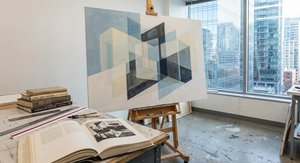
Explore the captivating world of geometric abstraction! Discover its origins, key artists like Malevich & Mondrian, and why this movement remains highly valued by art collectors today. Expert insights at Most-Famous-Paintings.

Explore the vibrant world of Gene Davis and the Washington Color School. Discover his iconic stripe paintings, innovative techniques, and lasting impact on American abstract art. A deep dive for collectors & enthusiasts.

Explore Orphism, the vibrant abstract art movement pioneered by Robert & Sonia Delaunay. Discover its unique color theory, lasting influence on modern art, and how to bring this 'symphony of color' into your home with Most-Famous-Paintings.

Explore the life & work of Jacob Kainen, a pivotal figure in American Abstract Expressionism and Color Field painting. Discover his journey from Social Realism to vibrant abstraction and lasting influence on 20th-century art.

Explore the profound world of Color Field painting with Most-Famous-Paintings. Discover key artists like Rothko & Newman, its philosophical roots, and lasting impact on modern art. Expert insights for collectors.


Maradjon naprakész a legfrissebb művészeti hírekkel, exkluzív ajánlatokkal és dekorációs ötletekkel.
Írja le nekünk projektjét, és művészeti szakértőink 3 személyre szabott műalkotási javaslatot készítenek Önnek.
Hagyjuk, hogy mi válogassunk ki Önnek 3 legjobb opciót – Ingyenesen!


 Megosztás


 Tovább olvasom







 Az üvegkeretes opció csak 110 cm alatti méretben érhető el


