x

Kézzel festett olajvastú vászon, az Ön által választott méretben és keretben, művészeink készítik meglévőre. ( Váltás nyomtatványra Képváltás)





























Válasszon előre meghatározott méreteink közül, amelyek megfelelnek a műalkotás eredeti arányainak.

Ön megadhat saját méreteket egy adott kerethez vagy térhez igazításhoz. Ha a kiválasztott méret nem egyezik az eredeti kép arányával, akkor a műalkotást levágjuk, vagy további kézzel festett elemekkel meghosszabbítjuk a festményt. A gyártás megkezdése előtt küldünk Önnek egy digitális előnézetet jóváhagyásra.
Kérjük, vegye figyelembe, hogy a képernyőn megjelenő előnézet nem tükrözi a tényleges vágást vagy kiterjesztést. Csak az előnézet fog pontosan mutatni a végső kompozíciót.
Bár egyedi méretek állnak rendelkezésre, javasoljuk, hogy válasszon egy méretet az előre meghatározott listából az eredeti arányok megőrzése érdekében.
Világszerte elérhető szállítás () 3-4 hét alatt a szokásos 5 hét helyett. (11 augusztus). A minőség nem kérdőjelezhető.


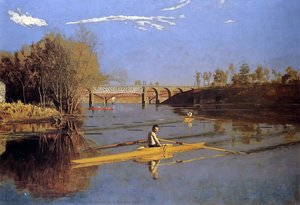
The Meadows, Gloucester
A reprodukció mérete
Thomas Cowperthwait Eakins (1844–1916) stands as an unparalleled figure in American art—a painter who relentlessly pursued the essence of human experience. He wasn’t merely concerned with *representing* the world; he sought to dissect it, understand its anatomy, both physical and psychological, and then reconstruct it on canvas with an uncompromising honesty that often provoked controversy.
Eakins's artistic vision was profoundly shaped by his upbringing in Philadelphia—a city far removed from the grand landscapes favored by Romantic painters. Instead, he focused on capturing the gritty realities of urban life, portraying figures engaged in commonplace activities: doctors examining patients, rowers battling currents, hunters tracking prey. This deliberate choice to depict ordinary subjects wasn’t a rejection of beauty; it was an assertion that truth resided within the mundane—a conviction that fueled his artistic endeavors and cemented his legacy as one of America's most astute observers of human behavior.
Early Influences and Artistic Formation
Eakins’s fascination with anatomy began early in life, nurtured by his father’s profession as a writing master and calligraphy teacher. He meticulously studied the human form—drawing inspiration from classical sculpture and anatomical treatises—a practice that would become central to his artistic technique. This dedication to precision extended beyond mere representation; Eakins aimed to convey not just what he saw but also how it *felt*, striving for an emotional resonance that transcended superficial aesthetics.
His formative years at Central High School in Philadelphia solidified his commitment to scientific observation and artistic rigor. Surrounded by fellow artists—most notably Charles Lewis Fussell—he honed his skills in drawing, perspective, and modeling the human body with unwavering accuracy. The influence of Jean-Léon Gérôme’s Parisian atelier was particularly significant, fostering a stylistic approach characterized by meticulous detail and an unflinching commitment to realism.
The Meadows, Gloucester
"The Meadows, Gloucester," painted in 1883, exemplifies Eakins's distinctive style—a masterful blend of observation and artistic interpretation. Executed in oil on panel, the canvas captures a tranquil rural scene featuring horses grazing peacefully amidst lush greenery. The composition is carefully balanced, with trees framing the meadow and providing depth to the landscape. Two figures are subtly integrated into the scene, suggesting an intimate connection between humanity and nature—a recurring motif in Eakins’s oeuvre.
Eakins's technique demonstrates a remarkable understanding of light and color, achieved through painstaking layering of brushstrokes that capture the nuances of atmospheric conditions. The muted palette reflects the overcast day depicted in the painting, creating an atmosphere of serenity and contemplation. Furthermore, Eakins’s meticulous anatomical rendering—evident in the depiction of the horses' musculature—underscores his unwavering commitment to scientific accuracy.
Symbolism and Emotional Impact
Beyond its technical brilliance, “The Meadows” resonates with deeper symbolic meanings. The meadow itself represents fertility and renewal—a visual metaphor for the cyclical rhythms of life—while the horses embody strength and grace. Together, they convey a sense of harmony between man and beast, mirroring Eakins’s belief that art could illuminate the complexities of human experience.
Ultimately, “The Meadows” transcends mere depiction; it invites viewers to contemplate the beauty inherent in everyday life—a testament to Eakins's profound artistic vision and his enduring influence on American art history.


1844 - 1916 , Egyesült Államok

Explore the ethereal beauty of Luminism. Discover how 19th-century American masters captured light and atmosphere through profound landscape painting. Learn about this iconic movement and find museum-quality, hand-painted oil reproductions to bring historical brilliance to your home.


Maradjon naprakész a legfrissebb művészeti hírekkel, exkluzív ajánlatokkal és dekorációs ötletekkel.
Írja le nekünk projektjét, és művészeti szakértőink 3 személyre szabott műalkotási javaslatot készítenek Önnek.
Hagyjuk, hogy mi válogassunk ki Önnek 3 legjobb opciót – Ingyenesen!


 Előnézet
 Megosztás
 Megosztás
 Részletek

 Letöltés
 Hasonló alkotások
 X-ray felvétel
 Diavetítés


 Tovább olvasom







 Az üvegkeretes opció csak 110 cm alatti méretben érhető el