


x


 Preview
 Készíttetnék festményként Kép letöltése
 Megosztás
 Részletek
 Kedvencekhez ad
 Letöltés
 Hasonló alkotások
 X-ray felvétel
 Diavetítés
Múzeumi minőségű giclée vagy vászonnyomat, gyors gyártással és rugalmas finomítási lehetőségekkel.





























Válasszon előre meghatározott méreteink közül, amelyek megfelelnek a műalkotás eredeti arányainak.

Megadhat saját méreteket is egy konkrét kerethez vagy helyszínhez igazítva. Amennyiben a kiválasztott méret nem egyezik az eredeti kép arányokkal, a műalkotást le fogjuk vágni, vagy kiegészítjük a képet tükrözött vagy egyszínű szélekkel. A gyártás megkezdése előtt egy digitális tervezetet küldünk jóváhagyásra.
Kérjük, vegye figyelembe, hogy a képernyőn látható előnézet nem tükrözi a tényleges levágást vagy kiegészítést. Csak a tervezet mutatja pontosan a végső kompozíciót.
Bár az egyedi méretek is elérhetőek, az eredeti arányok megőrzése érdekében azt javasoljuk, hogy válasszon a előre meghatározott listából származó méretet.
Világszerte történő kiszállítás területére 2 hét alatt, a szokásos 4-5 hét helyett. 26 július


Abstract Composition 17
A reprodukció mérete
Victor Vasarely's "Abstract Composition 17" is more than just an image; it’s an invitation to experience the world anew. Born in 1906 in Pécs, Croatia – then part of Austria-Hungary – Vasarely’s life was a deliberate pursuit of visual harmony, beginning with a surprising detour from medical studies into the realm of art. His early training at the Podolini-Volkmann Academy and, crucially, Sándor Bortnyik's “Műhely” workshop, profoundly shaped his approach, immersing him in the principles of functional design and geometric abstraction championed by the Bauhaus movement. This confluence of influences ultimately led to his groundbreaking contribution to Op Art – Optical Art – a style dedicated to manipulating perception through carefully constructed visual illusions.
This striking black-and-white composition exemplifies Vasarely’s mastery of Op Art. The artwork is dominated by an intricate network of interlocking lines, squares, and rectangles, meticulously arranged to create a dynamic sense of movement and depth. It's a deliberate rejection of traditional representational art; the focus isn't on depicting a recognizable scene but rather on exploring the very nature of visual perception. Vasarely’s technique involved precise execution – oil paint applied with exacting control onto canvas – to achieve this remarkable effect. The high contrast between black and white amplifies these optical effects, drawing the viewer into a captivating dance of shifting forms.
Emerging in the 1960s, Op Art represented a significant shift in artistic thinking. Artists like Vasarely sought to harness scientific principles – particularly those related to optics and visual perception – to create artwork that actively engaged the viewer’s eye. This wasn't simply about creating pretty patterns; it was an intellectual exploration of how our brains interpret visual information. The movement coincided with a broader cultural fascination with technology and its impact on human experience, reflecting a desire to understand and manipulate the world around us through new artistic means.
"Abstract Composition 17" possesses a profound symbolic resonance despite its lack of overt subject matter. The geometric forms – squares, rectangles, lines – can be interpreted as representing fundamental building blocks of reality, suggesting an underlying order within apparent chaos. The artwork’s ability to generate movement and vibration taps into primal human responses, evoking feelings of excitement, dynamism, and even a subtle sense of unease. It's a piece that demands attention, prompting the viewer to actively participate in its creation – to become part of the illusion itself.

1906 - 1997 , Kroatia

Explore the revolutionary world of Victor Vasarely, father of Op Art. Discover his geometric masterpieces, artistic system, & lasting impact on modern design. A guide for discerning art collectors.

Fedezze fel a top 10 minimalista műalkotást! Mark Rothko, Agnes Martin és más ikonikus festők letisztult világát. Inspirálódjon modern képekkel, absztrakt vászonképekkel és hozzon létre nyugtató belső teret. Prémium minőségű reprodukciók a Most-Famous-Paintings.com-on!
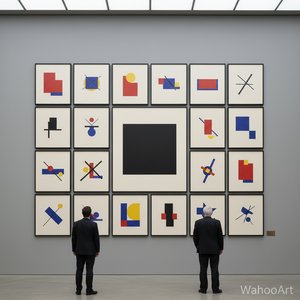
Fedezze fel Kazimir Malevich 25 legikonikusabb művészeti alkotását! Ismerje meg a szuprematizmus forradalmi világát, a Fekete Négyzet történetét és inspirálódjon modern lakberendezési ötletekkel. Múzeumi minőségű reprodukciók a Most-Famous-Paintings.com-on!
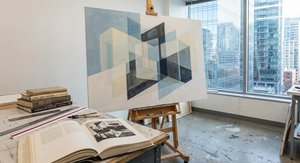
Explore the captivating world of geometric abstraction! Discover its origins, key artists like Malevich & Mondrian, and why this movement remains highly valued by art collectors today. Expert insights at Most-Famous-Paintings.
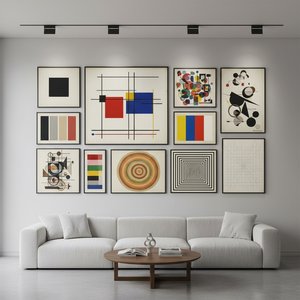
Fedezze fel a geometrikus absztrakció 10 legikonikusabb műalkotását! Kandinsky, Mondrian és más mesterek festményeinek története inspirálja otthona dekorációját. Múzeumi minőségű reprodukciók a Most-Famous-Paintings.com-on – fedezze fel online!


Maradjon naprakész a legfrissebb művészeti hírekkel, exkluzív ajánlatokkal és dekorációs ötletekkel.
Írja le nekünk projektjét, és művészeti szakértőink 3 személyre szabott műalkotási javaslatot készítenek Önnek.
Hagyjuk, hogy mi válogassunk ki Önnek 3 legjobb opciót – Ingyenesen!


 Megosztás


 Tovább olvasom







 Az üvegkeretes opció csak 110 cm alatti méretben érhető el


