x

Múzeumi minőségű giclée vagy vászonnyomat, gyors gyártással és rugalmas finomítási lehetőségekkel. ( Kézzel festett másolat rendelése Kép letöltése)





























Válasszon előre meghatározott méreteink közül, amelyek megfelelnek a műalkotás eredeti arányainak.

Megadhat saját méreteket is egy konkrét kerethez vagy helyszínhez igazítva. Amennyiben a kiválasztott méret nem egyezik az eredeti kép arányokkal, a műalkotást le fogjuk vágni, vagy kiegészítjük a képet tükrözött vagy egyszínű szélekkel. A gyártás megkezdése előtt egy digitális tervezetet küldünk jóváhagyásra.
Kérjük, vegye figyelembe, hogy a képernyőn látható előnézet nem tükrözi a tényleges levágást vagy kiegészítést. Csak a tervezet mutatja pontosan a végső kompozíciót.
Bár az egyedi méretek is elérhetőek, az eredeti arányok megőrzése érdekében azt javasoljuk, hogy válasszon a előre meghatározott listából származó méretet.
Világszerte történő kiszállítás területére mindössze 2 hét alatt, a szokásos 4-5 hét helyett. (19 augusztus)


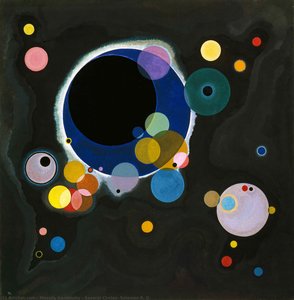
Division-Unity
Reprodukció mérete
Wassily Kandinsky’s “Division-Unity,” painted in 1934, stands as a cornerstone of abstract expressionism and a testament to the artist's profound exploration of spirituality through visual language. This striking canvas embodies Kandinsky’s revolutionary vision—that art should transcend representational imagery and tap into the realm of pure feeling, mirroring the harmonies of music.
Wassily Wassilyevich Kandinsky (1866-1944) irrevocably altered the trajectory of modern art, establishing himself as one of the foremost figures in abstract expressionism. Initially drawn to Impressionist painting—particularly Claude Monet’s “Haystacks”—Kandinsky experienced a transformative moment witnessing Wagner's opera "Lohengrin," sparking an unwavering desire to pursue artistic exploration beyond conventional boundaries.
His journey began with formal training at the Moscow State University, where he studied law and economics alongside his burgeoning interest in art. However, it was this encounter with music—specifically Wagner’s dramatic use of color and sound—that fundamentally reshaped Kandinsky's artistic worldview. He recognized that painting could aspire to achieve a similar level of expressive power, mirroring the harmonies of musical composition.
Moving to Munich in 1896, Kandinsky enrolled at Franz von Stuck’s Academy of Fine Arts, continuing his exploration of form and color theory. Influenced by Russian folk art and Eastern mysticism—particularly Rudolf Steiner's Anthroposophy—Kandinsky developed a distinctive aesthetic characterized by spontaneity and intuition.
Kandinsky’s involvement with the Bauhaus school in Weimar solidified his commitment to uniting art and craft, challenging prevailing academic conventions. Under Franz Meyer’s guidance, Kandinsky championed the use of geometric abstraction as a means of achieving functional beauty—a principle that resonated throughout the Bauhaus curriculum.
His teaching at Bauhaus instilled in students a belief in the transformative potential of color and form, fostering experimentation with innovative materials and techniques. The Bauhaus ethos profoundly impacted Kandinsky’s artistic practice, shaping his approach to composition and contributing to the development of influential designs for furniture and textiles.
"Division-Unity," alongside other seminal works like “Improvisation No. 28” and “Composition VIII,” exemplifies Kandinsky’s unwavering pursuit of artistic truth—a belief that art should transcend representational illusion and communicate directly with the human soul. His pioneering exploration of abstraction continues to inspire artists and designers worldwide, cementing his place as a visionary whose legacy endures in the vibrant hues and dynamic forms of contemporary visual culture.


1866 - 1944 , Oroszország

Master the complexities of Geometric Abstraction. Our expert guide explores the evolution from Cubist deconstruction to Bauhaus precision, decoding the power of shape and form. Perfect for art students seeking deep historical context and academic insight into modern masterpieces.
Explore the profound emotional depth of Lyrical Abstraction. Discover how masters like Raymond Parker used color and form to bridge Impressionism and Abstract Expressionism. Learn about this pivotal movement through our expert-led art history guide.

Explore the profound emotional depth of Color Field painting. Discover the history of mid-century abstraction, from Rothko to Newman, and learn how pure color transforms the viewer's experience through our expert art history guide.

Discover the profound emotional depth and investment potential of contemporary abstraction. Our expert guide explores how texture, movement, and form create timeless value for discerning art collectors and sophisticated interiors.


Maradjon naprakész a legfrissebb művészeti hírekkel, exkluzív ajánlatokkal és dekorációs ötletekkel.
Írja le nekünk projektjét, és művészeti szakértőink 3 személyre szabott műalkotási javaslatot készítenek Önnek.
Hagyjuk, hogy mi válogassunk ki Önnek 3 legjobb opciót – Ingyenesen!


 Megtekintés
 Küldés
 Megosztás
 Részletek

 Letöltés
 Hasonló darabok
 X-ray felvétel
 Diavetítés
 Összes részlet megjelenítése







 Az üvegkeretes opció csak 110 cm alatti méretben érhető el