Értékelje át műveit
Kedvencek listája Kosár tartalma Cart
x
MegtekintésMegtekintés Műalkotás AR előnézeteMűalkotás AR előnézete Kézzel festett másolat rendelése Kézzel festett másolat rendeléseKép letöltése Kép letöltése KüldésKüldés
RészletekRészletek Kedvencekhez ad Kedvencekhez ad LetöltésLetöltés Hasonló darabokHasonló darabok X-ray felvételX-ray felvétel DiavetítésDiavetítés

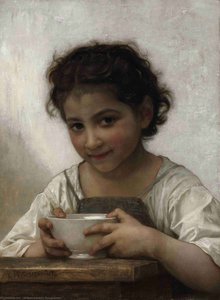
Young gypsy

Discover 'Young Gypsy' by William-Adolphe Bouguereau – a Romantic oil painting of a father & child in a vast landscape. Explore its beauty & historical significance.

Bouguereau: A mester Franciaország egyik legjelentősebb festője, aki a klasszikus szépséget és a részletességre helyezi a hangsúlyt. Fedezd fel a mitológiai, tájképeket és a nők ábrázolását! #Bouguereau

Giclée / Műnyomat

Múzeumi minőségű giclée vagy vászonnyomat, gyors gyártással és rugalmas finomítási lehetőségekkel. (Kézzel festett másolat rendelése Kézzel festett másolat rendeléseKép letöltése Kép letöltése)

P118B $10
P118H $10
P118W $10
P438Z $10
P508JH $12
P508YH $12
P805H $10
P805Z $10
P919BZ $10
P919G $10
P919XJ $10
P959ZH $10
P968JZ $12
W106C $8
W218G $10
W218JH $8
W218Y $10
W307PJ $10
W316G $10
W316PJ $8
W316Y $10
W398PJ $8
W4111J $10
W500HY $15
W500JH $15
W692G $12
W849H $8
W940BG $15
W953PJ $8

Standard
custom
CM
INCH

Válasszon előre meghatározott méreteink közül, amelyek megfelelnek a műalkotás eredeti arányainak.

szélesség
magasság

Megadhat saját méreteket is egy konkrét kerethez vagy helyszínhez igazítva. Amennyiben a kiválasztott méret nem egyezik az eredeti kép arányokkal, a műalkotást le fogjuk vágni, vagy kiegészítjük a képet tükrözött vagy egyszínű szélekkel. A gyártás megkezdése előtt egy digitális tervezetet küldünk jóváhagyásra.
Kérjük, vegye figyelembe, hogy a képernyőn látható előnézet nem tükrözi a tényleges levágást vagy kiegészítést. Csak a tervezet mutatja pontosan a végső kompozíciót.
Bár az egyedi méretek is elérhetőek, az eredeti arányok megőrzése érdekében azt javasoljuk, hogy válasszon a előre meghatározott listából származó méretet.

Világszerte történő kiszállítás területére mindössze 2 hét alatt, a szokásos 4-5 hét helyett. (18 augusztus)

why_choose_icon
Ingyenes globális expressz szállítás
why_choose_icon
Prémium minőségű len vászon
why_choose_icon
Teljes körű szállítási biztosítás
why_choose_icon
Vámvisszatérítési Garancia
why_choose_icon
Hiteles színpontosság garancia
why_choose_icon
60 napos visszaküldési lehetőség (csak hibás termékek esetén)
why_choose_icon
100% pénzvisszatérítési garancia
why_choose_icon
Több darab vásárlása esetén kedvezmény

Összesített ár

$ 68

reproduction

Young gypsy

Giclée / Műnyomat

Reprodukció mérete

-

Összesített ár

$ 68

Gyors információk

  • Artistic style: Romanticism
  • Artist: William-Adolphe Bouguereau
  • Title: Young gypsy
  • Subject or theme: Love, family, and connection to nature
  • Movement: Romanticism

Gyűjthető leírása

A Tender Encounter in the Romantic Landscape

In the sweeping, emotive masterpiece Young Gypsy, William-Adolphe Bouguereau invites the viewer into a moment of profound intimacy set against the infinite grandeur of the natural world. The painting captures a poignant scene of human connection: a young man, weathered by life yet tender in spirit, carries a child upon his back. This central duo serves as an anchor of warmth and vulnerability amidst a vast, dramatic landscape that speaks to the sublime power of the earth. As your eyes wander from the soft, protective embrace of the figures toward the distant, misty horizon, you are struck by the sheer scale of the environment, which seems to both dwarf the subjects and celebrate their resilience. It is a composition that masterfully balances the smallness of individual human experience with the eternal, breathing presence of nature.

The aesthetic language of this work is deeply rooted in the Romantic tradition, where emotion and atmosphere take precedence over mere photographic accuracy. Bouguereau employs a palette dominated by muted, soulful earth tones—rich ochres, deep browns, and subtle grays—that evoke a sense of timelessness and nostalgia. The lighting is particularly spellbinding; it possesses a diffused, atmospheric quality reminiscent of the golden hour, where the soft light of dawn or dusk casts long, gentle shadows and bathes the scene in a hazy, dreamlike glow. This technique creates a sense of depth that pulls the observer into the painting, making the distant mountains and sky feel like a reachable, albeit ethereal, destination.

Mastery of Technique and Luminous Detail

For the discerning collector or interior designer, the technical brilliance of Young Gypsy offers an unparalleled level of sophistication. Bouguereau, a master of the French academic style, utilizes meticulous brushwork and complex glazing techniques to build up layers of oil paint. This process creates a luminous quality, where light appears to emanate from within the canvas itself rather than simply reflecting off its surface. The textures are exquisitely rendered—from the soft, organic folds of the figures' clothing to the smooth, blended transitions in the sky—demonstrating a level of craftsmanship that honors the legacy of the Old Masters like Titian and Raphael.

Beyond its visual splendor, the painting carries a heavy symbolic weight that resonates with anyone seeking art that speaks to the soul. The image of the child being carried is a universal symbol of protection, lineage, and the continuity of life. It evokes a longing for simpler, more primal connections to our world, suggesting a time when humanity lived in closer harmony with the elements. This theme of humanity's connection to nature makes the piece an evocative choice for any space intended to inspire reflection, peace, or a sense of groundedness. Whether placed in a grand gallery setting or as a focal point in a curated living space, this reproduction brings with it a legacy of beauty, strength, and enduring tenderness.


A művész életrajza

A Life Immersed in Beauty: The World of William-Adolphe Bouguereau

William-Adolphe Bouguereau’s life unfolded as a profound celebration of classical ideals and breathtaking realism, beginning amidst the picturesque vineyards and olive groves of La Rochelle, France. From his earliest days, an undeniable artistic inclination guided him, leading to Paris and the prestigious École des Beaux-Arts. There, under the tutelage of François-Edouard Picquenot, he honed his skills, absorbing the timeless lessons imparted by the Old Masters – Raphael and Titian standing as particularly influential figures. These influences weren’t merely superficial imitations; they formed the very bedrock upon which Bouguereau constructed a unique artistic vision: one characterized by meticulous detail, luminous color palettes, and an unwavering dedication to portraying beauty in its most idealized form. He didn't simply capture what he *saw*; rather, he sought to represent what he believed to be inherently beautiful, striving for a level of perfection that resonated deeply with the aesthetic sensibilities of his era.

The Architect of Academic Perfection

Bouguereau’s artistic style is often described as “academic realism,” and this description holds considerable truth. He possessed an extraordinary mastery of anatomy, light, and composition – skills honed through rigorous training and a deep understanding of classical principles. His canvases are populated by figures rendered with astonishing precision: the delicate curve of a shoulder, the subtle blush of skin, the expressive depth of an eye. Yet, his work transcends mere technical proficiency; it’s infused with profound emotion and narrative power. Bouguereau frequently depicted mythological scenes, transforming ancient tales into vibrant, emotionally resonant moments. *The Birth of Venus*, for instance, isn't merely a depiction of the goddess emerging from the sea; it’s a powerful celebration of feminine grace and ethereal beauty – an embodiment of classical ideals elevated to their most sublime expression. Similarly, works like *Zenobia Found by Shepherds on the Banks of the Araxes* capture vulnerability and pathos with remarkable sensitivity, revealing a nuanced understanding of human emotion. Beyond mythology, Bouguereau found inspiration in everyday life – portraying shepherdesses tending their flocks, young girls at play, mothers cradling their children. These genre scenes, while seemingly simple, are imbued with a dignity and tenderness that elevates them to the realm of art, demonstrating his ability to find beauty in the ordinary. *Faneuse (1869)* exemplifies this approach, showcasing his meticulous attention to detail and atmospheric rendering.

Influences and Artistic Development

Bouguereau’s artistic journey was shaped by a confluence of influences. His early studies in Italy under Raffaello, Andrea del Sarto, and Guido Reni profoundly impacted his style, particularly his interest in mythological subjects. He meticulously studied the works of Raphael and Titian, absorbing their techniques for rendering form, light, and color. However, Bouguereau didn’t simply replicate these masters; he synthesized their lessons into a distinctly personal vision. His work evolved over time, reflecting both his adherence to academic principles and his growing interest in capturing the essence of human emotion. During the 1870s and 1880s, he developed a distinctive style characterized by soft colors, delicate brushwork, and an emphasis on idealized beauty. He was particularly drawn to scenes of childhood innocence and tenderness, as evidenced by paintings like *Child at Bath* and *Tóbiás búcsúja apjától*. His later works often featured religious subjects, rendered with a serene spirituality that resonated with the sensibilities of his time.

A Rediscovered Master

For decades following his death in 1905, Bouguereau’s work largely faded from public view. The rise of modern art movements – Impressionism, Post-Impressionism, and Cubism – overshadowed his traditional style, leading to a decline in critical recognition. However, beginning around 1979, there was a gradual but significant revival of interest in Bouguereau’s oeuvre. Art historians began to appreciate the technical brilliance and artistic integrity of his paintings, recognizing them as masterpieces of academic realism. His prices at auction soared, and museums began to exhibit his works with renewed enthusiasm. Today, Bouguereau is widely regarded as one of the most important artists of the 19th century – a testament to the enduring appeal of classical ideals and the power of meticulous craftsmanship.

Legacy and Enduring Appeal

Bouguereau’s influence extends far beyond his own paintings. He was a highly respected teacher, shaping the careers of numerous aspiring artists. His dedication to traditional artistic values – anatomical accuracy, compositional balance, and emotional expression – continues to inspire figurative painters today. His works are now housed in prestigious museums around the world, including the Musée d’Orsay in Paris, the Carnegie Museum in Pittsburgh, and The J. Paul Getty Museum in Los Angeles, ensuring that his legacy will endure for generations to come. His paintings remain remarkably popular, reproduced extensively in posters and prints, demonstrating a continued appreciation for his exquisite beauty and timeless appeal. Bouguereau's art stands as a powerful reminder of the enduring value of skill, dedication, and an unwavering commitment to artistic excellence – a true testament to the power of classical ideals.
William-Adolphe Bouguereau

William-Adolphe Bouguereau

1825 - 1905 , Franciaország

A művészről röviden

  • Artistic Movement Or Style: Akadémiai Realizmus
  • Artists Or Movements Influenced By This Artist: ['Impressionizmus']
  • Artists Who Influenced This Artist:
    • Raffaello
    • Tiziano
  • Date Of Birth: 1825. nov. 30.
  • Date Of Death: 1905. aug. 18.
  • Full Name: William-Adolphe Bouguereau
  • Nationality: Francia
  • Notable Artworks:
    • A Nymphaeum
    • Bergère 1886
    • Gyermek a fürdőben
    • Szélhúzó dala (1869)
  • Place Of Birth: La Rochelle, Francia
Fedezze fel a műalkotásokat témák, stílusok és jellemzők szerint csoportosítva.